

June 23, 2026
Key takeaways from our Food Sustainability industry breakfast
Reducing food waste is a multi-pronged issue
by TM Petaccia
For Charlotte’s restaurant industry, sustainability often begins with familiar conversations around sourcing local ingredients, supporting farmers, and reducing waste in the kitchen. But yesterday’s Unpretentious Palate Industry Breakfast made clear that food sustainability, particularly the issue of food waste, remains a far more complicated challenge.
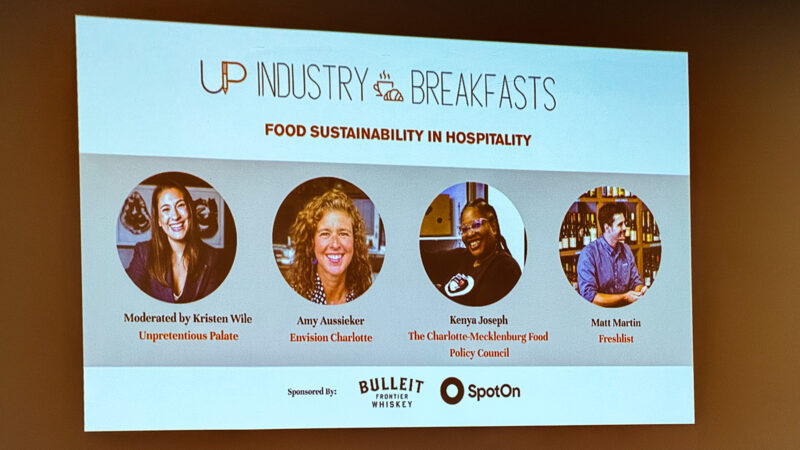
Hosted at Envision Charlotte’s Innovation Barn and sponsored by SpotOn and Bulleit Frontier Whiskey, the discussion brought together Amy Aussieker, executive director of Envision Charlotte; Kenya Joseph, board chair of the Charlotte-Mecklenburg Food Policy Council; and Matt Martin, director of operations at Freshlist, with UP editor Kristen Wile moderating the discussion focused on how the hospitality industry can reduce waste across every stage of the food chain and how the solution requires coordination between restaurants, farms, nonprofits, technology providers, and government agencies working in concert.
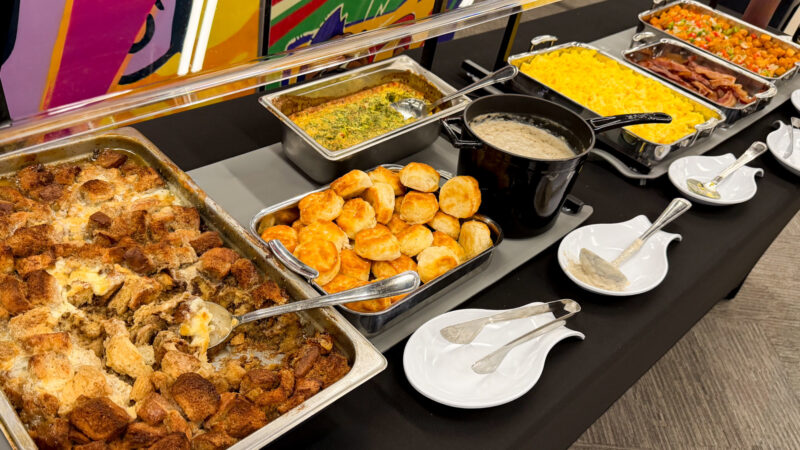
The morning began a buffet breakfast followed by a blunt assessment of where the industry currently stands.
“Not very great,” Aussieker said when asked about food service’s current impact on food waste. She explained that food waste sent to landfills presents a larger environmental problem than many people realize. “A lot of people are like, ‘Well, you compost, it breaks down.’ It does not [in a landfill]. It doesn’t get oxygen, so it doesn’t break down. It off-gases methane, which is one of the biggest contributors to climate change.”
While the environmental costs are significant, the panel quickly shifted toward the practical challenges operators face when trying to do better.
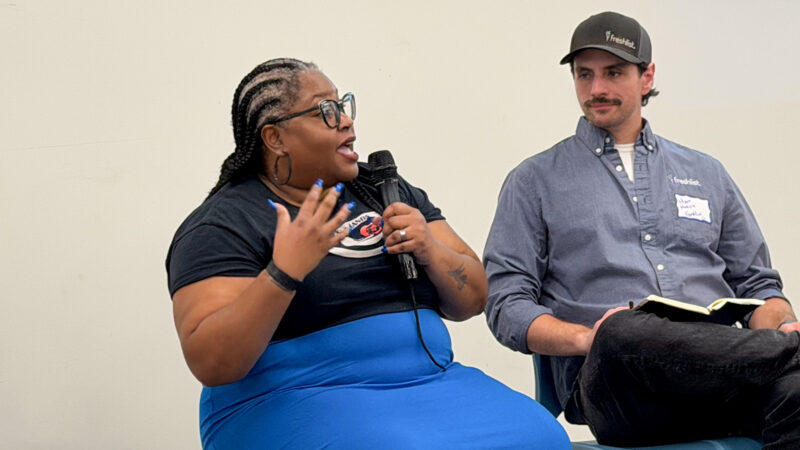
Joseph, who works extensively in food assistance programs throughout Charlotte, noted that restaurants often want to donate surplus food, but operational realities frequently stand in the way.
“It has to be built into your operation. It has to be built into your cost,” she said. “That’s where it can sometimes feel prohibitive for restaurants because it’s not just about the money cost, it’s also the time cost.” She explained that food recovery is rarely as simple as handing unused product to a nonprofit “How do we create the systems that can manage this on both sides so that things can actually go that are helpful to people?”
Martin argued that prevention remains the most effective form of sustainability, particularly when restaurants use better forecasting and purchasing systems. “Making sure that you’re keeping in tune to whatever POS system that it is that you have that’s telling you sales numbers on items, and making sure that you’re adjusting pars before you’re even ordering,” Martin said. At Freshlist, he explained, the company operates on what he described as a “harvest when ordered” model.
“We’re bringing in exactly what we already know has a home in our city,” he said”
Audience discussion quickly highlighted another often overlooked issue: farms frequently face their own food waste challenges, particularly during seasonal slowdowns when restaurant traffic declines but crop production remains high.
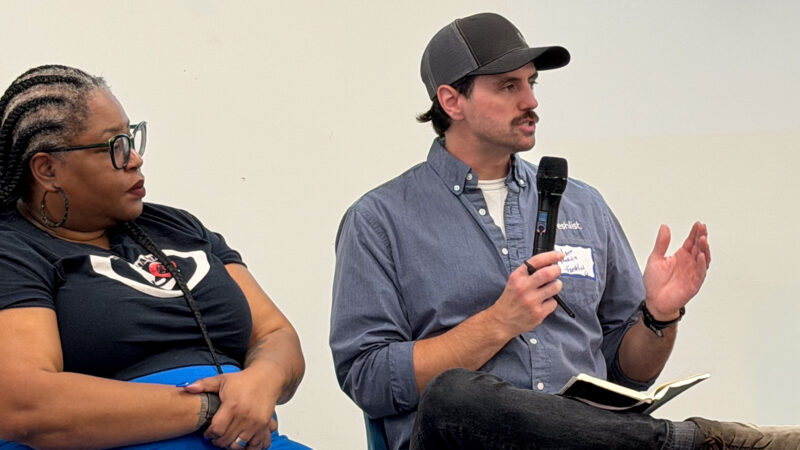
Martin encouraged producers to diversify their sales channels through restaurant partnerships, farm stands, CSA programs, and preservation opportunities when possible.
Technology also emerged as a major focus of the conversation.
Aussieker pointed to several innovations currently being explored globally, including food digesters used in restaurants in the Netherlands.
“They have restaurants over there that literally you take your plate out and you just scrape off your plate and it powers the street light,” she said. She also discussed a home-use food recycler called The Mill, which converts food scraps — including meat, bones, and cheese — into chicken feed. “We’re taking that technology and how do we create it for catering,” Aussieker said, noting efforts to explore larger-scale applications for restaurants and schools.
Joseph highlighted freeze-drying technology as another promising tool, particularly for food banks and disaster response organizations.
“One of the things that I learned when we went through Hurricane Helene… you’ve got six hours before produce really starts turning,” she says. Being able to say, okay, what about all these other options that could also be stored long term, be used in disasters, that’s something that I’m a really big proponent on.”
One of the morning’s more surprising takeaways centered around compostable packaging.
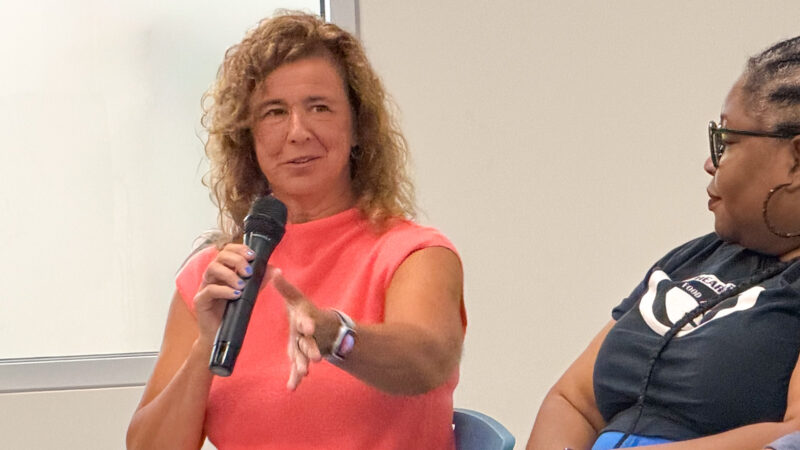
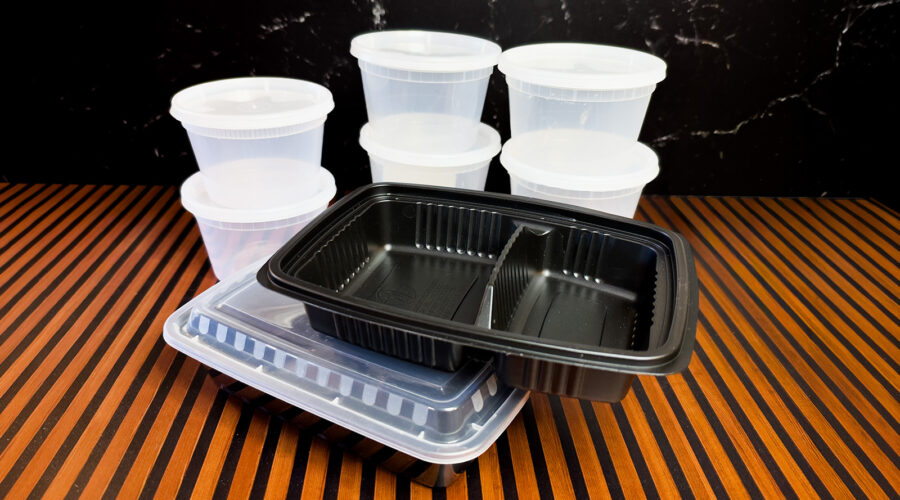
Many operators assume compostable containers are automatically better for the environment, but Aussieker challenged that assumption. “If you’re sending your to-go packages out to most consumers, they’re not composting,” she said. “You are now adding more organic waste to the landfill.” Her recommendation was direct. “I would not encourage any restaurant to order compostables.”
Instead, she urged businesses to understand what materials local recycling systems actually accept while also pressuring suppliers to reduce excessive packaging upstream. “We need to start talking to the providers just to lessen what they’re putting all their stuff in,” she said.
Throughout the discussion, restaurant operators and local farmers in attendance reinforced a recurring theme: sustainability challenges extend far beyond individual kitchens. Cherie Jzar of Deep Roots Farm maintained that while businesses can make incremental improvements on their own, larger structural solutions will require public investment and infrastructure.
“It is much bigger than that,” she said. “It is the municipal government. They’re probably the ones who need to create the structure. There’s no way that one entity is going to work their way out of this.”
Still, despite the scale of the problem, panelists consistently returned to the idea that meaningful progress often starts small.
“I feel like the biggest thing from these conversations is… take one thing that you can actually create action on and then try to implement that,” Martin said.
Aussieker echoed that sentiment.
“If every single one of us in this room did just one thing differently, even at home, collectively, that’s going to make a huge difference.”
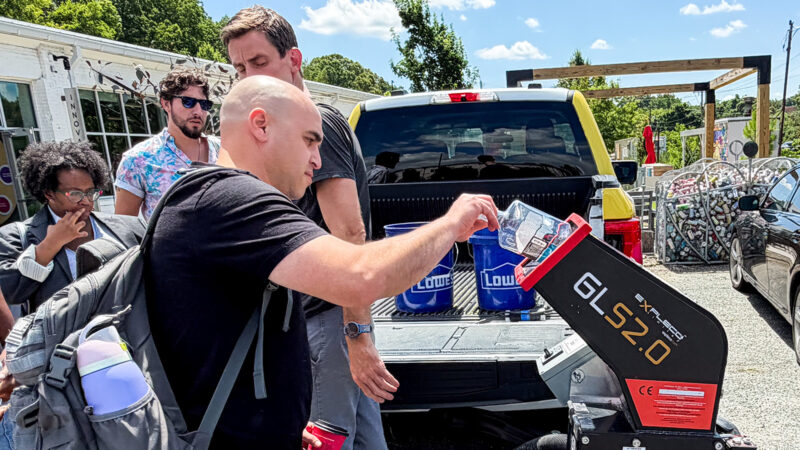
Following the discussion, attendees went outside to view Envision Charlotte’s “Crash Truck” in action. The yellow pickup carriess a mobile glass grinder that goes to restaurants, bars, breweries, festivals, and large-scale events, crushing wine, liquor, and other bottles into sand on-site rather than sending them through costly traditional recycling streams or to landfills. Once processed, the crushed glass is provided to a local concrete company, where it is incorpoated into cement for new local projects.
“A 96-gallon bin of bottles are crushed down to about the size of a paint can,” Aussieker said. “Right now Mecklenburg County ships our glass to Atlanta for recycling. It costs more to ship it there than it’s worth. The Crash Truck helps keep it all local.”
UPcomig Unpretentious Palate Industry Breakfasts
July 27 – Managing Personal Finances as a Hospitality Worker
September 8 — Making Moves Towards Leadership
October 28 — Mastering Marketing and Branding
Open to all culinary/hospitality industry professionals. Click here to request an invitation.
Support local food journalism in Charlotte.
UNPRETENTIOUS PALATE is a digital publication covering food and drink in Charlotte. At UP, you’ll find ethical food journalism that isn’t based on free meals. We’ll be your taste testers around the city, letting you know where you can’t miss and where to skip. And we’ll ban any condescending food-writer speak. We’ll tell you the dishes we love, where to go on date night, and the best places for cocktails. You can trust us.
Become an Unpretentious Palate member today to dine better in Charlotte.
Not ready to become a paying Member? Sign up for our free newsletter below.