Hidden gem in Charlotte’s Oakhurst neighborhood where the menu is as creative as the food
Hidden gem in Charlotte’s Oakhurst neighborhood where the menu is as creative as the food


The farmers market manager makes sure Charlotte has consistent access to fresh local food
By Allison Braden
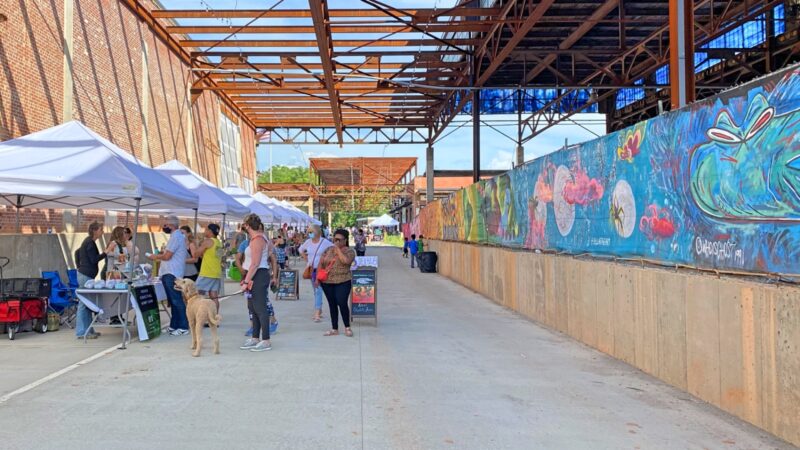
The farmers market at Camp North End. Kristen Wile/UP
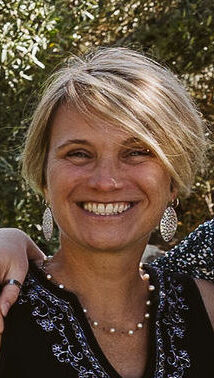
Samantha DeRosa of Farmers Market Management Services. Photo courtesy
In 2015, Samantha DeRosa had just quit working for Charlotte Wine & Food Weekend. Atherton Market had recently rebranded to the South End Farmers Market, and DeRosa asked market manager Lynn Caldwell if she needed any help. Seven years later, DeRosa manages four markets in Charlotte: South End, University City, Cotswold, and North End. She recruits vendors, keeps customers up to date on offerings, and tinkers with the ratio of farmers to food vendors to craftspeople. The markets also host musicians, library programs, and county education initiatives, among other events.
“There’s constant development and change because the farmers market is not only farms and the food system. It’s also economic development and small-business incubation, as well as community engagement,” DeRosa says. “There’s so much going on. It’s not static at all — it’s very, very dynamic.”
Here’s what a day in her life looks like.
6 a.m. “I typically wake up before six,” DeRosa says. “I have a 14-year-old who is a freshman at Myers Park, so the beginning of my day is to get her to school first thing in the morning.”
8 a.m. On Mondays and Thursdays, DeRosa assembles the information for the weekly newsletters for the farmers markets. From her home office, she compiles information from farmers and other vendors about what they’ll offer that week. While some vendors occupy the same stalls at the markets each week, others rotate. “Each one of those vendors produce what they sell, so we don’t have anyone reselling anything at our market, whether it’s produce, clothing — it doesn’t matter. Anything that’s sold at our farmers market is created by that person,” she explains. “To create a newsletter, I’m reaching out to everyone to see if they have any changes in their product offering, and then I’m also reaching out to the 10-15 people that rotate through our market that aren’t there every week, to confirm that they’re still planning to be there.”
DeRosa has a high school intern who helps coordinate the markets she can’t attend herself, since three of the markets she manages operate simultaneously on Saturday mornings. “I’m really only required to curate the vendor mix and the farmers,” she says. For example, “the board of directors at the Cotswold market manages the rest of the day themselves, so they identify who’s going to put up tents, who’s going to be on site to coordinate for the day, and all those things.”
11 a.m. “My day normally moves into working on some type of food system project,” she says. “I’m working with a team across the state to build a farmers market network. I’m really excited about that.”
2 p.m. “Because I work from home, I get to make my own lunch,” DeRosa says. “Myers Park gets out at two o’clock so I go sit in the car line to wait for my daughter to get out.”
4 p.m. DeRosa typically schedules meetings around town in the afternoon. For example, she says, “this week, I have a couple of meetings with University City Partners and the South End division of Center City Partners to talk about various projects that they’re supporting for the farmers market.”
Farmers markets depend on connectors like DeRosa. In addition to coordinating with neighborhood booster groups and existing vendors, she’s active in the community to recruit new farmers and artisans. South End is a popular, visible market, so in that case, prospective vendors often come to her. She fields applications, schedules rotating vendors, and ensures that there’s an optimal blend of farmers and other types of sellers.
DeRosa describes what she looks for in a potential vendor: “They have to produce the products that they intend to sell. They have to be a registered business, so I know that they’re paying sales tax. They have to be registered with the state, with a tax ID. And they have to have their own insurance.”
She adds, “We try to keep a handle on the types of products that are presented, and there’s certain items that I don’t quite understand the regulations for well enough to allow them into market in any quantity. And I don’t have licenses for any type of alcohol sales, so we avoid any producers like that.”
Farmers are scarcer. “There are not enough farmers in the local area for all of the farmers markets that we have,” DeRosa says. Many farmers operate stalls at more than one local market. “I do a lot of cold calling of farmers, when I come across their name and contact information,” DeRosa says. “I also reach out to the North Carolina Cooperative Extension agents in the counties surrounding us and ask if they have any farmers that might be interested in new markets.”
5 p.m. DeRosa’s daughter, Josie, is a “soccer superstar,” and DeRosa takes her to practice three afternoons a week. “She’s also on the Myers Park wrestling team, so she has weightlifting twice a week,” she says. “And then jiujitsu, so I do a lot of driving around for her.” DeRosa often hangs out and reads during Josie’s practices. Her latest book is Michael Pollan’s The Omnivore’s Dilemma.
7 p.m. Unsurprisingly, DeRosa gets a lot of her groceries at the farmers market. Throughout her workday at home, she preps here and there so dinner can come together quickly. “Tonight,” she says, “we’re having — Mano Bella had given us pasta and a pumpkin pesto that we were going to do with chicken and then mizuna salad with Blue Goat [Dairy] cheese and cranberries.”
It’s an autumnal meal, a harbinger of the end of the year’s market season, which wraps up at the end of October. During the season, DeRosa typically works six days a week, but she cuts back to four or five days a week when the season ends. Her husband, Billy, owns SilverDuck Tree and Yard Services, whose business picks up in winter. “I do a whole lot more stuff for the SilverDuck in November and December because that’s the tree banding season,” DeRosa says. “Then in January, February, and March, we do a lot of planning for the next year, like grant writing for food demonstrations.”
This winter, DeRosa will have even more on her plate as she works to launch the statewide farmers market network, but she still finds time to relax.
[Read more about DeRosa’s USDA grant to build out a North Carolina farmers market network.]
“Sunday is normally, as much as possible, a day off,” she says, “where I personally sit around and watch as much football as possible.”
Sam Diminich of Your Farms, Your Table
NoDa Brewing’s Chad Henderson
Bruce Moffett of Moffett Restaurant Group
Alyssa Wilen of Chef Alyssa’s Kitchen
What the Fries’ Jamie Barnes and Greg Williams
Kindred’s Katy Kindred
Freshlist’s Jesse Leadbetter
300 East’s Ashley Boyd
Aria and Cicchetti’s Pierre Bader