

July 25, 2019
The importance of restaurant design
We spoke with restaurant designer Carrie Frye for tips and trends

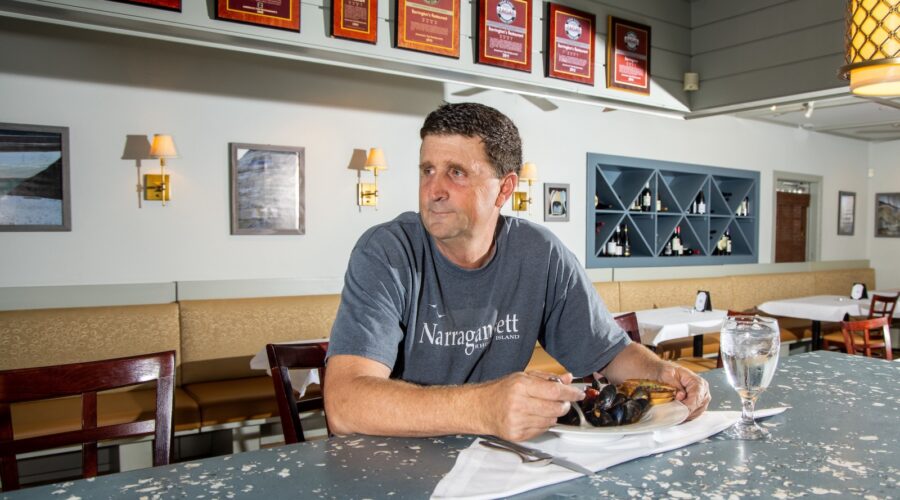
The Waterman in Sedgefield is one of the many restaurants designed by Frye. Kristen Wile/UP
The design of a restaurant is one of its most important aspects — and oftentimes, overlooked. The right interior can tie a restaurant together, creating a cohesive experience. We spoke with Carrie Frye, who has been working on restaurant design in Charlotte for 20 years and is responsible for the interiors at La Belle Helene, The Crunkleton, and the Waterman, about what makes a restaurant look and feel great. —Kristen Wile
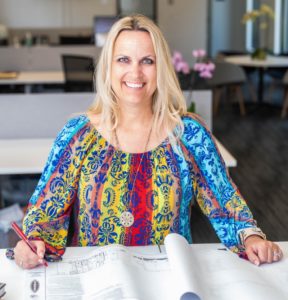
Carrie Frye, owner of Carrie Frye Interior Design. Photo courtesy.
Unpretentious Palate: Why is the design of a restaurant important?
Carrie Frye: It’s all part of the experience. It’s a brand, not unlike your office or your home. … It’s an experience. It has to have a strong brand and speak to that.
UP: What restaurants are you a regular at?
CF: That’s a good one! I live in Dilworth, and spend a lot of time at Foxcroft Wine. … I also love Fran’s for lunch. You’ll find me there a lot. Fran’s for lunch, Foxcroft for dinner. And wine.
UP: At what point in the restaurant planning process do you get involved?
CF: A lot of times early on, and in some cases they’ll come to me and they’ll say, ‘Hey, we’ve got this name, we’ve got this idea for this concept, we want it to be casual or we want it to be upscale, and this is our target demographic,’ then we’ll pick it up right from there. So it’s really from the very beginning.
UP: What are some of the things that first-time restaurant owners often overlook?
CF: A lot of times it’s — I don’t want to say budget, because that is often the case — they don’t realize how many surfaces there are. They want the bar to be really dynamic and they want the dining room to be really dynamic and they want the bathrooms to be really dynamic, and they might only have enough money for one of those three. Or putting too much stock in one of those and not enough in all three, for example.
Also, I think sometimes flow in the restaurant. They understand how the food’s going to come off the line, and that’s very specific and which stations, which fryer needs to be next to what flat top, et cetera. But they don’t necessarily think about it from a service, like once it leaves the kitchen, how does it get to where it needs to go? How does it get back to the kitchen? And the views into all of those things. It’s like, ‘Hey, we need a server station for the patio.’ So we put it right out front and center, and then that’s the first thing you see when you walk in the restaurant.
UP: What do you recommend if someone is opening their first place in terms of the necessary budget to do design right?
CF: It’s all over the board. I think a lot of it depends on what it is you’re doing. You can do a lot with color and a lot with texture on a budget for sure. I think the Viva Chicken guys are a great example of that. Their very first Viva Chicken, they did on a super shoestring, like it was on a thin shoestring. But they were smart enough that they put in some bright colors and some neat sort of cardboard texture on the wall that they painted and it just looked super cool. Of course, their food was great and service and all that, but it made for a complete experience, so then they were able to approach other folks and take that show on the road, as I like to say, and expand it.
UP: Are there some restaurants you haven’t worked on that you’re impressed with?
CF: There are for sure. I like some of the ones that are happening in South End that I haven’t been a part of, I think those are just great, everyman, you can come dressed up you can come dressed down and they’re approachable. I like that about a space. I love a lot of the rooftop spaces. I’d love to be involved in one of those, because I think there’s such an energy that you get from that.
UP: It seems like the industrial, exposed brick trend is still going strong. How can restaurants stay on trend but differentiate themselves so not every place looks the same?
CF: A lot of it comes back to your brand and trying to say okay, what is it we want to be known for? Who are we really targeting? … What’s nice about the industrial and why it’s hung on so long is because it can be found in a lot of spaces, so you don’t have to create it. So it’s a budget helper, you know? If you walk into one of these old warehouses and it’s got a giant brick wall, that’s a bonus, right? You’re not going to cover that up. Especially in a lot of these areas that are being rehabbed and redone, where you get the wood floors and the wood structure and maybe the brick walls and it’s done. Maybe you throw up a couple lights and build a bar and you’re good to go.
You have to constantly be thinking about materials, too, and how else can we use this? And certainly you’re not going to put brick on a ceiling, right, because that would be weird. Brick is too heavy to go on a ceiling, but what other material? Tile? But does it tie in to what you’re trying to do and your brand?
You can also make it part of the experience. Maybe you’re not really doing anything different in terms of the décor, but how your service is presented or the flow of the space, the indoor/outdoor experience. There’s more lounge seating or something as exposed to actual dining tables. I think it can be done in a couple of ways.
UP: What trends do you think we’ll see next in restaurant design?
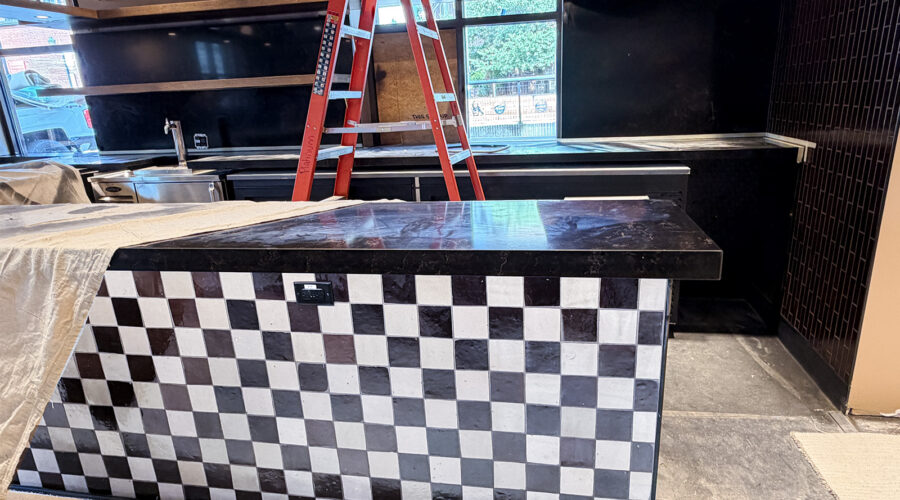
CF: I think more darker colors is going to be around for a little bit, but I do think definitely more, you’re not just there to eat. I think everybody is looking for the can you eat, can you drink, could you have a meeting? I wouldn’t be surprised if we start seeing more private areas that could be opened up to the dining room, or not, so that you’ve got spaces where you can come and spend a whole day there and have the experience in different aspects. You could potentially meet somebody for a meeting, then move over to the bar, then maybe meet somebody for dinner and you haven’t left the space.