Hidden gem in Charlotte’s Oakhurst neighborhood where the menu is as creative as the food
Hidden gem in Charlotte’s Oakhurst neighborhood where the menu is as creative as the food


The Foodie School celebrates five years of classes and competition in Fort Mill
By Ebony L. Morman
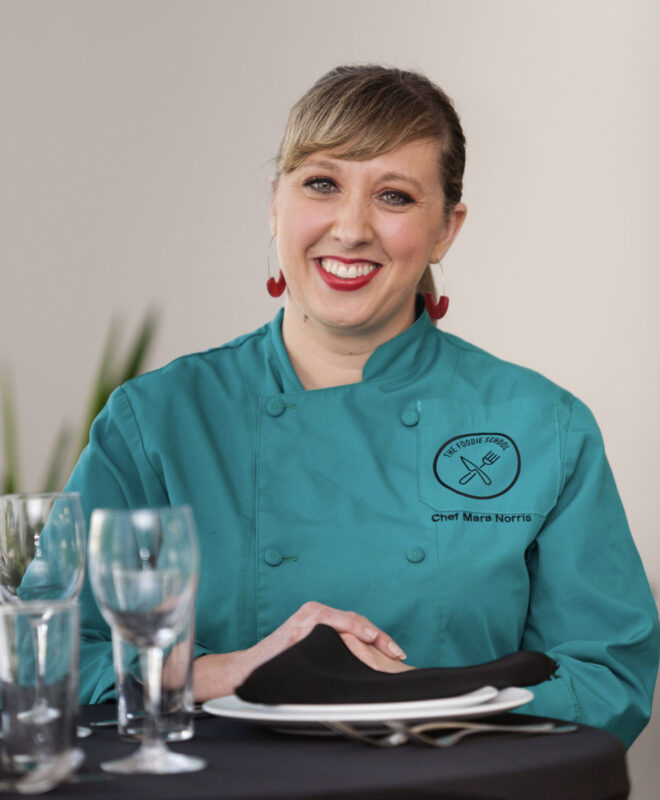
Before she opened The Foodie School, chef Mara Norris taught voice lessons in Greensboro, led cooking classes at Whole Foods, and ran a full-scale culinary program inside a grocery store. But even before that, she was a kid in New Hampshire who learned to cook by helping her mom make dinner for the family.
Norris’ first career was in music. She studied classical voice in college and spent more than 10 years teaching and performing. In 2010, inspired by Food Network Star, Norris started filming her own cooking videos and eventually enrolled in culinary school in Jamestown. From there, she let food take center stage. She led her school’s Knowledge Bowl team, taught community classes, and eventually became director of the Salud Cooking School at Whole Foods in Charlotte in 2014.
When the pandemic caused that program to shut down in 2020, Norris didn’t let that stop her. Instead, she figured out how to open a business of her own. This month marks five years since The Foodie School opened in Fort Mill.
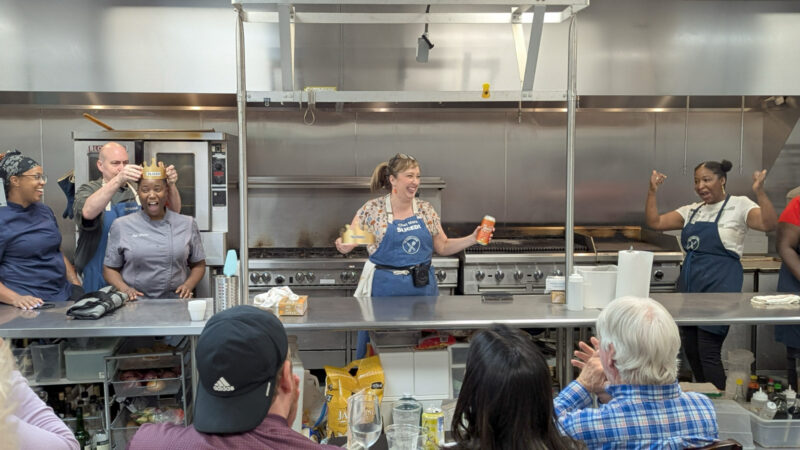
We spoke with Norris about how the cooking school got its start, some of its most sought-after classes, and what makes her Sliced! competition (think Chopped, only there’s two teams of local chefs and attendees select a winner) so wildly popular.
Unpretentious Palate: Where does your love of food come from?
Mara Norris: My mom had us in the kitchen with her, like from the time we could hold a spoon. She was very into cooking. In her day, she was a very adventurous cook. But oftentimes, I had to cook because I had two little brothers, and somebody had to make dinner. So that was a lot of it too, is, having to learn how to do that at a very young age and make sure everyone was fed. I always loved it as well. It wasn’t just something I had to do. I remember being 10 or 11 and making pancakes from scratch. At 12, I was making apple pie from scratch by myself, too. That’s a definite food memory: making pies.
UP: What was the inspiration for The Foodie School?
MN: Essentially, it was doing what I was already doing. We spent six or seven years building all those classes [while at Salud] and building the structure, the recipes, and the relationships with people. I didn’t want to stop doing that. So we took a very similar model and just opened up a cooking school myself. I wanted to continue on doing what I was doing before.
UP: What’s the most interesting class you’ve held this year? What makes it stand out?
MN: We just started a couple of new ones. We started doing a Brazilian steakhouse, and then we started doing a Korean barbecue class. And those two have really kind of taken off, so those have been fun. We did an Asian street food class that I really enjoyed. I like delving into different cultural cuisines and learning things that I might not have seen before. That’s kind of fun and exciting for me.
UP: How do you come up with recipes?
MN: At this point, we have a stock of thousands of recipes. If we do any brand new recipes that we haven’t done before, I always test them. I don’t just go in blindly. We always test the recipes and sometimes we’ll do tweaks on them and do our own little spin on it, just to make things easier for the students to achieve. We want people to actually be able to recreate the thing at home.
Guests receive a recipe packet in their email and we always tell them that if they have any questions after the fact, they’re always welcome to email us. And we do have some students who email quite a bit.
UP: What are three words that best describe a Foodie School experience?
MN: Fun, delicious, and edutainment. They’re learning something, but we crack jokes all the time, and we try to make things very fun, light, and not super serious.
We take away a lot of the kind of annoying parts of cooking, which is the prep and the getting of the equipment, so when they’re there, they can learn the technique without having all the stress and strain. Our biggest goal is creating a delicious meal during the class.
UP: Tell us more about the Sliced! competition.
MN: It started in 2014. When I was in culinary school, I was into the whole competition thing, and I just had the idea that I wanted to do a competition at Salud. So I started doing it there. We’ve been doing one a month since September 2014. We did take a little break during COVID.
UP: How do you go about getting chefs to compete?
It’s been an evolution. When I was new to Charlotte, I didn’t really know a lot of people. I reached out to the American Culinary Federation and a couple of folks reached back out to me and they helped me find people. From there, it just kind of snowballed. I became a member of the Piedmont Culinary Guild. Then people just got to know about the competition. We have lots of people that have been doing it for years and years. We have lots of people who come in one time. We’ve actually had to fill in from time to time. I just had to do one course for the first time in the whole 11 years because one chef didn’t show up. Each of our chefs here took one of the three courses. We lost though but it happens.
UP: Why do you think Sliced! is so popular?
MN: People see these chef competitions on TV, and they enjoy watching them. I’m not a sports person, but I think people like watching people compete. They enjoy the excitement of it, and the creativity when it comes to food. The problem with watching it on TV is you don’t ever get to taste the food. So that’s the biggest draw. People get to come, taste everything, see what’s happening close up, and judge who the winner is. It’s an exciting thing to watch people do that close up and there’s not really anything else like that happening.
UP: What are your most popular classes?
MN: Our two most popular classes are homemade pasta and sauces and our sushi workshop. Those ones typically are always sold out. Everyone loves pasta and sushi is just a fun class, something you don’t do every day.
Also, these two classes almost seem like something that’s unattainable for the home cook. They see these things on TV and social media, and it seems so unreachable. Or maybe they’ve even tried it at home and have not had great success because they haven’t had someone guiding them. You can watch a million YouTube videos but being guided by someone and getting feedback is helpful because a YouTube video can’t see what you’re doing. A big part of the hands-on experience is that you have someone there.
UP: What’s your favorite aspect of The Foodie School?
MN: One of my favorite things is when I see people get it, when I impart some type of information, and they’re like, ‘oh, wow.” It’s the aha moment. They’re like ‘I can do this.’ It’s about empowering people and showing them that it’s not some unachievable thing. I really love to cheer people on and say, ‘Yes, that’s great. Perfect. You did it.’