


Editor's Note: This story is unlocked for everyone to read courtesy of the CRVA, our partner in nourishing culinary exploration for residents and visitors of the Queen City.
August 18, 2026
When dinner becomes the show
How Blumenthal Arts is redefining the guest experience
by Cierra Lannon
At Blumenthal Arts, the idea of a night at the theater is evolving into something more.
It may include a magician performing at the dinner table. It might pair wine with comedy and conversation. Soon, it will involve a three-course meal that is woven directly into the plot of Clue: Murder on the Menu.
For Blumenthal, these aren’t simply ways to make a night at the theater more memorable. They’re part of a larger effort to rethink the relationship between audiences, artists, and the experiences surrounding a performance. Tom Gabbard, Blumenthal Arts President and CEO, shares excitement about their exploration phase.
“We’ve explored ways to expand the definition of what the arts are, who the artists are, and where art happens,” he says.
That idea has become increasingly relevant as Blumenthal experiments with food and beverage programming. Food isn’t being treated as an amenity that happens to accompany the arts. It’s becoming another medium through which audiences can connect with artists, with each other, and with the city around them. Food and beverage can fuel an exchange of ideas. The culinary component doesn’t have to sit beneath the artistic one.
Gabbard has a simpler way of putting it: “Chefs are artists, too. Food is part of the artistic process,” he says. “People who are good at it are true artists.”
A meal naturally creates conversation. It slows people down. It gives strangers a reason to sit together and exchange ideas. Those qualities make food a natural companion to live performance – and, increasingly, part of the performance itself.
A Different Kind of Audience
The shift is also changing who comes through Blumenthal’s doors.
Traditional theater can come with expectations: You buy a ticket, take your seat, then quietly sit and watch. Immersive and culinary experiences offer a different entry point, particularly for people who may not consider themselves regular theatergoers.
Blumenthal Arts’ Magician’s Table, which ran from November 2025 to February 2026, was an early example. Rather than putting the audience at a distance, the immersive event placed them directly inside the action. The format attracted people who were intrigued by the experience itself, including some who might not otherwise have considered attending a traditional theatrical production. Caro Tanghe, Senior Director of Hospitality & Guest Services at Blumenthal Arts, sees that shift through the lens of thoughtfully planned experiences.
“People increasingly want immersion, connection, and experiences they couldn’t easily recreate at home,” she says.
Tanghe’s hospitality background has shaped the way she thinks about what happens before, during, and after a performance. The audience doesn’t have to remain passive.
“People want to be kinetic; they want to engage with the environment and with one another,” Tanghe says. “When we incorporate these experiences with theater, dinner becomes the show rather than dinner and a show.”
The Connector on the Table
Food and beverage may be particularly well suited to pair with a live experience because of what it already represents in people’s lives. It is tied to family, culture, celebration, and friendship. It can be deeply personal, but it is also inherently social.
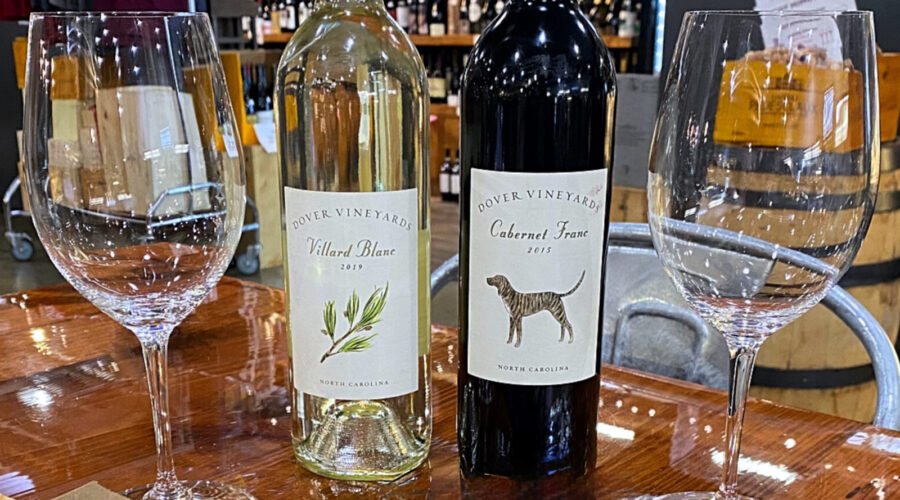
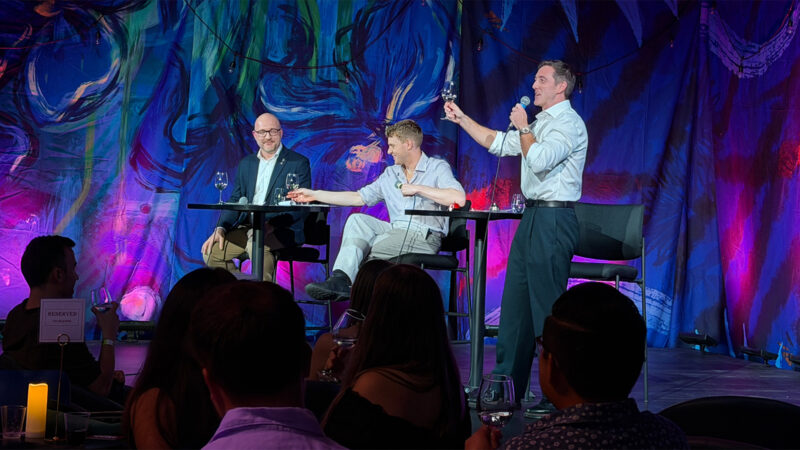
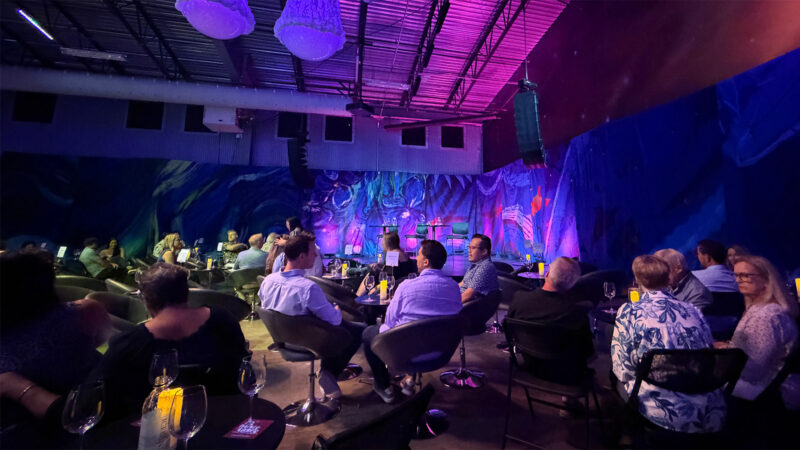
That’s part of what made In Pour Taste at Blume Studios such a natural experiment. The program combines a wine tasting, comedy show, and audience conversation, bringing together comedians and local wine experts like Michael Klinger, sommelier for restaurants in the Tonidandel-Brown Restaurant Group, including Supperland, Ever Andalo, and Lelulia Hall.
Audiences gather around shared tables for a five-wine tasting, guided by comedians who poke fun at the wine industry’s famously “pretentious” reputation. Klinger, appeals to audiences in a format that doesn’t make wine feel formal or intimidating. The show’s comedic hosts for the second Charlotte run, Liam Jeavons and Jacob Jackson, embrace the audience as an ever-changing, essential part of the show.
“You could see this show every day for the rest of our run, and none of them would be the same,” Jeavons says.
With audience reactions to the wine selections and the jokes told, the experience is unique in the power the audience holds to shape the show. “The audience is the biggest inspiration for us. They give us new material every night, which is just such a blessing,” Jackson says.
Measuring More Than Ticket Sales
This new approach gives Blumenthal a different way to think about success.
A program like In Pour Taste can be evaluated by attendance and revenue, but those aren’t the only numbers that matter. The larger question is who showed up. Did someone who had never purchased a Blumenthal ticket come because they were interested in wine? Did someone who wasn’t looking for a conventional theater performance discover a new way into the organization? Those first-time visitors represent something more lasting than a single transaction.
Gabbard speaks hopefully about making new friends, a catchy way to describe the strategy. “We love seeing our loyal fans there, but what really makes us smile is when we’re making new friends,” he says.
Blumenthal’s loyal audiences remain important, but reaching people beyond that existing circle indicates that the organization is expanding the definition of what an arts experience can be.
Dinner, Now Part of the Plot
With Clue: Murder on the Menu, running October 9 – November 22, 2026, Blumenthal is taking that idea another step. Clue is a dinner-theater experience centered on a world premiere in Charlotte, with producers from London and New York, and then touring across North America.
The production incorporates a three-course meal directly into the narrative. The food isn’t simply something served before the performance or during an intermission. It is part of the evening’s structure.
This isn’t theater plus dinner. The dinner helps create the theater.
Building that experience has required an unusual level of behind-the-scenes collaboration. The production is being developed from scratch, with weekly meetings bringing together the producer, hospitality team, caterer, and operations staff.
Timing matters. Service matters. The food has to fit the story, while the story has to accommodate the realities of serving an entire room.
That process has allowed Blumenthal to develop something distinctly its own rather than simply reproducing a conventional dinner-theater format.
It has also created an opportunity for a local Charlotte business, Roots Catering. Roots began in Charlotte in 2011 as a food truck before evolving into a South End cafe and full-service catering company. This project represents a chance for the company to take on a major production and work alongside an arts organization on an experience that neither could create independently.
The collaboration illustrates another part of Blumenthal’s approach. Innovation doesn’t necessarily happen by bringing in something finished from somewhere else. Sometimes it happens by putting local people and ideas in the same room and permitting them to experiment.
Charlotte as a Creative Partner
The local focus runs through much of Blumenthal’s food and beverage programming.
Magician’s Table has featured local magicians. In Pour Taste brings local wine expertise into the experience. Other events at Blume Studios, including a Top Chef celebration earlier this year, have created opportunities for Charlotte chefs and mixologists.
The result is a two-way exchange. Blumenthal gets to introduce audiences to talent from the city’s culinary and creative communities. Those businesses and artists get a platform to reach people they might not otherwise encounter. It’s also a way for Blumenthal to reflect the city around it.
Charlotte’s food, hospitality, and entertainment scenes have grown increasingly sophisticated, and Blumenthal can act as a meeting place for those communities.
“Working in the restaurant industry is like working in theater,” Klinger says. “Every night is different.”
Gabbard’s earlier emphasis on curiosity is central to that role. An arts organization can encourage people to try the restaurant they’ve never visited, listen to an artist they’ve never heard of, or participate in an experience that falls outside their normal definition of a night at the theater.
What’s Next
The experiments are beginning to point toward a broader ecosystem.
A new program in the works, Layers of Reality, takes a different direction, combining large-scale production with a one-night culinary experience and a creative team from Barcelona. The boundaries are becoming less rigid: theater can become immersive. A meal can become narrative. Hospitality can become storytelling. Technology can become part of a live performance. A restaurant, caterer, or local chef can become a creative partner.
For Blumenthal, the common denominator is the guest. The organization is increasingly interested in what happens when audiences leave their familiar roles and become participants in an experience – when they have something to taste, someone to meet, something to solve, or something unexpected to discover.
The goal isn’t simply for guests to remember what they saw onstage. It’s for them to remember what they felt, who they met, what they tasted, and the experience they shared.
“If it encourages people to be curious, to be bold, and step out and try something different – that’s a good thing,” Gabbard says.
“Ultimately, I think it will fuel their own satisfaction in life that they’ve discovered new things.”