


October 14, 2026
Inzio Pizza Napoletana is always on the clock
For Grant Arons, time is just as important as the ingredients
by Ebony L. Morman
At Inizio Pizza Napoletana, a typical pizza spends about 90 seconds inside an 800-degree oven. Once it comes out, another clock starts.
Within the first minute, steam rises from the pizza as moisture begins to escape, owner Grant Arons says. The crust still has some crispness, enough that you can hear the crunch when a pizza cutter passes through it, but the pizza has already started changing.
If the pizza sits before reaching the customer, those changes continue. Five minutes after leaving the oven, the dough has absorbed more moisture, softening the center and taking away some of that initial crispness. By 10 minutes, the thin Neapolitan pizza has cooled considerably, and its crust has grown softer still.
“You want to get your first bite within the first five minutes of any style of pizza for maximum experience of how good it can be,” Arons says.
Getting a pizza ready for those first few minutes starts days earlier. Inizio lets its dough sit at room temperature for part of a day before moving it into a cooler for a slow fermentation that lasts a couple of days. The kitchen then brings the dough back to room temperature before baking it.
Managing the 800-degree oven presents its own challenge. When fewer pizzas are cooking, the oven floor can grow too hot and scorch a pizza within seconds. During a rush, pizzas repeatedly pull heat from the floor, forcing the pizzaiolo — a pizza maker — to move them around and give heavily used areas time to recover.
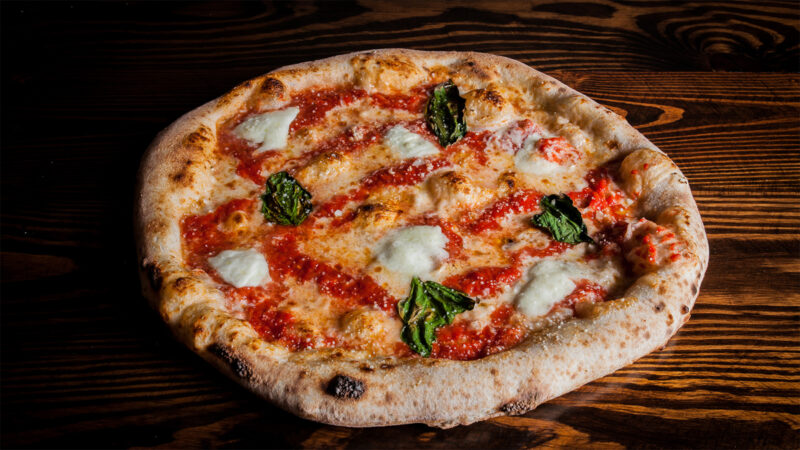
The intense heat also creates one of the defining characteristics Arons looks for in a Neapolitan pizza: leoparding, the dark spots scattered across the crust. As water in the dough turns to steam, the dough rapidly expands and thinner areas darken more quickly. The finished pizza differs from the crispier styles many American diners know.
“It’s never going to be crispy and crunchy like certain New York styles or certain other styles of pizza,” he says. “It’s always going to be soft and elastic, and that really has to do with how it’s cooked at such high temperatures.”
Arons has worked with pizza in the Charlotte area since 2004, when he and his partners took over a pizzeria that became Farley’s Pizza. He later deepened his understanding of dough by taking bread classes and staging at bakeries around the country, where he learned from bakers willing to share their techniques. In 2012, he bought a wood-fired oven for his backyard and began experimenting with Neapolitan pizza before opening the first Inizio in 2016.
After years of experimenting with Neapolitan pizza, Arons knows the changes don’t happen evenly across the pie. The thinner center softens as it absorbs moisture, while the outer edge of the crust, known as the cornicione, holds onto its texture a bit longer.
“You should still have a snap and texture to the very outer sort of shell of the crust,” he says.
As the pizza continues to sit, moisture moves from inside the dough toward the outer edge and gradually softens the crust.
At Inizio, Arons points to the margherita as the best pizza for experiencing those characteristics without other flavors competing for attention. The pizza combines San Marzano tomato sauce, basil, and pecorino with buffalo mozzarella that Inizio sources from Italy’s Campania region. Arons considers the classic a good measure of a pizzeria’s foundation.
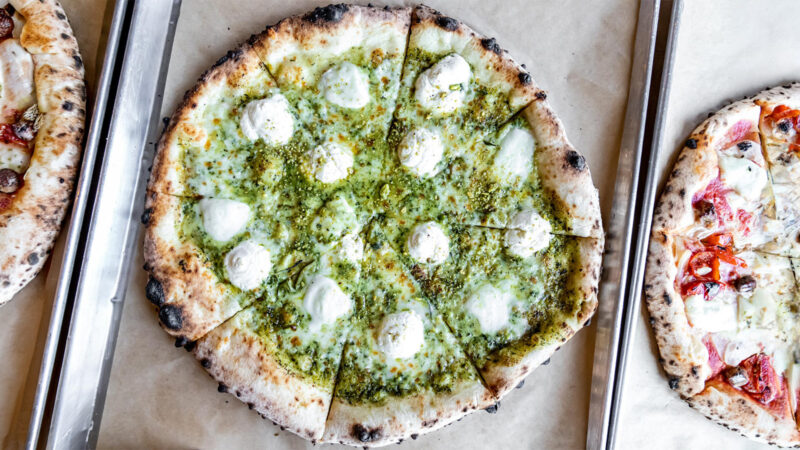
Stronger ingredients can make it harder to focus on the individual components, he says. Inizio’s pistachio pizza, for example, adds rosemary, sea salt, ricotta, garlic, pistachio pesto, and pistachios. With the margherita, the simpler combination puts more attention on the dough, tomatoes, and cheese and how the kitchen handles them.
Another aspect to consider is the pizza box, which can speed up changes by trapping the moisture that would otherwise escape into the air. For customers taking an Inizio pizza home, leaving the pizza uncut can help because cutting through the crust creates more surface area where moisture can work its way back into the dough.
Inizio initially tried putting that idea into practice. When the first location opened, the restaurant sent pizzas out uncut unless customers requested otherwise.
“You better cut my pizza,” he says, recalling the response. “I’ll tell you if I don’t want it cut.”
Customers would arrive home without a pizza cutter and wonder what they were supposed to do with an uncut pizza. Inizio changed course and began cutting the pizzas, but customers can still request an uncut pie if they plan to take it home.
Arons understood the value of letting moisture escape long before he understood the science behind it. As a child, he and his mother regularly drove from their home in Ohio to visit family in South Bend, Indiana. Each trip included a stop at Rocco’s Pizza, where his mother had worked in high school, and they would buy about five pizzas for the eight-hour drive home. She would crack the lid of each pizza box during the drive and freeze the pizzas once they got home. At the time, Arons didn’t understand why. He later realized she was giving the steam somewhere to go instead of trapping it inside the box, where the moisture could work its way back into the dough.
Years later, Arons put a similar idea to the test while developing Finale Pizza, the New York-style pizza concept he opened in early 2025. He wanted that style to retain its crispness longer than a Neapolitan pizza, so he considered how it would taste beyond the first few minutes after leaving the oven. Arons would taste the pizza fresh, then intentionally put another in a box and drive it home before trying it again.
“You have to taste it fresh out of the oven, and then you have to recognize that people are going to take this to go,” he says.
Accounting for what happens inside the box still requires Arons to balance what works best for the pizza with what customers actually want. For example, letting a pizza cool before boxing it could improve the way it reheats, but customers expect to receive their pizza hot.
At Inizio, Arons doesn’t try to make Neapolitan pizza behave like a style it isn’t. Its thin center, short bake, and retained moisture give it the soft texture and bright flavors he wants, even if those characteristics also mean the pizza won’t stay exactly as it left the oven.
The answer isn’t to fight those changes, he says. It’s to understand them and give customers the best version of the pizza for as long as possible. When they have the choice, the best option remains the simplest: eat it fresh from the oven.