




September 28, 2026
The making of La Vecina
Ken Thomas made sure his concept was not “another strip mall taco restaurant.”
by Cierra Lannon
For Ken Thomas, La Vecina’s story began long before the first taco was served. It started with a piece of real estate he had his eye on in a neighborhood he remembered fondly from childhood.
“I’ve always loved this neighborhood,” Thomas says.
He grew up coming from Florida to Plaza Midwood to visit his grandmother. Years later, after spending so much of his childhood in the area, he returned to Charlotte and co-founded Moo & Brew, a burger spot on Central Avenue. When the opportunity for La Vecina came along, the location already meant something to him.
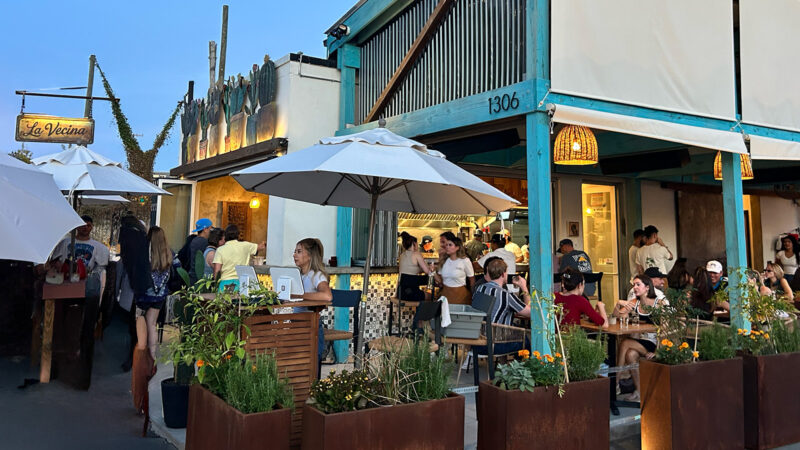
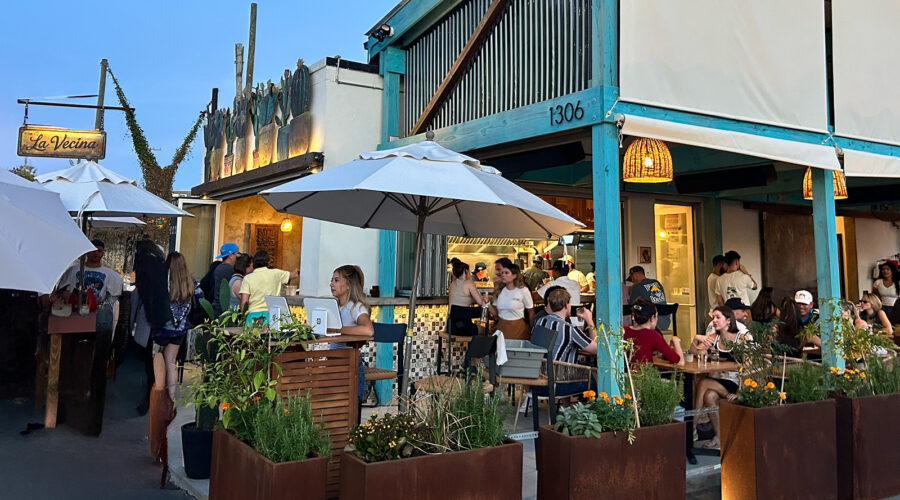
A former sandwich spot and then smoke shop, the tiny 600-square-foot building at 1306 Central Avenue kept Plaza Midwood residents wondering what it would become next. Knowing the right spot for Thomas’ new venture was only the beginning. The next question was what to do with it. Once he started leaning toward a Latin theme, he knew exactly who he wanted to get involved.
“If I want to do this, I want to do it with real-deal people,” Thomas says.
Carlos Nuñez, co-owner of Bocao Sushi, signed on as a partner almost immediately, helping shape the restaurant into what would become an authentic Latin and Mexican concept. From the start, the goal was to create something unique. “A new spot opens in Charlotte every week,” Thomas says. “We wanted to do it real and different.”
They didn’t want La Vecina to feel like “another strip mall taco restaurant.” They wanted it to feel special, but also as if it belonged in the neighborhood. That desire for a unique identity extended far beyond the menu. “The idea was bigger than the actual space,” Nuñez says.
Rebuilding the property became an exercise in discovery. The team overhauled the concrete and plumbing, expanded the outdoor footprint by 1,500 square feet with help from Cluck Design, and began building a space that felt less like a collection of design decisions and more like a character taking shape.
Once the bare bones were in place, Nuñez recalled sanding, welding, and painting different features throughout the restaurant with his team and family. “I’m scared of heights, and I’m up there painting with a rag,” he says. The willingness to make each detail intentional is part of what makes the restaurant feel personal. “Everything is custom-made; nothing is made to order,” Nuñez says.
That curated identity resulted from a handful of unique experiences and inspirations. While struggling to decide on the color palette for the restaurant, Nuñez was running in California when the jump rope he was carrying caught on a bench. The bench’s blue hue now adorns the beams inside La Vecina.
Along the same route, he noticed cacti, train tracks, and the ocean landscape. Those details eventually found their way into La Vecina, including the wooden structure inspired by the train tracks that ran along the oceanside.
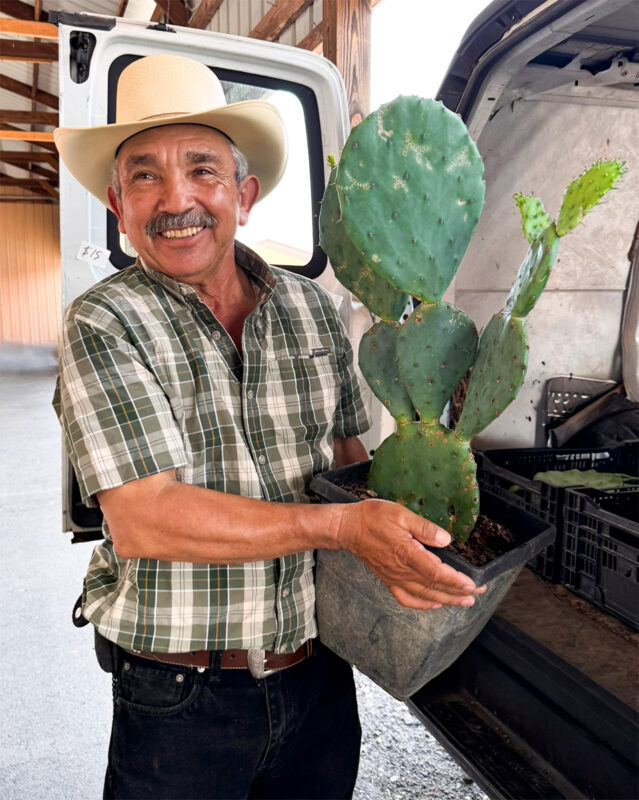
Other pieces were sourced with the same sense of discovery. Nuñez found their cactus supplier, Don Manuel, at a flea market near Steele Creek. Manuel had grown cacti with his father in Mexico. Now, he grows them on his land in York, South Carolina. Even with his years of experience, Manuel was shocked at how well the cacti are doing on La Vecina’s property today. Nuñez attributes that growth to the love poured into the project.
Nuñez and Thomas both feel the experiences that shaped La Vecina weren’t meant to follow a set timeline. “I like doing things that flow,” Nuñez says. “I don’t believe in forcing things. We found the identity of La Vecina – she spoke to us as we were building her.”
The design team was assembled through a network of relationships. Jose Hernandez, who owns Green Branch Construction in Charlotte, connected the team with designer Leo Dowell, whose experience includes work with Walt Disney and bars and restaurants throughout Europe.
Through Dowell’s curation, the bathroom doors feature the carved designs of a 100-year-old door panel from Mexico. The cacti he custom-painted on the front of the building were made from recycled metal. The team approached the lighting with the same level of intention. Tarek Kaouk, owner of Lumen Landscape Lighting, approached Nuñez one day early in the build.
“He said, ‘I want to light up La Vecina,'” Nuñez recalls. “It was about revealing stuff, and not just a lighting company.”
Thomas attributes that experience to the “good fortune of being here.” The result is a restaurant where the details are meant to reveal themselves slowly. There are no televisions. The music is curated and vibrant. The atmosphere centers on sitting, eating, and socializing.
La Vecina began as a walk-up taco stand. People in Plaza Midwood would walk by the restaurant and ask Nuñez and Thomas when the taco stand would finally open. After the frequency of questions and abundance of community support, the answer became something closer to: what if this could be something more? That shift gave the team room to build a more complete experience while keeping the accessibility that was central to the original concept.
“I wanted $5 tacos that were accessible and walk-up friendly,” Nuñez says.
The menu follows the same philosophy. It is rooted in authentic Mexican food while making room for familiar influences – and some from Nuñez’s Dominican heritage. One example is the puerco asado vecina Caribeña, a menu item inspired by a family Christmas dish and one of the few things on the menu that moves beyond the restaurant’s Mexican foundation.
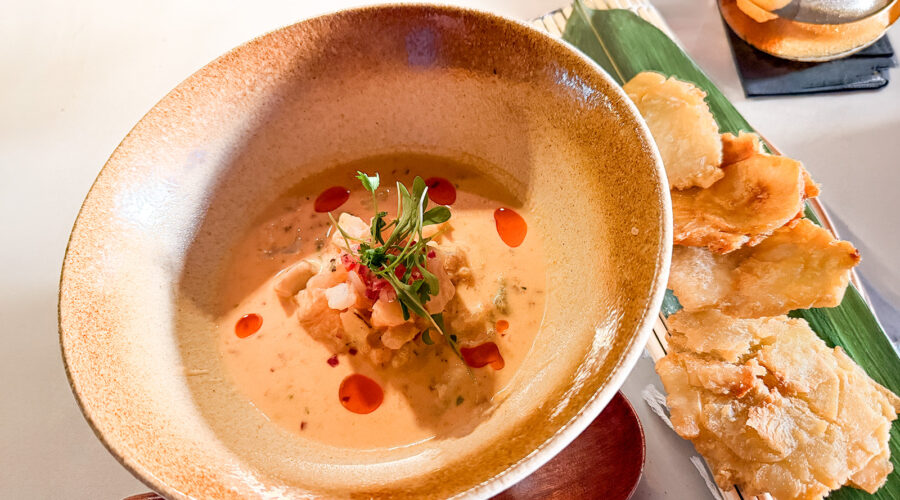
Other highlights include the mahi mahi aguachile with plantain chips and a premium ribeye taco, sliced in-house and served with a green sauce of steamed tomatillos, onion, and cilantro. The food is familiar enough to be approachable, but the details are deliberate.
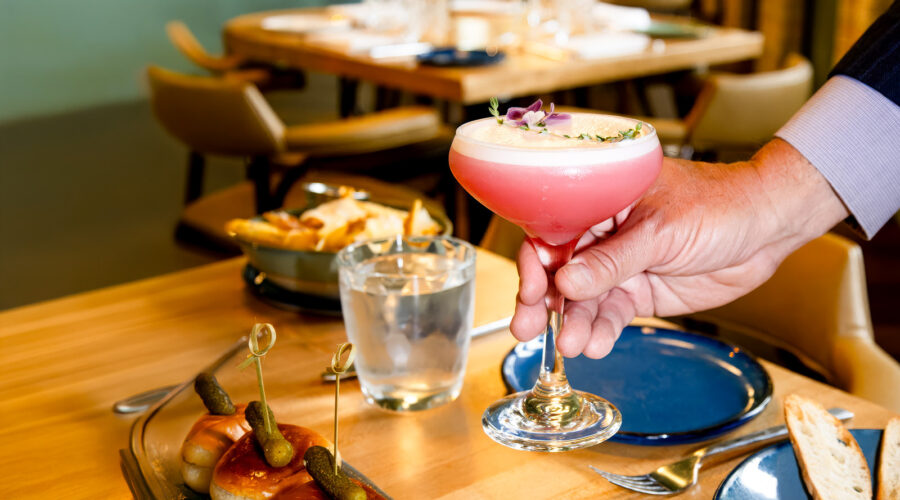
At the bar, homemade syrups incorporate ingredients like ancho and árbol peppers and real cane sugar. Tequila and mezcal are central to the program, while cocktails draw inspiration from Mexican culture.
Inspiration struck the team in multifaceted ways. One niche inspiration was El Chavo del Ocho, a Spanish-language sitcom from the 1970s. The cocktail menu features an Oaxacan Old Fashioned, named after Don Ramón, a character from the old television show who, Nuñez notes, “is grumpy, but has heart.”
The sitcom’s eccentric Latin American neighbors prompted the team to name the restaurant La Vecina, which translates to “the neighbor,” a nod to the communal, lively spirit they wanted the space to embody.
Lunch service will open in the coming weeks, eventually followed by Sunday brunch. The menu will keep expanding beyond dinner and tacos, including an authentic Mexican Caesar salad (according to National Geographic, it was originally created in Mexico).
Already, the community response has shown the team they are on the right track. During their soft opening, La Vecina is serving roughly 100 covers a day. Thomas shares that in looking at their sales, the restaurant served approximately 4,000 margaritas in their first five weeks.
The team chose not to rush the grand opening, instead giving themselves time to let the restaurant settle into itself. They’re planning a grand opening in the spring, perhaps centered around Cinco De Mayo. The restaurant may have started with Thomas wanting a particular spot next to Moo & Brew. But according to Nuñez, somewhere along the way, the spot started telling them exactly what it wanted to become.
“Everyone here merged right in. Everybody was helpful. The city was helpful,” Nuñez says.




That red salsa they make is so dang good. We stopped this past weekend to sit by those incredible cacti that look like they’ve been there for years and enjoy a drink and while it wasn’t dinner yet, our server offered green and red salsa with guacamole which was delicious.