





September 1, 2022
The birth of North Carolina wine country
Behind the shift from tobacco fields to vineyards
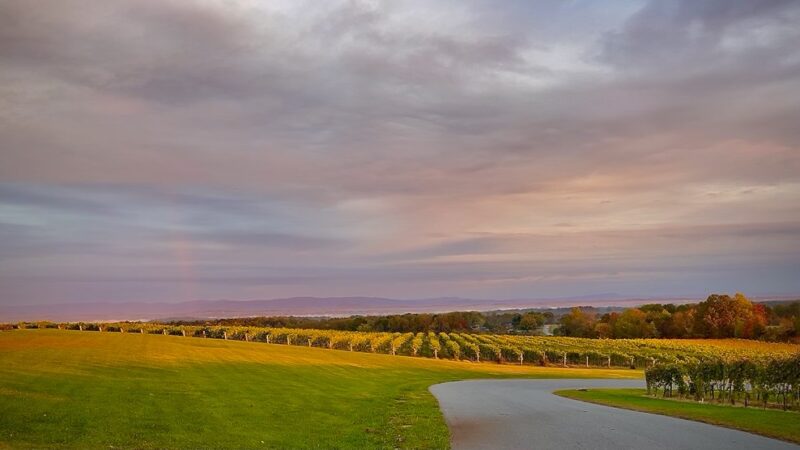
The vineyards at Raffaldini Vineyards, which specializes in Italian grapes. Photo by Thomas Salley
Growing grapes to make wine has been an integral part of North Carolina’s agriculture scene since the 1700s. There are about 200 wineries in the state, and even more grape growers. Many consumers assume that most of the wine made in N.C. is produced from scuppernong or muscadine grapes. While those grapes are still beloved by many consumers, they are falling in production volumes as compared to wines made from vitis vinifera – grapes like merlot, chardonnay, riesling, and viognier.
North Carolina was a dry state from 1908 to 1935; nationally, prohibition lasted from 1920 to 1933. Religious groups were opposed to alcohol, as they saw it as a source of crime and bad behavior. Many of the European settlers in North Carolina were from Scotland, Ireland, Germany, and England. They were mostly Protestant Calvinist, Lutherans, or Quakers, all of whom frowned on alcohol consumption. As the state imposed prohibition, most of the wineries and breweries closed. The only alcohol produced was spirits-based, and that was produced in illegal stills. The knowledge of winemaking in the state disappeared for a few generations; grape growing and winemaking returned after WWII.
At that time, most of the production was from native grapes. In the 1990s, the federal government started a campaign to reduce smoking among Americans. In conjunction with an education campaign, and a push for cigarette producers to be more forthcoming about the cancer risks from smoking, the tobacco farmers were asked to reduce production. North Carolina was, and is, the largest producer of tobacco; cutting their production would have had dire consequences for the farmers. The Feds offered to give tobacco farmers money to stop planting and to revamp their land to grow other crops. The Shelton brothers of Shelton Vineyards and a number of other farmers in the Yadkin Valley, realized that grapes would grow well in our state’s clay soil. The start up problems with vine selection were many. Producers wanted to grow household named grapes like cabernet sauvignon or chardonnay, but our humid late summer climate was not conducive to those grapes, so some growers had to tear out the vines and start over. The growers’ persistence has paid off.
The Shelton brothers and Richard Childress, two of the largest wineries in the state, figured out the best grapes and environments for our many microclimates. The Sheltons also underwrote an oenology program for Surry County Community College, which has been quite successful in training new vineyard managers and winemakers to work in our climate. As a result, North Carolina is listed as fifth in the U.S. for wine tourism.
Wineries are located all over the state. I built a couple of suggested itineraries for a day in wine country, going in a couple of different directions. We’ll start with the Western Yadkin Valley and Swan Creek AVA. Find our first wine guide here.















Fascinating! I also appreciate the guides, Anita.