

February 17, 2022
Small dining room. Big problem?
Cozy restaurants present obvious — and unusual — pandemic challenges
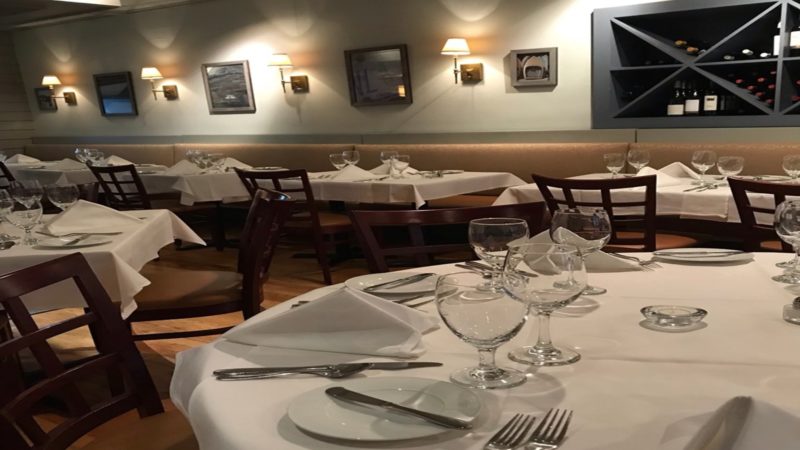
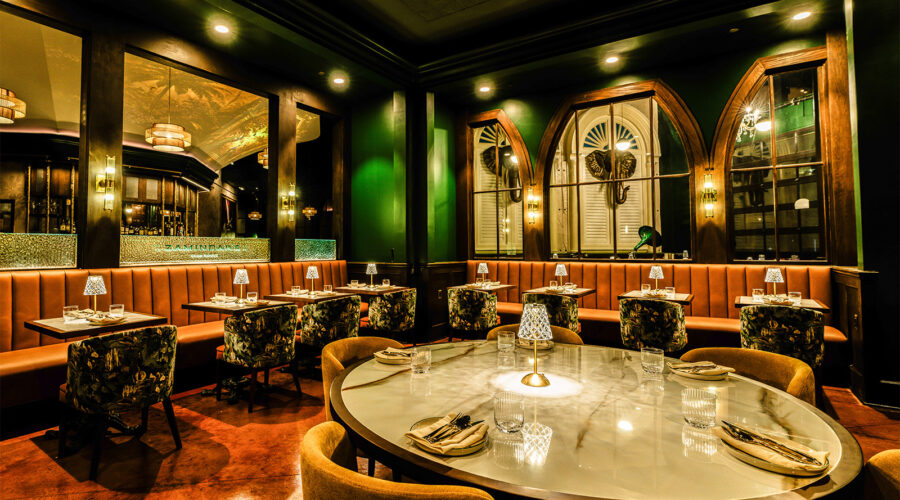
At small restaurants like Barrington’s, spreading diners out was one of many challenges during the pandemic. Photo courtesy
In 2020, COVID very quickly made a certain style of dining unpalatable: elbow to elbow with neighbors, leaning close to make conversation in the lively din, jostling with strangers to catch the bartender’s eye. Restaurants once popular for their intimate settings had to battle the same challenges every other restaurant faced — and adapt to diners’ new preferences and health concerns.
When Barrington’s reopened at half-capacity in 2020, staff could only serve 25 guests per seating, a crowd smaller than at some families’ Thanksgiving dinners. “It definitely felt a little bit weird,” says owner Bruce Moffett. Management had to cut front-of-house positions. “There just weren’t as many hours available.” Now, Moffett faces the opposite problem. As at nearly every other restaurant, staffing has become a significant challenge, but as a fine dining restaurant, Barrington’s has an even tougher time finding candidates with experience and expertise.
The shift to half-capacity and back also exacerbated an ongoing tug of war between customers, who by and large loved the big, spaced out tables, and management, which has to maximize capacity to make the numbers work. “Each chair is revenue, so the more chairs you can get in there, the more revenue you can produce,” Moffett says. “With all the stresses because of inflation, you need those seats.” When Moffett’s restaurants cut capacity, revenue nosedived: Barrington’s was down by 34 percent compared to the previous year; Stagioni, 30 percent. Revenue at Good Food on Montford plummeted more than 50 percent.
The seating skirmish between customers and management predates the pandemic. “I’ve never been in a city where people are more concerned with their table location and size in my entire life,” he says. “It’s crazy. It’ll just ruin their entire meal.” But over the last two years, the situation has worsened and customers are quicker to complain about their seating arrangement.
The reduction in dining space took a predictable toll on revenue. To offset the damage, Barrington’s opened its patio and tried to make better use of its limited outdoor space, a pivot reflected around town. In Plaza Midwood, in the first year of the pandemic, Dish, which is small but not as intimate as Barrington’s, also remade its patio into a full-service dining area. Next door, The Pizza Peel and Tap Room expanded its al fresco options, too. In South End, cozy ramen bar Futo Buta closed its dining room and relied solely on takeout and its small patio space. Two years later, the dining room remains closed to customers.
Though restaurants are now allowed to operate at full capacity, attendance remains difficult to predict. Cancellations have skyrocketed, leading some restaurants to impose reservation and cancellation fees. For example, the Royal Tot, a newly opened tiki bar in the Belmont neighborhood, charges $3 per person to make a reservation and $20 per person if the reservation isn’t canceled more than 24 hours in advance. The bar also imposes time limits based on party size, an approach that Sister, which replaced KiKi Bistro in Plaza Midwood, also adopted.
Barrington’s opted not to take that tack. How can you charge someone, Moffett wonders, when they just called to tell you they’ve been diagnosed with COVID? “It’s a nice threat,” he says, “but it’s not worth the actual headache to go ahead and charge the cards.” For other restaurants, like Soul Gastrolounge, reservations aren’t worth it at all. The space is simply too small and not configured for a reservation system. Instead, owner Andy Kastanas says, Soul launched a system that allows guests to join the waitlist from home, so they don’t have to crowd the restaurant while they wait. Before opening Sister in January, Kastanas reconfigured the old dining room at KiKi to accommodate diners’ tastes, replacing the restaurant’s booths with more spaced-out tables and chairs.
The challenges go beyond crowd control. Kastanas says supply chain issues have affected how his restaurants, including Soul and Sister, procure inventory. “When we find something, we’re having to buy more of it because we don’t know when we’re going to get it again,” he says, and that means storage constraints. The restaurants are located in a historic building — no warehouses included. Inventory stacks up in the back, a logistical challenge not only physically but economically. “Inventory is expensive,” Kastanas explains, “and it restricts cash flow. That’s not something you really want to do in the restaurant business — you only buy as much as you need, because you don’t want money sitting on the shelves.” When cash is tied up in inventory, it’s not available for unforeseen expenses or other needs, like building out a sister restaurant.
Liquor shortages mean that Barrington’s stocks up whenever possible, and that means buying product in whatever size is available, even handles. But the large bottles don’t fit easily in the bar’s limited space. Staff have to find a way to edge them on the narrow shelves anyway — or store them however they can.
But aside from a few space-related problems, Kastanas and Moffett cite the challenges that plague nearly every restaurant these days. Everything, from inventory to staff and customers, has become more unpredictable than ever. The stakes of dining out are higher, as guests weigh health risks and higher prices. As with every hurdle over the past two years, restaurateurs must adapt as they go, a challenge that’s tougher now but not altogether new. “At Soul, since we’ve opened, we’ve had space problems, but we manage somehow,” Kastanas says. “The people seem to be OK with it.”