Hidden gem in Charlotte’s Oakhurst neighborhood where the menu is as creative as the food
Hidden gem in Charlotte’s Oakhurst neighborhood where the menu is as creative as the food


Gaining life skills and dreaming big are part of the curriculum
by Ebony L. Morman
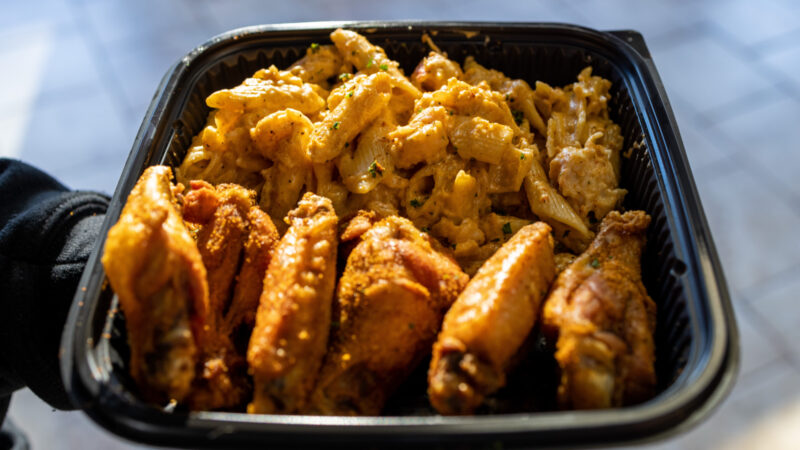
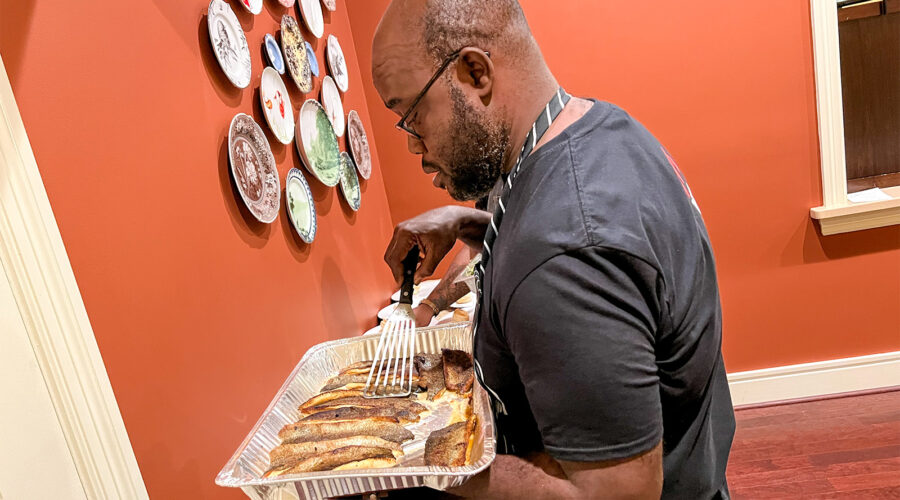
When chef Andarrio Johnson first dreamed of owning a food truck, he had no money and no equipment. Back then, in 2000, all he had was a vision. Cuzzo’s Cuisine became a reality 14 years later when Johnson finally launched what would become an 11-year culinary and entrepreneurial journey. The journey included three restaurants, several food trucks, and a grassroots organization that serves local youth.
Currently, Johnson owns one restaurant and one food truck, using both as avenues not just to feed the community, but to teach the next generation. Through his nonprofit, Culinary Connections, he hosts free bi-monthly cooking classes for kids ages 10-15, creating a space where they can do more than learning kitchen basics. It’s not just about chopping, stirring, and sautéing, it’s a place for gaining life skills and dreaming big. And the impact is tangible: one of his former students, now 17, runs her own catering business. Charlotte-Mecklenburg Government Center recently invited her to showcase her food at a teen event.
Unpretentious Palate spoke with Johnson to learn more about the inspiration for Culinary Connections, what motivates him, why he believes in ministering to kids through food, and more.
Unpretentious Palate: How did Culinary Connections get its start?
Andarrio Johnson: COVID hit and we stayed open. The kids were out of school, and I wanted to do something for them. I decided to start feeding them for free at what used to be our main location. When I started that, it was a big thing. All the news started coming, interviewing me about it but it wasn’t a nonprofit yet. I was just doing that out of my pocket. I’d feed kids for free, Tuesday through Friday from 11a.m.-3 p.m. We’d serve whatever was on the current menu and I made sure they had an entree, a vegetable, a side, and a drink. When they went back to school, I just decided to keep feeding them until 2023 when our main restaurant location burned down. Luckily, I had another restaurant open, so I just transferred everything to the University. Around that time, I decided to start my nonprofit and have cooking classes for kids, because no one showed me, at an early age, how to cook or taught me culinary skills. I felt like, if I got the opportunity, I could show kids at an early age and give them another avenue other than sports. Plus, you need to learn how to cook to survive.
UP: What does a typical class look like?
AJ: I’m doing it just like I did in culinary school. We do academics. I teach them culinary terms, how to use a knife, and certain ways to operate in the kitchen. I teach them about different levels of jobs in the kitchen, like sous chefs, line cook, and prep cook. They learn the terminology. That’s for the first hour. After that, we cook. The class is usually two hours, from 11 a.m.-1 p.m. I give them a menu and a recipe book, too.
UP: What’s the most interesting dish they’ve made?
AJ: The last one we made was a breakfast dish. I showed them how to make a cinnamon roll pancake. It’s a pancake that uses the ingredients of a cinnamon roll with a cream cheese sauce.
UP: How do you get inspiration for the dishes?
AJ: I have to figure out what can be cooked on portable burners and in one pan. I try to think about what I can make that they would enjoy. A lot of the dishes involve sauteing and pan searing. I try to expose them to eating healthy.
UP: Where does your love for food come from?
AJ: I was in jail and God found me there. I read a magazine telling me about a book called The Purpose Driven Life by Rick Warren. When I read the magazine, I said, when I get out of jail, I’m going to find this book and read it. I read that book and that book changed my life. It helped me to find my purpose here on Earth. It opened up my soul. I realized that cooking must be my purpose. I decided to feed God’s people. This is how I minister to God’s people, through to the food. Ever since then, I took my career seriously and it took me to another level. I never thought I’d be teaching at places like CPCC, where I taught Food Truck 101, going to Johnson & Wales University to talk to students, or doing internships here at my restaurant. I’m just doing my job. I’m doing what God got that plan for me.
UP: What impact would a program like yours have had on you when you were younger?
AJ: I would have had an idea of what to do. I would have had a career path.
UP: What are you hoping to achieve through Culinary Connections?
AJ: I’m teaching students how to cook, but I’m teaching them how to become an entrepreneur and come up like I did. I want to show them my path—I started off catering, then I got a food truck. I want to show them how to run a food truck and all that. Eventually, I want them to have their own food truck, a Culinary Connections food truck, and have them cooking in it. If that’s something they want to do, they can see that if they can’t afford a restaurant, they can start off with a truck.
UP: What challenges have you encountered since starting Culinary Connections?
AJ: I just don’t get enough sponsorships and enough people to support it. Now, I charge people a little extra when they buy food from my restaurant, and I use some of that money to sponsor the classes, to buy food and equipment. So my main thing is that to keep it going, you really need people to help. And I just have to start doing more fundraising. I’m working on that. I just want to get to the kids early, because I care.
UP: What’s your favorite part of this work?
AJ: Connecting with the kids. They’re funny. When I talk about academics, it seems like they’re bored but that changes when they start cooking. I’ll see them sautéing and flipping food, and I’ll say, “How you learn how to do that?” They’ll say: “You taught me how to do that.” They pick up on things quick.
UP: If you weren’t a chef, what would you be doing?
AJ: My mother was a Master Barber. At one point in my life, I did open up a barber shop so I already had an entrepreneurial aspect in me. I probably would have been a barber, or who knows?
UP: What fundraisers or activities do you have coming up?
AJ: For fundraising, we’ll start hosting adult classes starting July 14. They’ll be once a month. The goal is to have those funds support youth classes. We’re also hoping to partner with schools to hold cooking classes in classrooms.
UP: Why is Culinary Connections important to the community?
AJ: I think the youth needs it. It brings the community together, brings the kids together, and it’s a lifelong skill. A lot of their parents don’t cook, so they need to learn how to cook for themselves because all this fast food isn’t good for you. It also gives another avenue instead of turning to the streets or thinking sports is the way out. We just need more entrepreneurs and more chefs doing this. I do see more chefs doing kids cooking classes now though. That’s what I want to see.
To learn more about Culinary Connections and to donate, click here.