
Hidden gem in Charlotte’s Oakhurst neighborhood where the menu is as creative as the food
Hidden gem in Charlotte’s Oakhurst neighborhood where the menu is as creative as the food


In a city of fast-paced growth, owner Kristiana Perini takes her time
By Ebony L. Morman
At Sorellina Pasta Co., ragù takes time.
Owner Kristiana Perini braises meat with sofritto, a touch of tomato, and wine for six hours, slowly coaxing out layers of flavor. The pace feels deliberate, especially in a city like Charlotte, where growth often moves much faster.
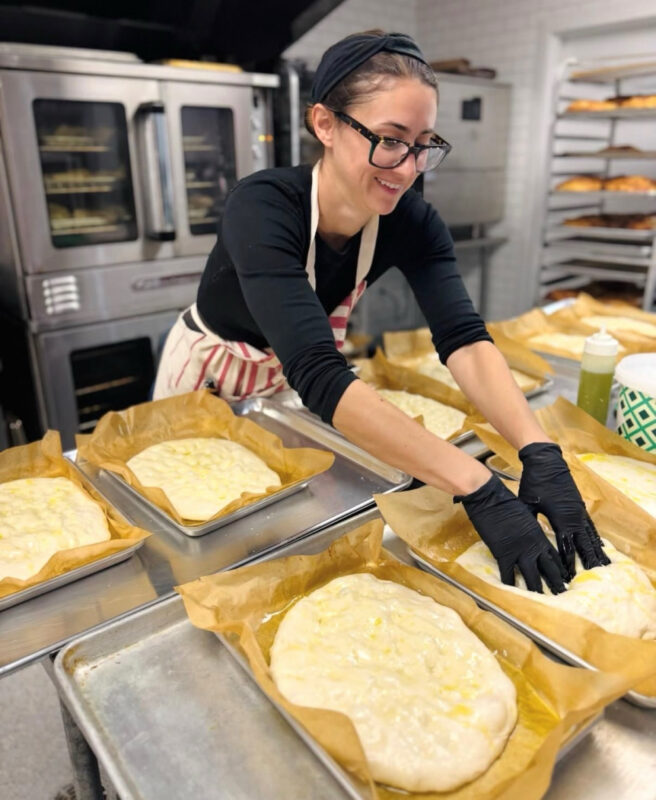
Yet Perini’s approach to handmade pasta — with whole ingredients, and small-batch production — continues to resonate with customers. The roots of that approach go back to her childhood. The UPPY finalist for Food Artisan of the Year grew up in an Italian family where Sunday dinners were a weekly tradition.
“My grandma used to make dinner for her whole family every Sunday night, and it was often pasta,” she says. “Her ravioli was a family favorite, and her lasagnas were always fabulous.”
But those meals weren’t just about food, they were about gathering.
“One of the things that I just love so much about cooking is how it brought our family together over the table,” Perini says.
Early kitchen memories shaped her career in professional kitchens. After attending culinary school, Perini spent nearly a decade working in restaurants, including Auberge du Soleil, a Michelin-starred, French-influenced restaurant in Napa Valley, where she encountered a wide range of cuisines and cooking styles.
Perini moved to Charlotte in 2017 and eventually stepped away from restaurant kitchens, working in logistics and accounting for a bottled water delivery company before a 10-month stint in the kitchen at Team Rose Bread. Time away from restaurant work reinforced how much she missed cooking for people. She continued cooking in small ways — hosting private dinners for friends and experimenting with recipes — until the idea for her own shop took shape.
Her experiences influenced how she built Sorellina, which opened last April. Rather than operating as a traditional restaurant, Perini designed Sorellina around packaged meals and fresh pasta customers finish cooking at home.
“Everybody’s so busy and exhausted at the end of the day,” Perini says. “Sometimes it’s just really hard to get a good, nutritious meal on the table for your family to enjoy together.”
Supporting local farmers and prioritizing quality ingredients also shaped the concept. Through partnerships with suppliers like Freshlist, the shop sources as many local products as possible while also seeking organic and responsibly produced ingredients for its pasta, sauces, and baked dishes.
Because Perini and her team make nearly everything in-house, the production schedule drives the shop’s hours. They prepare fresh food earlier in the week, while the shop opens Wednesday through Friday. Inside the kitchen, the processes are intentionally slow. For example, the shop’s tagliatelle dough rests partway through rolling.
“In doing that, we’re able to create texture in the pasta,” she says. “The wrinkles are extremely helpful in encouraging your sauce to stick to your noodle. We’re doing pretty small production compared to a lot of people, but it allows us to take great care in the product that we’re putting out.”
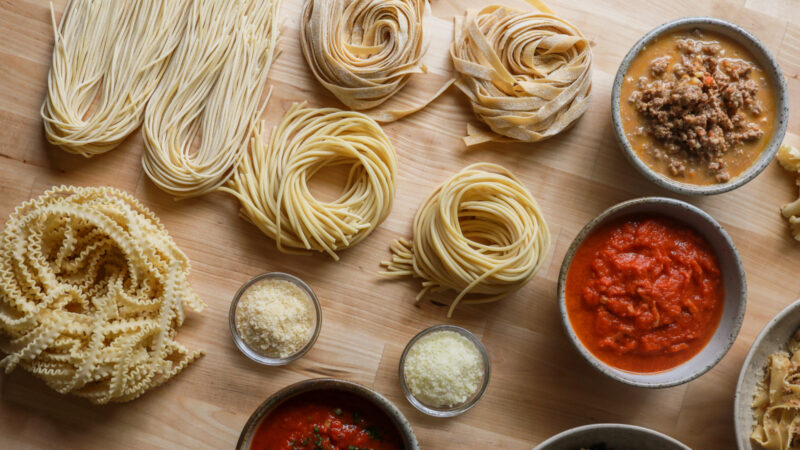
Customers have responded to that level of care. Handmade pasta and other staples — including grass-fed beef and pasture-raised pork meatballs, lasagna, and sourdough focaccia — have become favorites among regulars. The shop also offers a rotating selection of fresh sauces like ragu bolognese and sun-dried tomato cream, along with house-made pasta such as bucatini, tagliatelle, gemelli, radiatori, and campanelle. Seasonal baked pasta dishes, including vegetarian and sausage or ragu options, change weekly based on available local produce.
Still, the appeal isn’t only about taste. It’s also about the process behind it: thoughtfully sourced ingredients, slowly built sauces, and food prepared from scratch. Creating that kind of food requires a different pace in the kitchen.
“I just found this stress of service is challenging,” she says. “It often leads to people cutting corners. I wanted a place where nobody felt like they had to cut corners to finish the task, and that is reflected in our food too. We have the time to take to put into it.”
In a rapidly growing city like Charlotte, that kind of craftsmanship can feel increasingly meaningful. Perini believes many customers are looking not just for good food, but for a deeper connection to the people and businesses behind it.
Despite Charlotte’s expansion, there’ll always be room for food made with intentionality, she says.
“I think Charlotte wants more independent restaurants,” Perini says. “There’s always space for small businesses, especially in food service.”
UNPRETENTIOUS PALATE is a digital publication covering food and drink in Charlotte. At UP, you’ll find ethical food journalism that isn’t based on free meals. We’ll be your taste testers around the city, letting you know where you can’t miss and where to skip. And we’ll ban any condescending food-writer speak. We’ll tell you the dishes we love, where to go on date night, and the best places for cocktails. You can trust us.
Not ready to become a paying Member? Sign up for our free newsletter below.






I love this shop. You walk in and your blood pressure drops. Very helpful and friendly staff. Delicious and creative pastas including amazing vegetarian lasagnas. Incredible bread. A perfect neighborhood spot.