

March 24, 2025
Farmer of the Year offers tips on growing tomatoes
As home gardening season approaches, Windcrest Farm’s Mary Roberts says patience is a virtue
by TM Petaccia
With the first warm days of the year, many home gardeners’ minds turn to planning and planting for the coming season. One of the most popular homegrown food crops is tomatoes. Before you head out to your favorite garden center to pick up a few plants, Unpretentious Palate 2024 UPPY Farmer of the year Mary Roberts of Windcrest Farm, has a word for you.
“Wait.”
At least for a few more weeks. She says two key factors give you your best chance for a bountiful harvest: soil temperature and air temperature — and Charlotte is not quite there yet. Roberts suggests your soil temperature be consistently above 60ºF with the air temperature consistently above 50ºF.
“When you and I catch a chill, we kind of draw up and brace against the cold,” Roberts says. “It may take a little bit for us to warm up and relax. Tropical plants like tomatoes, peppers, cucumbers, and watermelons are the same way. When the conditions aren’t optimal, they’ll just sit there, and it takes a little bit for them to come out of it and say, ‘Okay, conditions are right; I’m ready to grow.’ This time of year, when we’re still having wild temperature swings, those plants are basically in shock. Eventually, those plants will produce, but you won’t get the same yields as you would get if you waited until after the last frost.”

Historically, in this area, the last frost occurs somewhere around April 12. Last year, it was April 5, and some years, it has been as late as early May. Roberts says a little patience will go a long way. “We can’t catch spring fever when we want to grow tomatoes,” she says. “We all want that juicy tomato, and we all want it as soon as we can get it. But I can plant a tomato at the end of April or the beginning of May alongside one that I planted in March, and that May tomato will overtake the March one in growth and production.”
When the weather is right to plant, Roberts still recommends a few steps before you reach for the tomato plants. “Plant your trellises first,” she says. “You don’t want to plant your tomato and have it sprawling all over the place. You want to trellis them up. That way, as they really start growing, you have a structure that keeps them off the ground, with better airflow, reducing the chance of rot and bug damage.”
You can get trellises at home improvement stores and the popular mail order outlets, or if you are handy, build your own, but Roberts points out you may already have some built-in ones at your home. “If you have a deck or patio railing or a fence, you’ve already got a trellis, and you can utilize that. I have a customer who has a huge deck at her home. She just uses the deck railings there.”
For soil preparation, Roberts does recommend some type of natural fertilizer or similar soil amendment. “We have one here called ‘Compost Complete,’ which is terrific for tomatoes,” she says. “It contains a high amount of calcium, which helps prevent ‘tomato blossom end rot,’ which is where you have a tomato on the vine and it’s looking really big and great, and your mouth is watering already for that tomato, and you turn it over, and it has a little rotten spot on the bottom. That’s often from lack of calcium.”
When it’s time to plant, Roberts suggests going deep. “If you look at a tomato stem, it looks like there are lots of little hairs along the stem,” she says. “Those hairs actually form roots. When you bury the tomato deep, up to its neck even, all those little hairs along that stem form roots. Now you have this massive root system feeding and providing water to the plant.”
If you can’t plant deep, Roberts says, plant long. “Dig a trench and lay that tomato plant down sideways, she says. “Cover all the stem with just its little head popping up out of the soil. Within 24 hours or so, that tomato plant will orient itself and start growing straight up.” Roberts also recommends you plant tomatoes where it will get at least 6-8 hours of direct sun on most days.
As for watering, Roberts says the amount and regularity of your watering schedule depends on how the tomatoes are planted. “Anything in a raised bed or in a container will need more attention in watering and food,” she says. “If it’s in the ground, it can go out for its own groceries a little bit.”
A common mistake, Roberts says, is over-fertilizing once the plant is in the ground. “People think if they fertilize more, they’ll get more tomatoes,” she says. “In fact, the tomato plant will respond by putting out more foliage than fruit.”
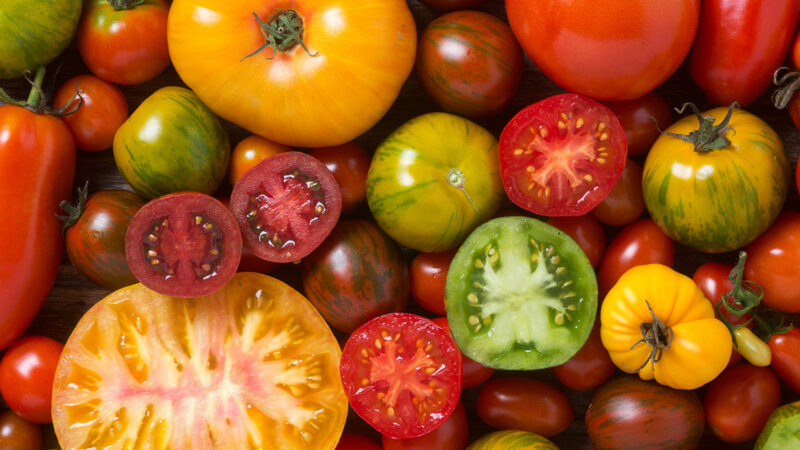
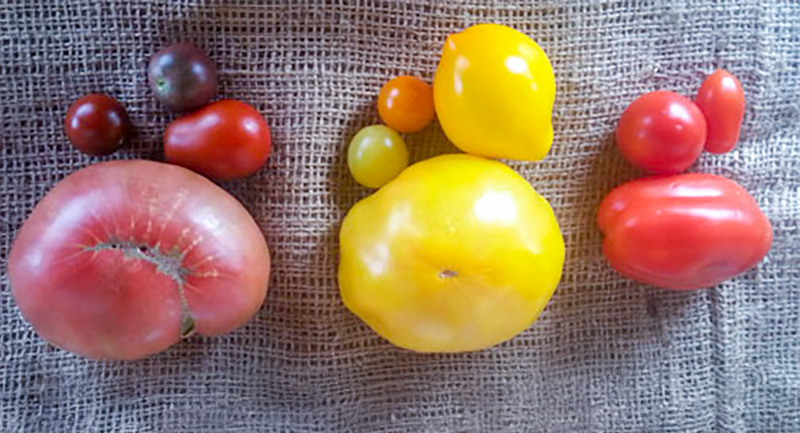
Time from plant to harvest depends on the weather and other factors, as well as the type of tomato you plant. Expected yield time should be provided on the plant tag or if you get them from a farm or garden center. Windcrest Farm will be offering over 45 varieties of heirloom organic tomato plants at its farm/garden center in Monroe in early April.
Roberts points out you don’t need to rush out this spring to plant. “You can plant tomatoes as late as the 4th of July and still get a nice fall harvest,” she says.