Hidden gem in Charlotte’s Oakhurst neighborhood where the menu is as creative as the food
Hidden gem in Charlotte’s Oakhurst neighborhood where the menu is as creative as the food


Here’s why, and how you can adjust your eating habits
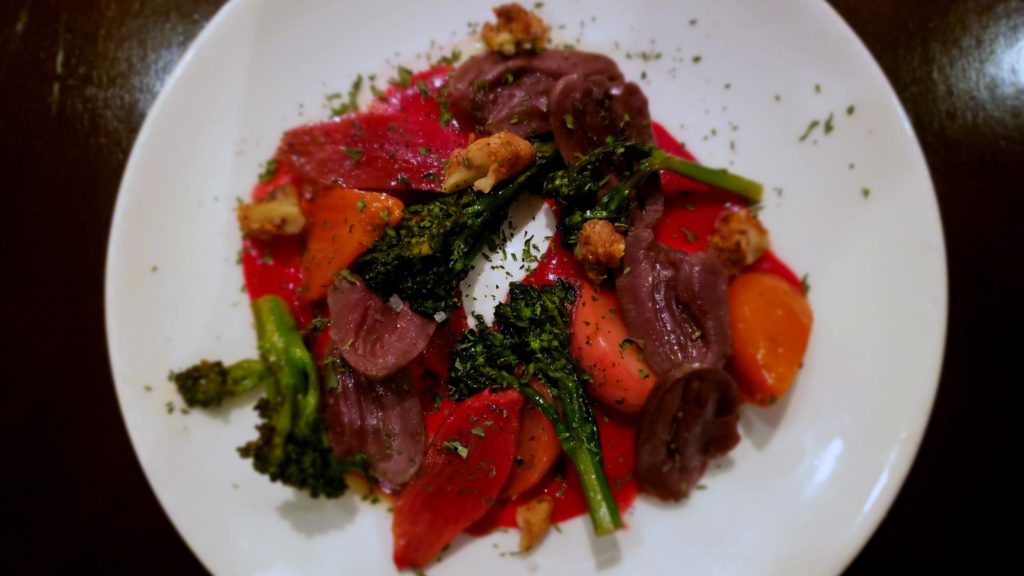
If we want to continue feeding the world, we’ll have to change our diets. One way to improve sustainability is to eat more varieties of meat. Pictures are smoked duck hearts from The Asbury. Kristen Wile/UP
Over the last century, the way we produce meat has industrialized food. The continuing push to increase profits has created a system where what we eat is raised as efficiently as possible, to be the same size and same weight, making the animals easier and cheaper to slaughter. Nutrition and the environmental impact of this system have become afterthoughts.
And we’re seeing the impacts. Waste from meat production, mostly commoditized beef, harms the environment through both animal emissions and the amount of land used to provide them with feed. According to an article by The Guardian using research from the World Resources Institute, beef provides only three percent of the calories we consume in the U.S., yet is responsible for half of its emissions. And that feed we’re growing to raise cattle is inefficient, too, a cheap way of preparing animals for slaughter without considering the environmental impact. Another Guardian headline based on the WRI study calls a massive reduction in meat-eating “essential” to avoiding a climate breakdown.
It’s a large task to try and dismantle this system, but the trends are beginning. Duck and rabbit are becoming more common on local menus, for example.
“Part of it is a sustainability issue, and the growing understanding of the somewhat taxing impact of commercial meat production — particularly when we’re looking at traditional things like beef, pork, and chicken,” North Carolina Restaurant and Lodging Association communications director Margo Metzger says. “Although those things are still the staples of nearly every menu that you’ll find, in North Carolina, I have seen a trend towards dabbling in [less common proteins], and that may end up turning into more of a regular feature on menus.”
Local organization Piedmont Culinary Guild is also trying to get the message out there that we need to diversify the meat we’re eating. This year, at the guild’s annual symposium in March, their annual butchery class won’t include pigs or cows.
“We realize at this point that from a sustainability standpoint, that we need to be encouraging offspecies, alternative species,” PCG director Kris Reid says. “What typically we see in mass production are the animal species that you see at the grocery store, and we know that the voice of a chef is often the voice that will encourage the public or educate the public in a direction or pique interest.”
This year, they’ll be butchering goat, rabbit, and duck, then teaching chefs how to cook with the whole animals. Reid’s hope is that once people become more familiar with different proteins, such as the goat, rabbit, and duck they’ll be butchering, they’ll feel more comfortable purchasing them at the farmer’s market, and help rebalance our food system. Otherwise, our dependency on pork, beef, and chicken will continue to pose a long-term risk to our environment and the way we eat.
“That becomes this very linear food system, which at the end of the day is not sustainable, because the planet doesn’t work on a linear system,” Reid says. “With how that’s all developed, it really started with pigs, then became beef. We’re really at this point having to combat something that’s been in place for a century.”
Alternative species (any meat source other than beef, pork, and chicken) help not only improve biodiversity in our food system, but help minimize the presence of meat on our plates, shifting us away from the meat-dominated diet we’ve grown accustomed to. Purchasing rabbit, for example, is much more expensive than chicken, so you will likely use less of it. There’s another piece of rabbit as a protein, too, that’s beneficial to the environment: rabbit dung makes a rich fertilizer.
That’s not to say you need to eliminate the three big proteins from your diet entirely. If you want to eat chicken, try a different variety, such as Poulet rouge, or substitute guinea. Reid points to goat as a protein that is easy to raise, has a low environmental impact, and is raised locally. The difficulty is that there are no facilities for the farmers who raise them to process the meat, so to get the meat, you often have to purchase and breakdown an entire goat. That’s where the PCG symposium hopes to have an impact; familiarizing both chefs and home cooks with the protein.
“That class, that butchery class, is often just filled with a lot of consumers just trying to learn more about the food system,” Reid says. “It’s an opportunity to really bring this idea to people that are not in a restaurant, that are just cooking at home for their family or shopping at the farmer’s market and creating more and more demand for these off-species that you’re typically only seeing in the finest dining experience in most cities.”
Those fine dining experiences may be where this change begins, familiarizing diners with new sources of proteins and guiding them away from the usual rib eye steaks.
“We have to start with the chefs,” Reid says. “The reason that we’re doing it at the symposium is because we really believe the chefs are the voice of change in the system.”
It’s a voice we need to start listening to. We’ll be posting some recipes next week using some of these alternate proteins, and you can find goat and rabbit at the Charlotte Regional Farmer’s Market on most Saturdays in the first bay. You can also join us at our Meat & Potatoes dinner to see how delicious eating differently can be. —Kristen Wile