Hidden gem in Charlotte’s Oakhurst neighborhood where the menu is as creative as the food
Hidden gem in Charlotte’s Oakhurst neighborhood where the menu is as creative as the food


When war threatened a bakery in Ukraine, the longtime baker and community leader rose to the challenge
By Allison Braden
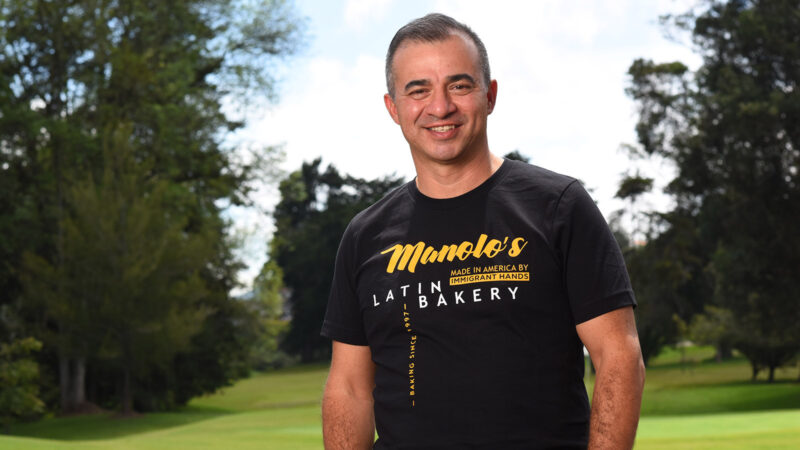
Manolo Betancur, owner of Manolo’s Bakery in East Charlotte. Photo courtesy
Before Manuel “Manolo” Betancur moved to the U.S. in 2000, he served as an officer in the Colombian navy. When Russian forces invaded Ukraine in February, the owner of Manolo’s Bakery was ready to join the international troops who were volunteering to defend the country. “I’m a big believer of freedom, human rights, and dignity, and always against oppression,” he says. But the 46-year-old father of two realized he couldn’t leave his life behind to join the fray. “I’m no longer 20 years old.”
Instead, he did what he’s always done: He baked in the service of an issue that was important to him and rallied the local community to support the cause. A leader on Charlotte’s east side, Betancur is known throughout the city for his commitment to the Latino community and charitable initiatives. This year, his empathy and generosity had global impact.
Betancur typically donates a portion of his bakery’s king cake proceeds to support a local Hispanic Mardi Gras event. This year, he shared on social media that he would donate 10 percent of his king cake revenue to help the people of Ukraine. “We make an average of 40 king cakes. This year, we sold 400,” he says with a laugh. “I had to stop production of bread and start making king cakes.”
He was determined to donate the money to fellow bakers to keep their business running. Through Facebook, he made a series of connections that led him to Xatuhka Nekapr (Хатинка Пекаря) Bakery in the central Ukrainian city of Bucha, where Russian forces massacred civilians during their occupation. The troops destroyed the bakery and stole much of its equipment. In May, a month after Russia withdrew from the area, Betancur traveled to Poland, where he entrusted his donation of $10,000 to a friend, who delivered it to Bucha. The money allowed the bakery to rebuild and buy an oven.
“But when I came back from Poland, I wasn’t happy with myself,” Betancur reflects. “I didn’t do enough.” He regretted that he didn’t visit the bakery in person, and he resolved to go back and deliver an additional $5,000 in person in November. So many others have broken their commitments to the Ukrainians, he thought, as the news cycle moved on and many pledged more sympathy than tangible aid. He decided that if he didn’t raise the amount he promised, he would make up the difference with his own money. This time, the funds helped the bakery purchase a car for bread deliveries and a generator, crucial amid frequent power outages.
Betancur hasn’t let up at home, either. This year, he taught baking classes to teenagers and young adults who have been incarcerated, an experience that has underscored the way that incarceration burdens young people in the U.S. and robs them of opportunity. One of the gifts of making bread, he says, is that it makes time for meaningful conversations and connection while the dough rises. He also kept up regular donations of money and baked goods to a range of local nonprofits.
Though they’ve never run a bakery in a war zone, Betancur and his staff know what it means to be afraid to come to work. After Trump took office, Betancur says, he received blackmail and became a target for racists and nativists. Immigration and Customs Enforcement officers arrested an employee in the bakery parking lot, which created an atmosphere of dread among employees and customers. Betancur went viral when he posted about the experience on social media. He begged for support because, he says, there was “fear in my community to come to buy bread.” Those moved by his story drove from across the state and from other states to support him.
“That was overwhelming, and I have a lot of support from the community,” he says. “There are too many blessings I have received in this country.” He sees it as his duty to return that care to his community, whether in his neighborhood or in Ukraine, and he calls on other business owners to do the same. “We can’t let American greed,” he likes to say, “kill the American dream.”
This year, though he couldn’t take up arms and enlist in Ukraine, Betancur still found ways to go where he was needed. “Bread is easy to make, and bread feeds,” he says. “If your stomach is not empty, your spirit is alive.”