Hidden gem in Charlotte’s Oakhurst neighborhood where the menu is as creative as the food
Hidden gem in Charlotte’s Oakhurst neighborhood where the menu is as creative as the food


Get to know the state’s growing artisanal cheese industry
Cheese has been a staple in my life since I was a child. Many Sunday night dinners consisted of melted extra sharp cheese in milk, poured over a thick slice of toasted homemade bread (known as Welch Rarebit). Sometimes a slice of summer tomato was added. Heaven. Grilled cheese sandwiches and tomato soup for lunch, homemade cheese lasagna from my Italian grandmother, slices of crumbly cheddar dipped in mustard — well, you get the picture, we were a cheesy family.
The number of cheeses made in the Carolinas is rapidly growing and covers diverse styles. Cheese is made from milk; it is the perfect way to preserve milk for use when refrigeration is not available. The basic method for making cheese is to change lactose (one of the ingredients in every type of milk) into lactic acid. First you bring the milk to the desired temperature, which is warm to hot depending on the final product you’re seeking. You add cultures and rennet (a complex set of enzymes produced in the stomachs of goats, cows, and sheep), and curds start to form. The curds are stirred until the milk has mostly turned into solids, then the solids are formed into blocks and placed in drainable containers to allow the whey to escape. (Remember Little Miss Muffet? She knew what was good to eat, curds and whey!)
The blocks sit overnight, and once solid, they are salted. The cheesemaker will help the cheese form a rind, such as a soft bloomy rind like Brie, or a rind made with vegetable ash. If the cheese is meant to age and become more solid, like Taleggio, gouda, or cheddar, a wash made of beer and brine might be used to seal the rounds and add more flavor. There are also beeswax rinds that preserve the cheese. Cedar Grove-based Boxcarr, for example, has a brilliant yellow beeswax rind that seals in a citrus note to their blended milk Winsome cheese.
Different types of milk are used to make different styles of cheese. In our state, the primary milks are goat and cow, with one producer, Fading D Ranch in Salisbury, using buffalo milk to make mozzarella. Hard cheeses are generally made from cow’s milk, and the softer cheeses use goat’s milk, but that is not a strict rule. There are gouda-style cheeses being made from goat’s milk (Prodigal Farm in Rougemont) and feta-style cheeses made from cow’s milk (Looking Glass Creamery in Fairview). Blending goat and cow milk is also popular to add more complexity to the flavor.
None of these cheese-makers use milk with antibiotics or added hormones, and all are very proud of the humane practices they use while raising their herds. Many of their products are even award-winning: Goat Lady in Climax, Chapel Hill Creamery in Orange County, and Prodigal all placed in the most recent American Cheese Society Awards. In Charlotte, Una Alla Volta (UAV) produces feta, yogurt, mozzarella, burrata, and a rich, dense ricotta.
If you’re looking to make a cheese plate that shows off the best North Carolina has to offer, here are the three we’d start with:
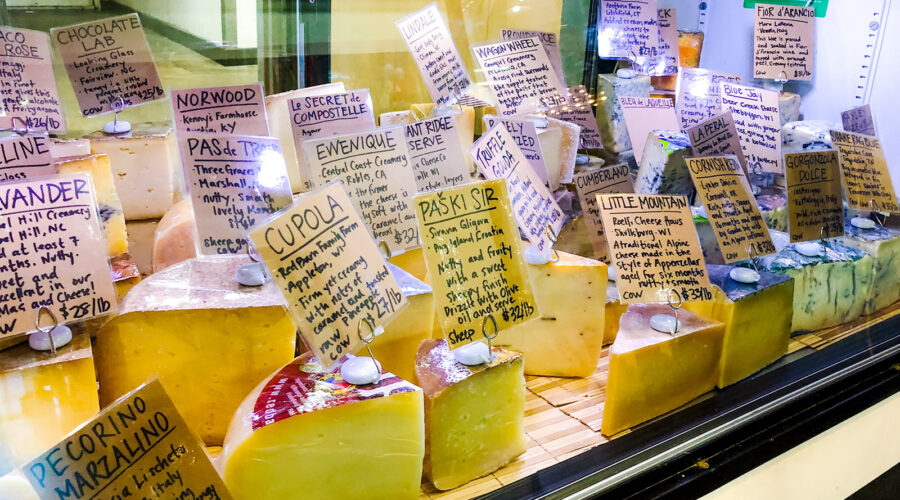
Chocolate Lab, Looking Glass Creamery — a semi hard cow cheese washed in stout and rubbed with cacao nibs.
Hunkadora, Prodigal Farm — a vegetable ash-coated semi-soft goat cheese.
Cottonseed, Boxcarr Handmade Cheese — a 50/50 blend of cow and goat milks creates a nutty, mellow, buttery semi-soft cheese.
You can find many of these NC cheeses at Orrman’s Cheese Shop in 7th Street Public Market, The Loyalist Market in Matthews, Pasta & Provisions, and Charlotte Regional Farmers Market. Or, if you’re looking for a cheese-filled weekend, check out NC Agriculture’s cheese trail map. —Anita Skogland