Hidden gem in Charlotte’s Oakhurst neighborhood where the menu is as creative as the food
Hidden gem in Charlotte’s Oakhurst neighborhood where the menu is as creative as the food


Unique location allows guests to enjoy beverages in beautiful spaces
By Ebony L. Morman
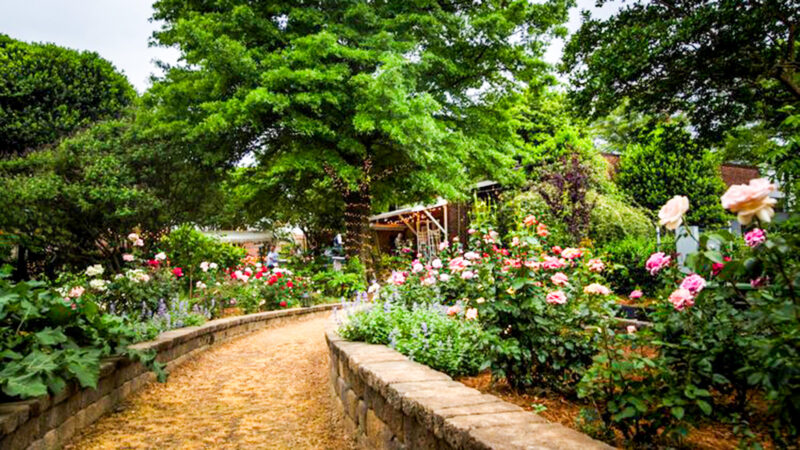
In a quaint brick building right off of North Davidson Street is where you’ll find Rosie’s Coffee & Wine Garden. Dan Fulco and Karisa Pennell own the coffee and wine shop, which is merely 900 square feet. But if you include the green space accessible via McGill Rose Garden, then Rosie’s experience includes access to an additional one and a half acres of outdoor space.
Earlier this month, Rosie’s celebrated its fifth anniversary and they’ve allowed the business to grow organically, says Fulco, who is Rosie’s general and operations manager.
“We’ve a loose plan of what we want to do, and if things work out, it’s great,” Fulco says. “And if things don’t work out, we try something new. But because we do utilize the park and the garden, we also let the community dictate a bit of what’s going on here. Part of our philosophy is to let Rosie’s be a business, but also let it be a community space, and the two together have proven to be a pretty good formula.”
Operating Rosie’s with a community-first mindset proves to be sustainable because since the pandemic, the business has seen an increase in customers, Fulco says. During the week, on average, 100 people spend the day, or night, at the shop or in the gardens. And on evenings when there are public events such as trivia on Tuesdays or live music on Thursdays, the number of visitors increases.
“We don’t see anything slowing down,” he says. “There are so many people, new residents of Charlotte every month, that even after five years, I have people coming up and saying, ‘This is my first time here.’ We do expect first-timers all the time, and we’re kind of used to it now, but that’s something that still kind of gets me, that Rosie’s still has some newness to it.”
Unpretentious Palate: What was the inspiration for Rosie’s?
Dan Fulco: Karisa Pennell had a flower shop, Nectar. It was in the same space that Rosie’s is now. She had to move her flower shop because it wasn’t practical anymore, space wise. It was at the time when me and my wife were only doing events on weekends in 2017 that we started to brainstorm to try to figure out how to generate revenue during the week. It’s very cliche, but we scribbled on a piece of paper: drink wine and garden. We kept going back to it. Then it took root, and in our minds, it started to grow. I never thought that we would be as successful as we are. I’m conservative when it comes to running a business, but never in my wildest dreams did I think 100 people would come through here on an evening to enjoy the space that we’ve enjoyed since she opened a flower shop back in 2007. We’ve always enjoyed the garden and my kids have grown up around here. We’re also very close with the board of directors of the garden. They are their own entity, a nonprofit. We want to make sure that people know our location and the fact that you can enjoy the garden. You can enjoy the garden without even buying anything from Rosie’s. We’re simply the gatekeepers. We leave the gate open so that the public can enjoy the garden.
UP: What’s an example of how Rosie’s is community-driven?
DF: We didn’t set out to do live music because I didn’t want to be a music venue. But we had some people reach out to say that they thought it’d be a great place to have music. So every Thursday night, we have some sort of live music, a singer or songwriter on the guitar or a duo. Sometimes we have full bands and we’ve incorporated music into a lot of our other events. Another thing that we do is the first friday of every month, free of charge, we allow small businesses to come in as vendors during our first friday market. It’s things like that that we try to just let happen while also keeping a bit of control over it. We feel we are facilitators of what happens in the garden.
UP: How did you become interested in wine?
DF: I like to research wine, and I like the fact that wine ultimately starts out like any other crop. It’s the farmers who are tending to these vines and making sure that the food comes off correctly, then they can go through the process of turning grape juice into wine. That fascinates me and it’s what helps me to easily prepare for the wine classes. Researching different regions is what gets my juices flowing. I started hosting wine classes in 2021. It’s taken me a couple of years to get a good library of classes but now I have a dozen to rotate through. We host regional classes, wines of France or Italy. I recently hosted a class about wines from South Africa, Australia, and New Zealand. I also do classes about trends, such as what are we looking out for in 2024? And a class where we compare different varieties. So we’ll take a French pinot noir and an Oregon pinot noir, and we’ll taste the similarities and differences. The classes cost $40-$50 and are posted on social media.
UP: How do you source your wines?
DF: I have a wine buyer on staff, and he works through our distributors. We like to have all the primary varietals, such as pinot noir, malbec, merlot, cabernet, sauvignon blanc, and pinot grigio. I try to represent most of the regions of the world, and then some more obscure regions. So we have Greek wine, wine from New York’s Finger Lakes wine country, and we have Slovenian wine. We also try to be trendy because our demographic is a bit younger. We want to appease those palates by offering more natural wines. Over the years, we’ve found non-alcoholic wines to expand offerings for people who still want to come to enjoy the garden and have a good time, but not to feel excluded because they have to drink coffee.
UP: Describe your approach to coffee.
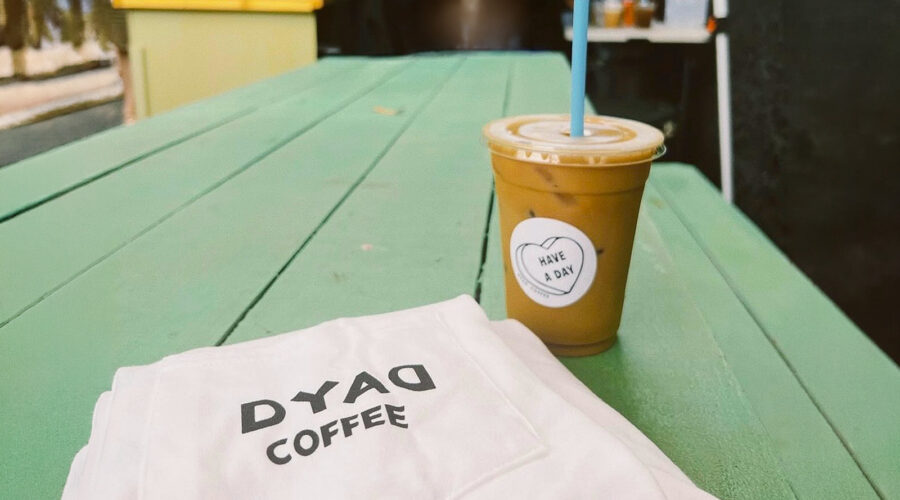
DF: We source locally roasted beans from Pure Intentions Coffee Roaster. We have drip coffee, light and dark or blonde and dark. We have cortados, cappuccinos, lattes, and americanos. We also curate a seasonal drink list of four to five drinks per season. Since it’s almost fall, we have an apple pie chai latte that’s sweet but tastes just like an apple pie. Then there’s the maple cookie latte, honey brown sugar matcha, and salted caramel cappuccino. We do all those recipes in-house and we have sugar-free options, as well. We have a few sugar-free varieties and dairy alternatives.
UP: What should someone know prior to stopping by Rosie’s for the first time?
DF: On a practical level, they can bring their own food. They can have it delivered. They can bring it from Optimist Hall. They can DoorDash it. We allow outside food, even when we have food trucks. They should also know the vibe is where it’s at. It’s a relaxed atmosphere and we have welcoming staff. We don’t have a lot of rules. We don’t take reservations. We basically strive to let the garden dictate the vibe and the mentality. It’s almost like a stress relief, not just because there’s alcohol here, but because it’s close to the city, but you would never realize it. We call McGill Rose Garden the hidden gem of Charlotte. And we’re lucky and grateful that we’re able to utilize this space the way we do, and we think that we’ve also exposed the fact that the McGill Rose Garden is a cool place. We think we allow people to experience the garden a lot more than it would if we weren’t here serving coffee in the morning and moving on into beer and wine at night.
UP: What’s something important you’ve learned from being in Charlotte’s hospitality industry over the years?
DF: I’ve learned to be flexible. When we started, we were kind of rigid about who was sitting where. We didn’t take reservations, but then people would move the furniture all around and things like that. Now we know that’s just what people do. That’s what they need, to slide a table together because 10 people are in their party. I would rather have that 10 people in here than to tell people no. We’ve learned to be more flexible and adaptable with each situation and how we handle it. That’s probably the most important thing that I’ve learned being a small business owner.
UP: Is there anything else you want to add?
DF: We’re very close with the board of directors of the garden. They are their own entity, a nonprofit. We want to make sure that people know our location and the fact that you can enjoy the garden. You can enjoy the garden without even buying anything from Rosie’s. We’re simply the gatekeepers. We leave the gate open so that the public can enjoy the garden.