


March 15, 2024
Re-envisioning waste at Circular Charlotte
Conference examines solutions to diverting food waste
by Lynn S. Caldwell
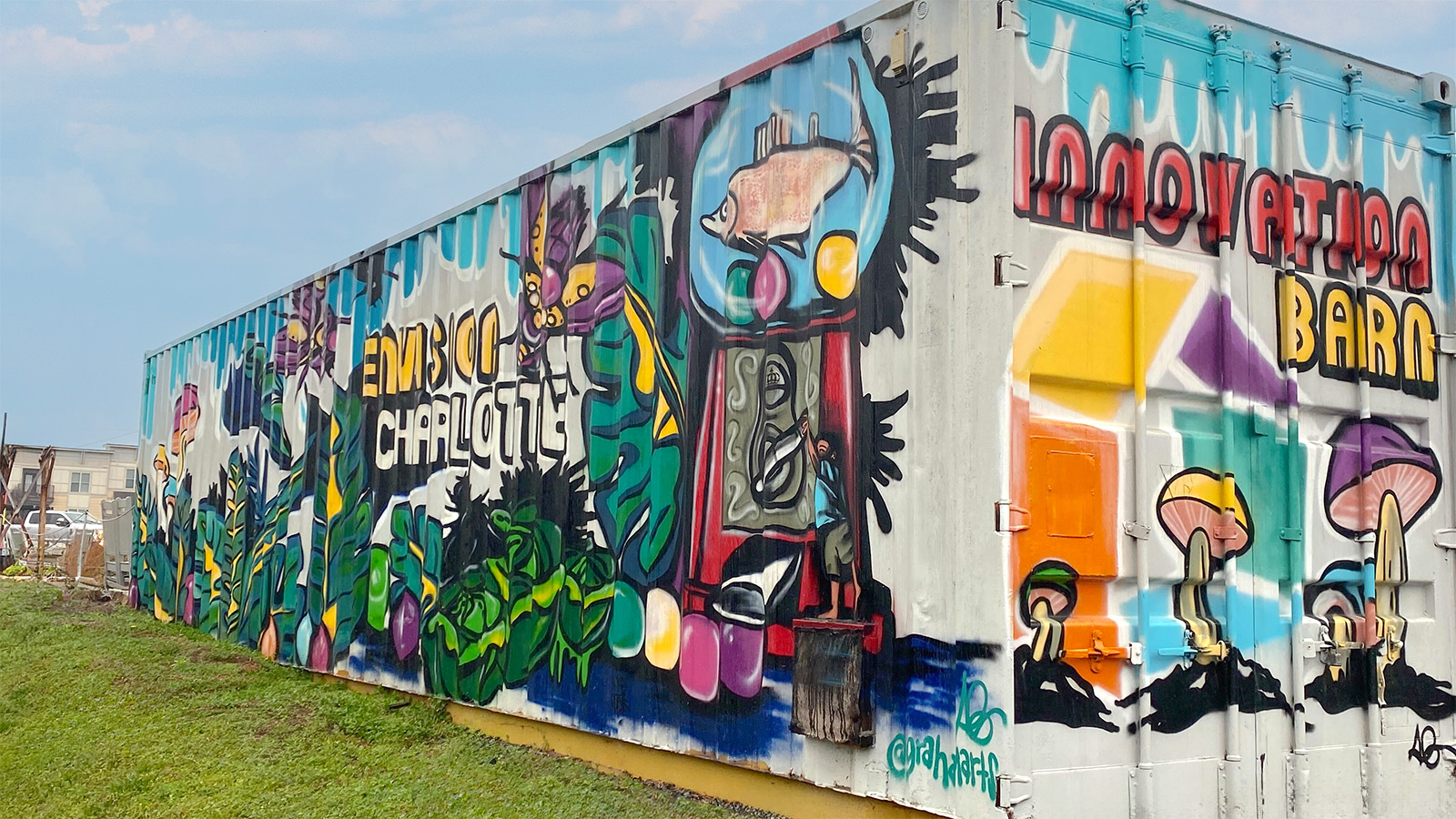
The Innovation Barn is a hub for several Charlotte organizations working to reduce food waste. Kristen Wile/UP
At the end of February, diverse organizations and participants came together at the Charlotte Innovation Barn to share and learn more about projects and companies that are driving Charlotte towards a circular economy. The simplest definition of a circular economy is one that keeps materials in circulation for as long as possible.
Through a tour of the Innovation Barn’s spaces and exhibits, as well as informative panel discussions led by industry leaders and experts, the Circular Charlotte conference attendees got a look at efforts happening now and a glimpse into the future.
Circular Charlotte was sponsored by the City of Charlotte and Envision Charlotte, a public-private partnership that champions environmental sustainability. The Innovation Barn, located in the Belmont neighborhood, is a collaborative project between Envision Charlotte and the City of Charlotte to showcase materials management and to propel Charlotte towards a circular, zero-waste economy.
While there were presentations on recycling programs related to glass, plastics, and textiles, many of the projects presented involve food waste and what happens to food in the supply chain that is no longer fit to eat.
Several organizations in Charlotte are working to divert food waste. The Bulb Gallery, which launched in 2016, is now headquartered in the Innovation Barn. The Bulb has established community-led sponsorships and received grants that have allowed them to grow from two donation-based weekly markets to more than twelve in Charlotte neighborhoods with limited access to fresh food. Almost 88 percent of the produce they obtain from local farms and grocers, deemed not fit for sale, is distributable. The other 12% is composted by fellow Innovation Barn tenant Crown Town Compost.
In 2023, The Bulb organized 618 mobile markets; served 24,559 customers; reached 76,355 total people; and distributed 349,304 pounds of food.
“Seeing how The Bulb has evolved in the past four years has been incredible,” says Bulb director Lisa Mathews. “Food insecurity, especially as it relates to fresh and nutritious produce items, is a longstanding problem and one that is often hidden or overlooked. One of the most frustrating things is that there is no shortage of food available. Rather, it’s getting the food where it needs to go and removing barriers to access.”
The Bulb steps in to bridge that gap between food purveyors, such partners Trader Joe’s and Freshlist, and those who need it.
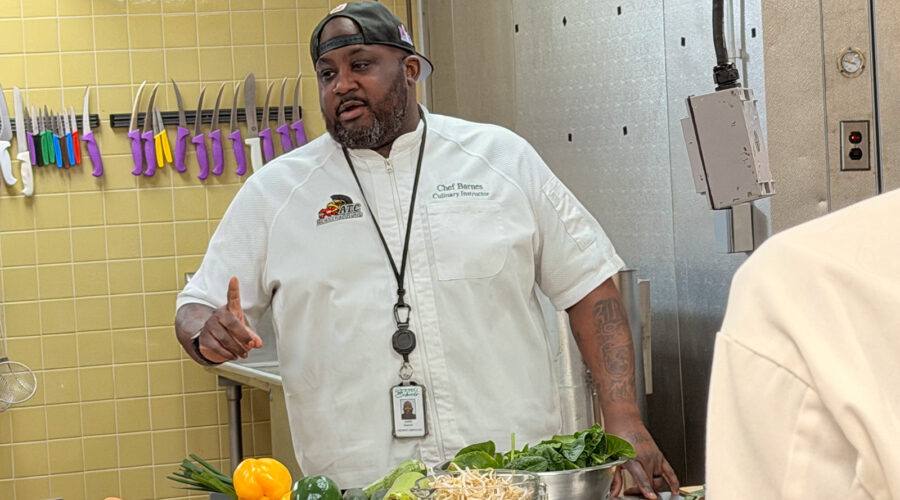
Some of the produce that The Bulb procured went to Canteen for the Circular Charlotte event. Canteen is slated to be the newest tenant at the Innovation Barn, which has been seeking a hospitality partner that can operate a no-waste operation. Canteen has a vision for a sustainable catering operation and is looking into replacing the kitchen’s residential-grade equipment with commercial-grade kitchen equipment.
The facility’s intention is to be a zero-waste operation, using fully compostable dishes and utensils, and diverting any food waste to Crown Town Compost. Any food from catered events at the Innovation Barn that is not consumed will be picked up by Feeding Charlotte and delivered to local non-profit recipient organizations that feed the hungry.
“We are excited to continue our relationship with the Charlotte Innovation Barn through our partnership with Canteen. With public-private partnerships like these, we’re able to support infrastructure development that will benefit the entire Charlotte community,” says Marissa Golison, Senior Director of Sustainability for Compass USA, the parent group of Canteen. “We believe that reducing food waste is an issue we can help solve outside of our four walls by leveraging our talented chefs to educate and empower our guests to reduce food waste in their homes. Through our efforts to reduce food waste in our kitchens and communities, we make every day Stop Food Waste Day.”
Stop Food Waste Day started in 2017 and will be celebrated this year on Wednesday, April 24. To honor the day, communities all over the world pledge to reduce food waste in a variety of ways, including redistribution and composting.
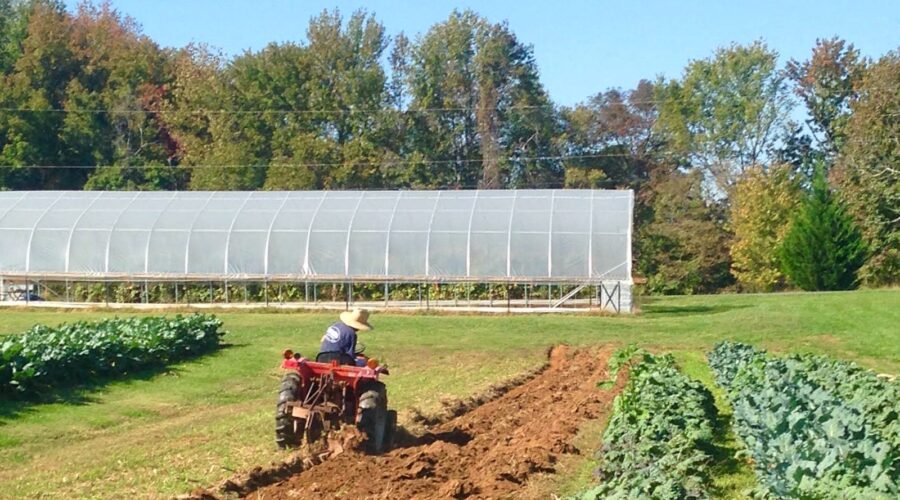
The presence of Crown Town Compost at the Innovation Barn makes it easier to ensure waste from food consumed on-site is diverted from the landfill. Crown Town Compost got their start a decade ago collecting residential compost with an upfitted bicycle and a vintage pickup truck. Ten years later, they serve hundreds of homes and businesses by picking up their food waste and transforming it into nutrient-rich compost, ready to revive gardens and farms throughout the region, including their own food forest in Cabarrus County. They currently produce more than 1 million pounds of compost annually.
“In terms of future growth of composting in the circular economy, I think locally we will start seeing more demand for finished compost as demand continues to grow for local foods and organic food, and as the impact of soil degradation on agricultural production begins to show itself,” says David Valder, co-founder of Crown Town Compost. “I think it will also become more popular when landfilling waste becomes more expensive.”
Their latest program involves using soldier fly larvae to quickly break down food waste. Soldier fly larvae can transform many times their body weight in food to usable, nutrient rich compost in a very brief amount of time. They are visible at the Innovation Barn through a window if you take a tour, which are publicly available twice weekly with registration. The near-future intention is for the larvae to become food for the tilapia in the aquaponics agricultural installation operated by 100 Gardens and housed in the same Innovation Barn facility.
When these organizations were asked about the future of their endeavors and how the impact of food redistribution, waste diversion, and composting could grow, their responses had several common themes.
The first is that we must make reducing carbon emissions a priority by diverting organic matter from the landfill, by redistributing it or transforming it into useful materials. Even compostable containers, paper products, and utensils are wasted when they are thrown in the garbage.
The second is expanding the effort to educate individual consumers. The public generates more than 40 percent of the food waste that goes directly to the landfill. The experts agree that changing consumer behavior is difficult because it often comes at the cost of dollars and convenience, but consumers need to be made more aware of the long-term implications of existing behaviors.
Lastly, grass roots efforts have been somewhat effective but insufficient. There is a necessity to encourage governing institutions to establish public policies that prohibit or penalize sending organic materials like food and compostables to the landfill. In addition, leadership in corporate institutions need to prioritize instituting environmentally friendly policies throughout their organizations and should be incentivized to do so.
As a consumer you can take action to make a difference. According to suggestions from the conference panelists, buy only what you have a plan to eat. Try to obtain products and produce with little to no packaging, or in recyclable packaging. Compost at home or use a service like Crown Town Compost. Start a waste reduction program at your company or in your neighborhood. And finally, contact your representatives to encourage them toward policies that will incentivize change. There is enough food to feed the world. We just need to find ways to reduce the amount of food that is wasted and get it into the hands of the hungry.