


August 5, 2021
Prepare for a mushroom shortage
One of our favorite ‘shrooms is going to be off the shelves
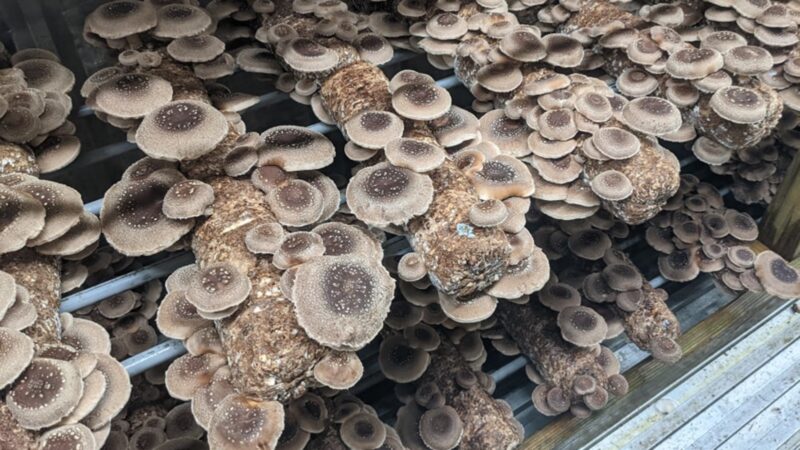
Shiitake mushrooms are going to be disappearing from shelves soon thanks to a shortage of the blocks that grow them. Photo courtesy of Urban Gourmet Farms
We won’t be seeing many shiitake mushrooms on our plates in the near future. According to Urban Gourmet Farms owner Hiram Ramirez, the mushroom industry is facing a significant shortage on the blocks required to grow them — and the blocks that are making it to the U.S. are all going to the country’s largest purveyors.
When Ramirez first started his business, however, he was buying the blocks from within the United States. Unlike most mushrooms, however, shiitake mushrooms are grown on blocks that must cure for a couple of months before the mushrooms can be grown and harvested. That lead time means importing the blocks makes the most sense from a business standpoint; as the blocks travel oversees, they’re already curing.
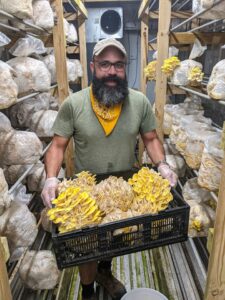
Hiram Ramirez, owner of Urban Gourmet Farms. Photo courtesy
“It’s technically kind of efficient, where you’re just using this time passing through the sea in order for the blocks to cure, and then they get there and people like me grow these blocks,” Ramirez says. “Now that the supply chain is broken, [KSS Sales] is actually getting back to making blocks. But you won’t see them in the market for about three months, because it takes such a long time.”
During that three-month stretch, Ramirez’s supplier told him, there’s a possibility Pennsylvania — one of the two largest producers of shiitakes — may have no shiitake blocks in the state. When they do return, Ramirez says to anticipate a price hike for the mushrooms — the price of his blocks have gone up 50 percent, and though he plans to absorb that cost for now, big stores will likely not do the same. In the future, Ramirez plans to begin making the blocks for his mushrooms on his own to prevent facing another supply issue.
Couple the current shortage with recurring heat waves in Charlotte, and Ramirez’s ability to provide customers with mushrooms each week is diminished. Inside converted shipping containers, Ramirez grows shiitakes, oyster mushrooms, lion’s mane mushrooms, trumpet mushrooms, and more. He must keep the air to a specific temperature and humidity, or the mushrooms can’t thrive. On particularly hot weeks, his cooling systems simply can’t keep up — leaving him with a much lower yield, despite the same amount of work. On some weeks, he has just enough product to supply his restaurant clients, keeping him from the farmers’ markets he usually attends, South End Market and Matthews Farmers Market.
It’s another battle for Ramirez and his business, following the restaurant shutdown at the start of the Covid-19 pandemic that put a halt to much of his business. One positive change Ramirez has noticed is that he’s seeing a larger number of non-industry customers seeking out his product, either at the markets or through Freshlist.
Ramirez, who was the general manager at Block & Grinder before the restaurant closed in April of 2017, started Urban Gourmet Farms after leaving the restaurant. He credits one particular chef as helping him kick off his business: Bruce Moffett, owner of Stagioni, Good Food on Montford, and Barrington’s.
“I had a couple pounds of mushrooms and just kept knocking on his door, and finally he’s like, OK, I’ll buy your mushrooms,” Ramirez says.
From there, he began selling to South End restaurant Futo Buta. Chef/owner Michael Shortino kept slowly adding more mushrooms to his orders each week, allowing Urban Gourmet to grow gradually. Today, Urban Gourmet sells mushrooms directly to 25 restaurants in town, as well as distributing to other clients via Freshlist.
For those who are looking for a shiitake substitute, Ramirez suggests oyster mushrooms, though they’re not as woody in flavor.