

April 26, 2024
New Riff bourbon expands into Carolinas
The distillery’s chief sales officer shares what to expect on shelves and what North Carolina’s drinking
by Kristen Wile
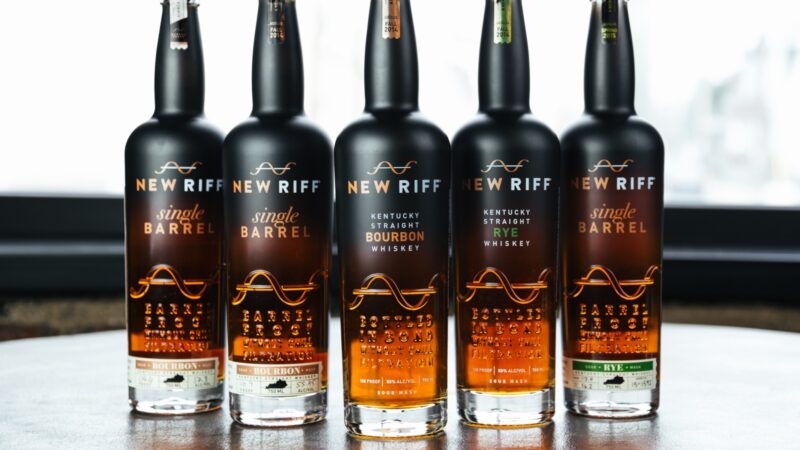
Kentucky-based New Riff Distilling is one of the newer bourbon brands on the market in the U.S., opening in 2014 just across the border from Cincinnati. Now, they’re expanding into North Carolina with their core line and a few special releases as part of a broader expansion into the Southeast. The offerings will soon be in Mecklenburg County ABC Stores. Mixed beverage permit holders can special order bottles, which means the orders are fulfilled by New Riff instead of being held in stock at the ABC Warehouse. The latter is something New Riff is working towards. New Riff will soon be available in Mecklenburg County, as well.
The distillery’s debut line in North Carolina includes its Bottled in Bond Bourbon, Bottled in Bond Rye, 6 Year 100% Malted Rye Whiskey, Single Barrel Bourbon, and Single Barrel Rye. It will be distributed by RNDC.
We spoke with Rawnica Dillingham, Chief Sales Officer of New Riff, about the distillery’s expansion into North Carolina and what to expect in the future.
Unpretentious Palate: What does it take to get a point where you can start distributing outside of the state?
Rawnica Dillingham: I am maybe about ten weeks in as the chief sales officer at New Riff, so I am coming in at mid-expansion, if you will. We, as a company are growing rapidly, but have been on a really slow and steady intentional growth pattern since we went to market in 2018. This year, New Riff has decided to put a little more focus in their expansion and sales force, which is where I came in. I was brought in as Chief Sales Officer at the beginning of February. And then throughout Q1, we have expanded into four new states, with North Carolina being one of them.
UP: With bourbon, you can’t meet demand precisely because the aging process takes so much time. How are you managing production to meet the demand during expansion?
RD: We as a company project out what that’s going to look like year to year, and our capacity from a barrel perspective is greater than our current sales, so we have that ability to expand. The really great thing about whiskey and bourbon is that leaving some unbottled doesn’t mean it goes unused. We hold back 20-30 percent of everything that we barrel so that it can continue to age, so we have older age statements as we as a company get older. We have those additional barrels that can continue to age if we need them to or can be pulled in the moment if we need them to as well, from a demand perspective. We did set out what the year looked like, including the new states that we anticipated going into, and allocated a general idea of what that volume would look like in each of those new states and built that into the barrels and into the bottling process and forecast for the year.
UP: What will you have for sale in North Carolina to start? And do you plan on growing that?
RD: Absolutely. We are starting with our core line, which is going to be our bottled-in-bond bourbon, our bottled-in-bond rye, as well as our general SKU single barrel bourbon and rye. We’re also coming in with our malted rye — a specialty item, which is kind of exciting and fun — as well as our barrel-aged gin, which is a Kentucky wild gin that’s aged in our used whiskey barrels. Those are the expressions that are coming in to North Carolina first.
Towards the end of the summer, you will see our oldest aged-stated bourbon yet — our eight-year bourbon —and our eight-year rye coming into the market as well.
UP: What have you learned about North Carolina as a whiskey state so far? Is there anything that sticks out as being different from Kentucky, or any of the other states that you’ve distributed to?
RD: Absolutely. North Carolina is its own little mini country, if you will. Typically, Kentucky being an open state, orders flow in and out easily. North Carolina being a control state, it creates a little bit more paperwork of course and a little bit more processes going in and out of the state. But what’s really unique about North Carolina, which has been a huge learning curve for our team, is that each separate county within the state operates as its own little control market. So those purchase orders, instead of getting one for the state, we get one for each county as it comes in. From a logistics and shipping perspective, instead of getting a purchase order and then shipping it out, we’re getting 75 purchase orders and holding them so that they can all create one large order to ship out together.
UP: Have you noticed any trends in what North Carolinians drink, or is it the same across most states?
RD: Single malt has been doing really well in North Carolina. I was just having this conversation with someone last week. North Carolina is one of the top ten states in the country for whiskey consumption per capita, and so North Carolina is a really, really important market for a whiskey brand of our size to be in.
From a spirits perspective, whiskey’s where it’s at in North Carolina. It’s certainly a great space for us to be in and … a really important whiskey market. Single malt whiskey is rising nationwide, but I’ve noticed in North Carolina those numbers are up. We will be putting our single malt into the state as well in the fall, so I’m excited to bring that in. I think it’s going to be really, really well received by the market.
UP: How did you decide which states you were expanding into?
RD: A couple of different ways. One of those things is just capacity from us as a team perspective. So when I came on as chief sales officer, I hired a few new people. One of those people is a sales manager for the Southeast; one of those people that actually got promoted from within the company is a control state sales manager. Having those people in place allowed us to determine what states we wanted to expand to in our list of priority states. Those priority states are going to come from a) whiskey consumption per capita and b) our bandwidth as a company to be able to service those states once we get into them. And then, do we have a distributor partner in those states that we believe is going to take us to the level that we need to for success in that state, or broker partner in a control state. Those pieces put together determine where we’re going to go. So this year we expanded into the Carolinas and Louisiana and Georgia.
UP: You mentioned releasing the single malt in North Carolina this fall — will all New Riff expressions be available here as they’re bottled, or will that selection grow with time?
RD: We know for the year what our specialty offerings will be and we have those planned out for the rest of the year, with their bottling dates. As far as which ones are coming into North Carolina, being a control state and being our first year, those will be the only specialty items we will be putting into the market this year. We want to allow our core line to grow and be healthy before we bring too many other things into the market. And so our focus this year is really growing that core line, introducing our new eight-years and then giving a couple of specialty items as well so that way, we have some versatility in the market.
Our focus in North Carolina for 2024 is going to be just to get to know the consumer, let them get to know us, and really grow those core line items that we talked about earlier into the market for this year. And then next year, as we start to work towards a full listing in the state and we get out of special order, we will be able to start to bring in some of those specialty items a little more frequently until we get to be fully listed on our core line items that’s going to be our focus.
UP: What will it mean to consumers — restaurant and ABC store — when you become fully listed?
RD: It makes a huge difference from the availability. The difference between a special order and being fully listed determines product availability in the warehouse. So at this point, if an on-premise bar or restaurant buyer wants New Riff, they have to go to their local store, let them know that, then their local store has to order it, and then it has to get shipped from us to the North Carolina warehouse, then to the local county, and then to that on-premise location. That’s a 3-4 week process, and it will remain that way until special order is over and we become a full listing. Once that happens, then there will be product in the North Carolina warehouse all the time, so when the stores order, then the orders just get fulfilled as opposed to a new order having to come through every time a bar or restaurant decides that they want to bring in New Riff. [Currently,] they have to then order it, pay for it, and then wait the four weeks before they’re going to receive the product, which can be pretty cost prohibitive sometimes for on-premise locations, to put those dollars out for weeks in advance.
Getting to a full listing from an on-premise perspective is certainly a really big deal. From a retail perspective, it looks a little bit different in the fact that we would have availability in more stores. But from the way they access the whiskey on a retail side, the consumer’s not going to notice a difference. It’s going to be in their state liquor store, and they’re going to go in and they’re going to purchase it. But on the on premise bar restaurant space, it definitely changes the timeline of the process.
UP: Is there a set date where that swap happens to become fully listed?
RD: It’s an approval process. Basically, we come in as special order and then the control states determine whether or not you or your sales are warranted to be fully listed in this section. So what’s happening now, orders being placed, how quickly they’re leaving the shelf, on-premise relationships we’re able to build, like this one with Ruth’s Chris [in eastern North Carolina] — those types of experiences increase our volume while we’re special order, which helped make our case for a warranted full listing. There’s not a timeline of a switch. It’s more of an approval process that we have to go through to be able to be fully listed.