Hidden gem in Charlotte’s Oakhurst neighborhood where the menu is as creative as the food
Hidden gem in Charlotte’s Oakhurst neighborhood where the menu is as creative as the food


At Project 658, a café brings new faces — and a new revenue stream — to the nonprofit
By Ebony L. Morman
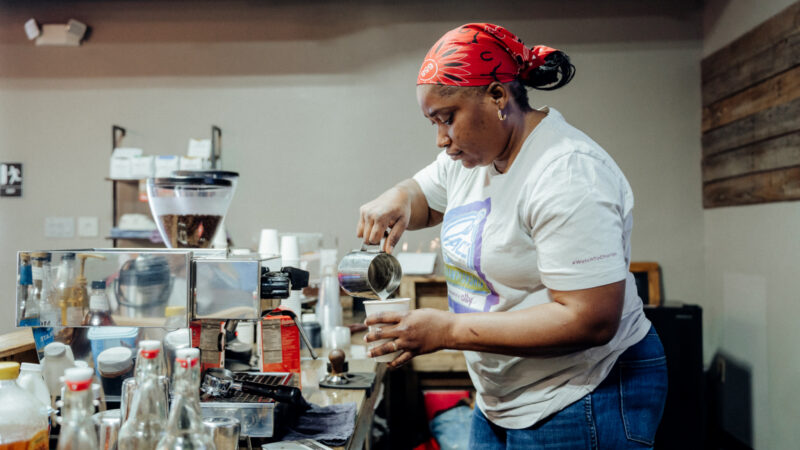
Neighborhood Coffee Roaster’s cafe manager and barista Nathalie Indenge is from the Democratic Republic of the Congo. Seven years ago, she arrived in Charlotte, after traveling more than 7,000 miles to get here, not knowing what to expect. Now hers is the beaming face you see when you walk into Project 658’s facility on Central Avenue in East Charlotte. And Indenge’s mere presence is a tangible example of Project 658’s mission.
The local nonprofit’s goal is to change Charlotte by loving and serving people, says executive director Eric Brenner. Providing an opportunity for Indenge to become a barista is one example of how the organization’s mission is lived out daily.
“The cool thing about coffee is it’s so communal,” Brenner says. “We love that when people walk into our building, they can get a full bevy of products, just like any other coffee shop. People love to just hang out, get a cup of coffee, and have a conversation. Then Indenge, she’s also our receptionist, if you will.”
From her perch at the coffee bar to the left of the entrance, Indenge receives all who walk through their doors. She’s an important part of the community that’s nurtured at Project 658. It’s a community that supports at-risk families by guiding them toward sustainability. More specifically, their work centers on international and refugee communities. The organization, which launched in 2008, offers relief programs, classes that empower refugees and aid in their personal and professional development, and services such as childcare and sports programming for youth.
“We want to help the community all around us, that’s kind of fractured and broken, in a small way,” he says. “If we can provide a spot for people to come, feel loved and welcomed, enjoy a cup of coffee, and be introduced to what we do, then we’re helping to restore the community here in East Charlotte.”
The decision to integrate coffee into their work wasn’t immediate. Neighborhood Coffee Roasters launched in 2023, but the seed was planted six years prior by Logan Thompson, community outreach and Imago 658 director. He wanted to incorporate an entrepreneurial aspect into their work with the goals of supplying jobs and ensuring sustainability for the nonprofit. Instead, Thompson founded Imago 658, a print shop, with the same goals. But coffee remained in the back of his mind. So when the print shop began experiencing growth, they circled back to coffee. Thompson, a coffee lover, planned to hire and train a barista, as well as someone to roast the beans on site.
Indenge is the shop’s only barista, except on a few occasions when Thompson hops behind the bar to make drinks alongside Indenge. But that doesn’t happen often because now she makes coffee with confidence, though she didn’t start out that way, even under Thompson’s tutelage.
“I was nervous because it was my first time being a barista,” Indenge says. “I didn’t speak English and I would see everyone when they entered.”
It didn’t take long for those nerves to wear off. Within two weeks, she was prepared to make coffee on her own. More than a year and a half later, she’s at ease moving behind the coffee bar, making coffee, making sure everyone has what they need, and waiting for an opportunity to let her creativity shine whenever someone orders a latte.
“My favorite coffee to make is a latte because it’s hard,” she says. “You need to create a design and I need to create the design from my heart. When I make a design, I just pray that if my customer drinks this coffee and they’re going through something bad, after they finish my drink, they feel better.”
Indenge’s aware that her work is about more than coffee. The coffee and Indenge meet visitors at the door and both have the ability to positively impact someone’s day. That’s why she takes her job seriously, ensuring that the customers who choose to stick around to enjoy their drinks at one of the many tables in the nonprofit’s lobby feel welcomed, too. She also ensures that each drink is made with love. Whether customers order drip coffee, espresso, or cold brew from the coffee portion of the menu or a signature offering, such as Ethiopian coffee or a honey lavender latte, she takes her time because every cup matters.
To make the drinks, Indenge uses coffee beans that Thompson sources from vendors in the countries where many of the people the nonprofit serves came from, such as Ethiopia and Colombia. Indenge is Congolese, so Jambo, specifically, is sourced from the Congo. It produces a medium roast coffee with an herbal essence. Salem — a light roast coffee that’s bright, light, and complex — is from Ethiopia. Buen Dia, which originates in Colombia, is smooth with tasting notes of walnuts.
While Project 658’s venture into coffee is fairly new and they are still working on the business model, Brenner believes the decision is worthwhile.
“Even if coffee is a net zero to our bottom line, it’s worth it, because it creates this communal atmosphere,” Brenner says. “It creates this welcoming part of what we do, coffee just does that for people. We’re still striving to learn how to grow and how to make it better. But right now, it’s an integral part of what we do.”