Hidden gem in Charlotte’s Oakhurst neighborhood where the menu is as creative as the food
Hidden gem in Charlotte’s Oakhurst neighborhood where the menu is as creative as the food


The longtime restaurant owner was optimistic, now uncertain about getting funds

The Fig Tree’s duck confit takeout serves four people. Kristen Wile/UP
After the CARES Act passed on March 27, restaurant owners quickly worked to file the paperwork to apply for the Paycheck Protection Program, a forgivable loan meant to enable small businesses to continue paying their staff. Businesses that use the funds for basic operating expenses — such as rent, utilities, and payroll — can have 100 percent of the loan forgiven. However, the process hasn’t been easy for everyone, and the first round of funding rapidly ran out. The second round of funding is expected to run out just as quickly. We’re asking a series of business owners if, how, and when they got their loans, and how they plan to use them. When we spoke, Greg Zanitsch, owner of The Fig Tree with his wife Sara, received confirmation from Bank of America that their paperwork was filed and was confident they’d be getting a loan. Now, he thinks they have a 50-50 chance of seeing any funds from the program. —Kristen Wile
Unpretentious Palate: When did you apply for your Paycheck Protection Program loan?
Greg Zanitsch: We applied (April 3). But then on Monday, we were told that they had changed the form over the weekend so they needed some additional information. We received a confirmation email saying that they had received the application. And then on Saturday at like three o’clock, the bank called us and told us that they had received everything and they needed one more thing, so Sara sent it to them.
UP: When do you anticipate getting the money?
GZ: It could be as early as this week. It might be a month from now. I don’t know. So I know that they’re busy. I know they have the application and I know that they have everything they needed from us. So I felt like as long as we did our end, they’ll hold up their end when they get to us.
UP: Do you have a breakdown of how you plan on using the loan?
GZ: I talked to the accountant — Sara did more so than me because I was busy yesterday — but she talked to him for about an hour on Saturday night. He said he would let us know, and that it’s still being ironed out. We have 42 employees. Most of them are part-time. So those are the people I really want to see get back, or get something in their hands.
UP: The Fig Tree is serving family-style take-out. When you get the money, will that change whether you’re planning to do take-out?
GZ: I don’t think so. Sara and I were talking last night and we get better each week. The first week was rough. Closing on Mondays and getting deliveries for the weekend has helped out, and it kind of gets me prepped a day ahead. It’s been well received and we’ve gotten better at it, we’ve kind of got a system in place, so I foresee us not stopping.
UP: What happens if your restaurant isn’t open by the eight-week time limit you have to rehire your staff?
GZ: I feel like if they need to adjust that, I think everything is kind of in a state of flux. So I don’t believe that will become an issue. I think if they were to tell us we needed to close longer, they would just change the terms of the loan.
UP: Do you have any concerns about the terms of the loan that you’ve come across that far?
GZ: Not at all, no. I was hesitant until talking to our accountant, and he convinced me that this was a good thing. I usually don’t like to rely on government for things, but he talked me off the ledge, and told me that this will be good for everybody.
UP: Do you think that more restaurants have a better chance of surviving now, or do you still think a large percentage of restaurants will not make it through the shutdown?
GZ: I am kind of isolated in the kitchen every day, which has been a good thing because I’m not watching the news and I’m up in the morning and tracking down product, then in the kitchen all day. So I haven’t talked to a whole lot of people. I don’t know. I talked to the national sales person from Louis Latour last week, and he says that he expects about 35 percent of restaurants not to make it. I think that seems like a high percentage. I think there’ll be some that don’t. But I think I think most people come back and will come back strong.
UP: What do you think will look different when you open your doors again?
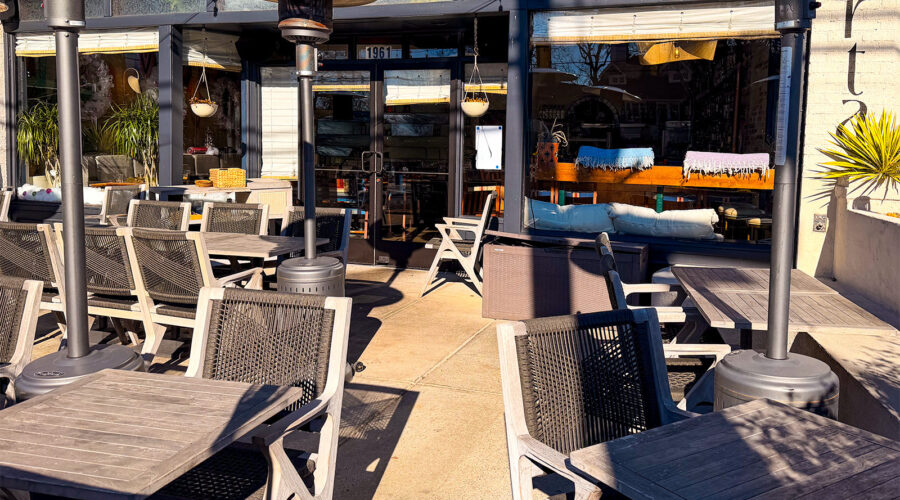
GZ: I think that everybody has a different comfortability or sense of mortality. Some people are taking it more seriously. Rightfully so. And some people are taking it less seriously. And that’s their decision. People will come back when they’re comfortable. Whether that’s opening night or or six months from now, it just depends. Everybody is going to have to weigh that personally and make that decision on their own. I think that we’ll probably be busy right out of the gate for a week or two. We’ve had a lot of people reach out and want to support us and tell us they can’t wait to come back. But then I think it will probably slow down a little bit until maybe mid-summer. I really don’t know. That’s just kind of a gut feeling. I think we’re in a good space because of the size of our restaurant and having outside seating. I think people will feel comfortable sitting outside before they feel comfortable sitting inside.
And that we’re an old house with small rooms, you wouldn’t be around more than a few people. I think if you’re Capital Grille or Del Frisco’s and you’re doing 350, 500 people, people might be a little more hesitant to dine there right away. Also, I think being open for 15 years, people tend to come back to us because they trust us and know we’re trying to do the right thing.
UP: One thing that I’m hearing is that when restaurants reopen, they’ll have to limit seating and spread out tables. From a business standpoint, if you have to operate with fewer tables in your restaurant, what does that do to your margin?
GZ: The obvious answer is that if you reduce your seating by 20 percent, it takes 20 percent off your margin. If that’s necessary to do, that’s certainly what we will do. I think that’s probably what it will be. We survived 2008 in the economic cycle back then in the downturn, doing few covers, and we just had fewer employees. Sara will work more in the front and I’ll work more than the back and have fewer people around if we have to go that route. I’m hoping that we can hire everybody back, and this is a short-term blip, but we’ll see. We don’t know what’s going to happen in the fall.
UP: If you get PPP funds, when do you plan on paying people again?
GZ: That’s what I’m waiting for the accountants to tell me. And as of Saturday, he didn’t have a solid answer for me yet. Carry-out’s been good. I’ve been doing it with a skeleton crew. I have a lot of people that want to work. But it’s a catch-22 of you don’t want people around. So we’ve been keeping just the same two girls in the front; it’s usually Sara and two others in the front of the house and then me and the dishwasher. I have Molly [Cohen, pastry chef] come in in the mornings early and do desserts twice a week, I have Will [McAvoy, sous chef] on Mondays, and then it’s just me in the afternoons. Then as I’m finishing up, I have a dishwasher come in and clean up because the first week I tried doing dishes by myself and was there ‘til 10 o’clock at night every night. I decided I needed somebody else to do that. I’m not as young as I used to be.
UP: When you bring people back on staff, presumably it’ll be before the restaurant is able to open its doors again. Do you have a plan on what your staff will be doing?
GZ: No, I think cleaning, for one. But I think we’ll just bring everybody back on would be my guess, and we will then just bring them in on an as-needed basis. We’ve talked to certain staff. Certain staff ran out and got jobs at Amazon and are so far enjoying that. And hopefully they want to come back. But they might enjoy the benefits and the set schedule and set money at Amazon. So we’ll see. But others are probably playing X-Box 16 to 18 hours a day. Everybody’s handling it their own way. As soon as the accountant tells me we can start paying people, my intent is to pay everybody and then bring them in as needed and as safely as possible.
UP: We ordered one of your mixed wine packs, which I’m excited to try. That was a cool idea.
GZ: For years and years I’ve been kicking around the idea of a Fig Tree Wine Club. I never really got my head around how to make it work. And in a matter of two days, we put that together and we sold well over 100 cases of wine doing it. Even when we reopen, I think we might consider doing like a quarterly Fig Tree wine club. Just affordable wines that deliver for the price, some favorites of ours.
The wine list is going to be a nightmare. I guess that’s one thing when we do reopen — I’ll have the staff come in and we’ll have to do a crazy inventory, because there’s a lot of people that have been cherry picking special bottles off the list. I think our inventory is going to look a lot different when we finally reopen.
UP: If you keep doing the wine club, that’ll be one positive that comes out of all this, right?
GZ: Yeah, I think so. This is a negative event for sure. I hope people don’t get sick. But other than that, I think we’ll try to make the best of it. Everybody’s gonna be ready to get back to work, which is sometimes a nice feeling. People want to be at work, not feel like they have to be. So I’m excited for that. I’m excited to see everybody. It’s hard not having seen employees. Most of our staff has been with us more than five years and a lot of them ten years. I haven’t seen any of them for three weeks now. And it looks like it’s gonna be at least another three. So it’ll be exciting. We’ll have a little reunion.