
Hidden gem in Charlotte’s Oakhurst neighborhood where the menu is as creative as the food
Hidden gem in Charlotte’s Oakhurst neighborhood where the menu is as creative as the food


We asked Subrina Collier about how the historic inspiration will translate
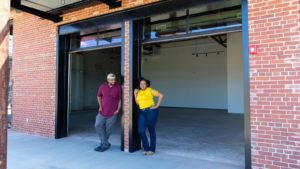
Greg and Subrina Collier, owners of Leah & Louise. Kristen Wile/UP
Greg and Subrina Collier opening a restaurant in Camp North End was big news for Charlotte’s food scene, and most media outlets across the city wrote about it. The Colliers, both Memphis-raised, said the inspiration for the restaurant, called Leah & Louise, was juke joints, popular hangouts for black Americans. We wanted to know more about juke joints and how that inspiration would translate in a sit-down restaurant, so we sat down with Subrina Collier to get some more details.
“Juke joints are blues, they’re booze, they’re very Southern, very soul music,” she says. “They’re not refined, they’re not this cookie cutter theme of what a lot of restaurants are now.”
Juke joints came about after the end of slavery, Collier says, when segregation was the norm.
“Bars really weren’t something we were able to go to, so you had to go to places that had bootlegged liquor and some music,” she says.
Her own grandmother frequented juke joints, and her grandfather played blues music on Beale Street. While they hope to add live performances eventually, the Colliers are looking for a juke box with a catalogue of blues for when Leah & Louise opens. For those who aren’t familiar with juke joints, Subrina points to a scene in The Color Purple when Shug is singing in the bar for a visual.
Subrina will be overseeing the restaurant’s design, and says trying to turn a new interior into something that reflects history is a challenge. She plans to bring in antiques and use some of the items found during Camp North End’s renovations as décor, with Beale Street’s iconic streetscape as an inspiration.
As for the menu, Subrina says it will be Greg’s take on the food they ate growing up in Memphis. He’s looking through his grandmother’s recipes, reading up on the history of Southern food, and getting input from chefs in Tennessee.
“What were people eating during that time?” Subrina says. “They’re eating a lot of ribs, fish, pork, meat-based. It’s soul food, but it’s a different flare on it — same thing like we do at Soul Food Sessions. It’s a different take on it. Greg is going to refine it to what he sees, because history is only through the eyes of the person.” —Kristen Wile



I was already excited that they were opening a place at Camp North End but anyplace using “juke joint” in their title has me as a guest.