
Hidden gem in Charlotte’s Oakhurst neighborhood where the menu is as creative as the food
Hidden gem in Charlotte’s Oakhurst neighborhood where the menu is as creative as the food


State and national initiatives hope to address a long-standing bottleneck in niche meat processing
by Allison Braden
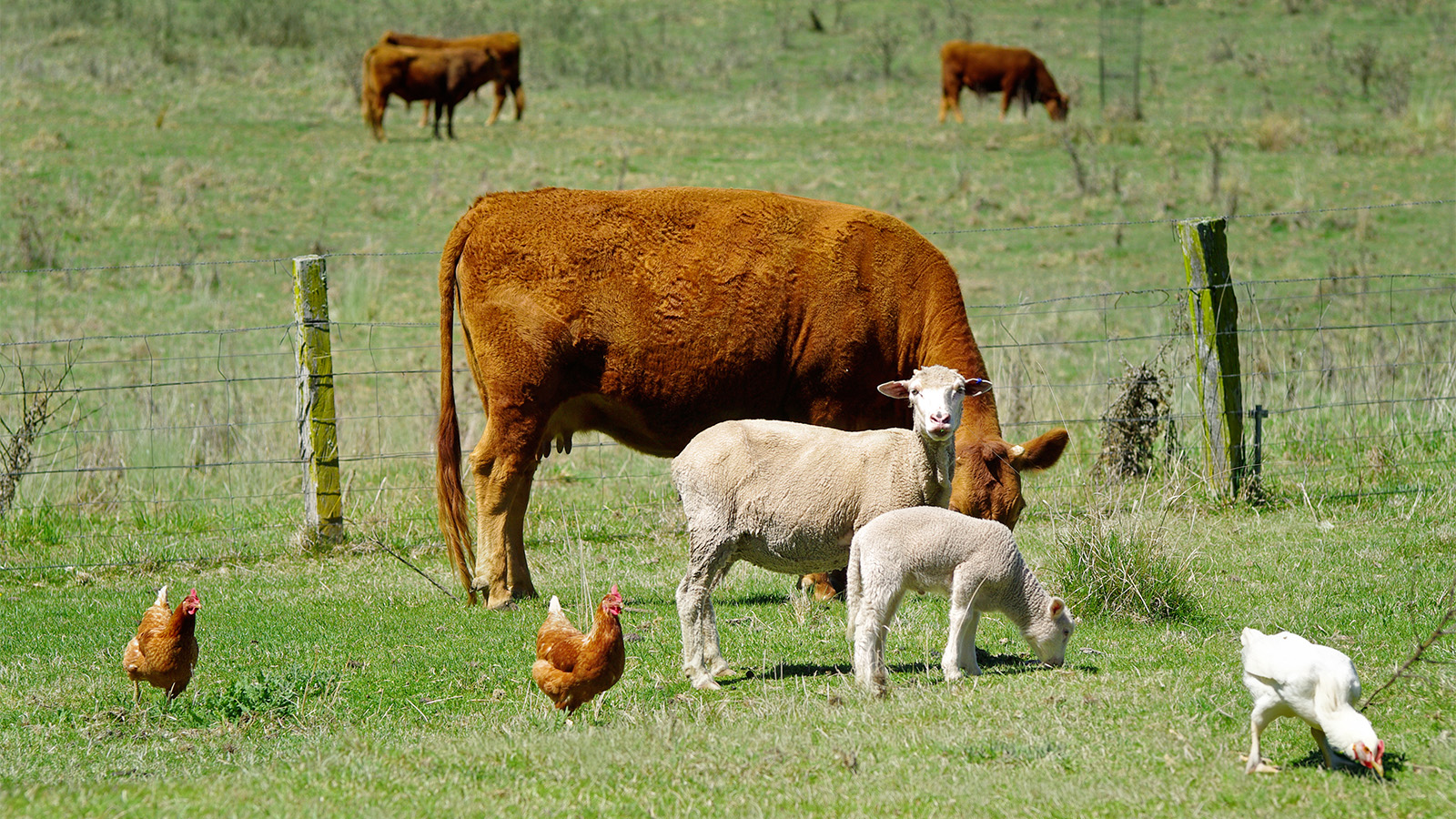
Farmers find it increasingly difficult to get their meats processed, but local and federal initiatives hope to change that.
When Sammy Koenigsberg established New Town Farms in 1990, he had two choices for where to process his poultry: He could drive nearly two hours west to Hendersonville or two hours northeast to Chapel Hill. For small-scale farmers like Koenigsberg, the options for meat processing have improved in the last 30 years, but significant challenges still hamper their ability to easily and efficiently process meat for sale.
Across the Carolinas, USDA-inspected meat processing facilities are scarce, meaning that many farmers must transport their livestock, from chicken to cattle, hours away. If the processor is three hours away, for example, that means a six-hour round trip to deliver the animals to be slaughtered, processed, and packaged, and another to pick up the finished product.
In its 2016 overview of the U.S. slaughter industry, the USDA reported that just 837 USDA-inspected plants are processing beef and pork nationwide, a 36% decline since 1990, and the plants have concentrated geographically. The scarcity means it’s tough to get an appointment, too, a problem that was exacerbated during the pandemic, when large meatpacking plants became COVID-infection hotspots.
“During COVID, there was this huge demand. A lot of local, smaller growers, instead of shipping their beef off to the lots, they started processing here, and they ended up clogging up all the butcher shops for the small guys like us,” Koenigsberg says. “If I was three weeks out, I could get a slot for my pigs, and I called one day, and they said, ‘It’s gonna be a year.’”
Koenigberg was broadsided. “I can’t wait a year,” he recalls thinking. “I’ve got to figure out how to butcher these myself — which is illegal!” (Farmers can process meat themselves, but that comes with its own thicket of opaque regulations and requirements. In 2006, the Carolina Farm Stewardship Association published a 46-page guide to meat processing.)
Because Koenigsberg had a decadeslong relationship with his processor, Wells, Jenkins & Wells Fresh Meats, he was able to get an earlier appointment. But the bottleneck, which has improved but not disappeared in the wake of the pandemic, may lead less established farmers to opt out of raising livestock, even as demand grows for local, sustainably raised meat.
The Niche Meat Processor Assistance Network is a national university extension-based community formed to share resources and advocate for improvement in the sector. “Small and mid-sized plants — when available at all — can lack capacity, equipment, appropriate inspection status, and the human and financial capital to upgrade or expand,” their website explains. “A stable base of profitable and nimble small and mid-sized meat processors is essential to bringing sustainably and humanely raised meat and poultry to local and regional markets.”
In North Carolina, the Center for Environmental Farming Systems collaborated with the NC Cooperative Extension to launch NC Choices, an initiative to promote “sustainable food systems through the advancement of the local, niche, and pasture-based meat supply chain.”
NC Choices awards Increasing Meat Production, Efficiency and Capacity grants to processors. Recent recipients include Piedmont Custom Meats in Asheboro and Gibsonville, which used the grant to upgrade equipment and expand their facilities to improve efficiency and productivity. In 2021, the company also established an intensive training program to develop meat cutters to North American Meat Processor standards. This summer, Piedmont Custom Meats opened a third production line to increase capacity and re-added smoked sausages and hot dogs to their offerings.
In February, a bipartisan group of U.S. Representatives introduced the Strengthening Local Processing Act. The bill would create training programs to address workforce shortages, boost the Cooperative Interstate Shipment program to promote more robust interstate trade, and fund grants to improve local and regional processing capacity. The legislation could become part of the 2023 Farm Bill, which will steer agriculture and food policy until 2028. (Since 1933, Congress has passed a farm bill roughly every five years.)
Consolidation and lack of oversight in meatpacking have been headline issues for more than a century — the topic of Upton Sinclair’s seminal exposé The Jungle, which led to the creation of the Food and Drug Administration.
“The small processor was one of the casualties of the industrialization of agriculture,” Koenigsberg says. As companies like Tyson vertically integrated and developed their own USDA-approved processing facilities, small processors lost a major market, hollowing out the sector. Massive corporations now dominate — and threaten to monopolize — the industry.
In the meantime, small-scale farmers make do. “The situation is a reflection of the state of agriculture,” Koenigsberg says. “It’s a chicken-and-egg situation.”













Thank you so much for bringing attention to this. There are several local food initiatives being addressed by Rep. Alma Adams and others including the Strengthening Local Processing Act that we should be supporting. Supporting Urban & Innovative Farming Act (S.2591) is another that will benefit the Charlotte area food shed.