


July 16, 2024
Jersey girl finds life and love on a North Carolina farm
Coldwater Creek Farm’s Donna Hinckley went from volunteer to wife and farmer
by Ebony L. Morman
A farm tour. That’s how Donna Hinckley got into farming. It was 2012, and a native of New Jersey had just moved to Charlotte. She was in between jobs and decided to take a tour of Coldwater Creek Farms. From there, her future was set.
“I volunteered to help harvest the sweet potatoes for that fall,” Hinckley says. “Then, I just never left the farm.”
What started as temporary became permanent when Hinckley got used to the repetition of being on the farm, digging up crops, and lending a helping hand. Her interests were piqued as she learned about the ins and outs of crops: what they like, what they don’t like, and what grows in which season.
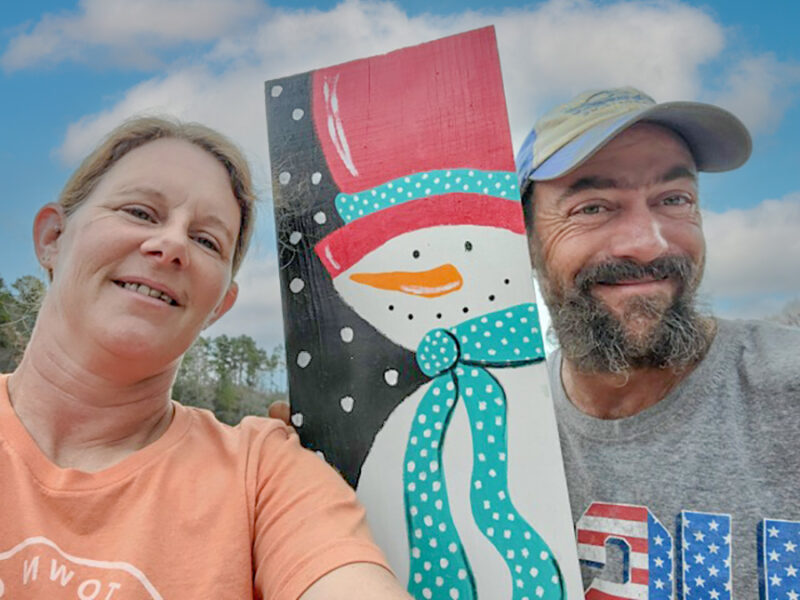
Then, she married the head farmer, Brad Hinckley, who started Coldwater Creek Farms in 2009 with just two plots, each one acre. When Brad’s partner had to exit the business, the Hinckleys began running the farm together.
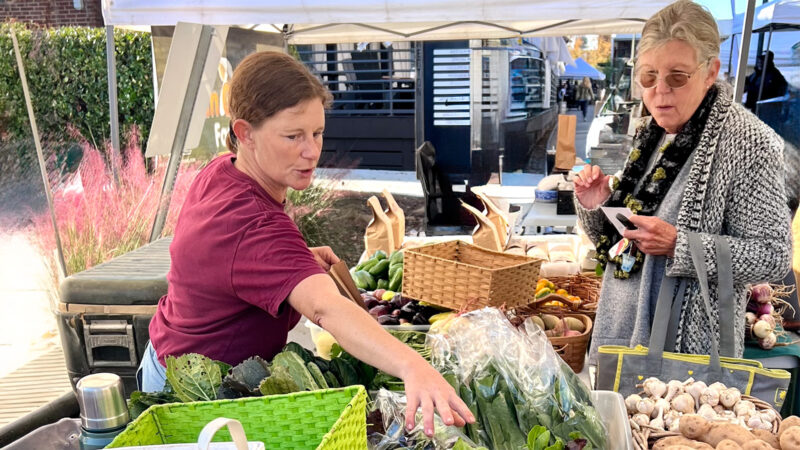
Today, the farm encompasses nearly 30 acres in Gold Hill, North Carolina. The couple rents the land in addition to renting a few five-acre plots around town. These five-acre plots are where most of their corn is milled for grains, kidney beans, and other crops that don’t need attention until harvest grows. The entire operation is just shy of 50 acres. On Saturday mornings, market-goers can peruse their offerings of pork cuts, vegetables, fruits, cornmeal, grits, and whole wheat flour at both the South End and Davidson farmers markets. Their grits are also shipped throughout the Southeast to places like Florida, Virginia, and Georgia, thanks to wholesale accounts with distributors.
When people visit Coldwater Creek Farms stands on Saturdays, they can expect to shop produce that has just been harvested. The couple eats in season at home and serves the community what’s in season, as well. For instance, Coldwater Creek Farms does not currently offer bell peppers or white potatoes, which have yet to be harvested since winter. But the harvest is near, and Hinckley is excited.
“I absolutely love sharing my knowledge about produce with the community and the excitement of the new season coming and the new crops that are coming with it,” she says.
The best way to experience new crops is through the farm’s Community Supported Agriculture (CSA), which is offered for 26 weeks (in two 13-week sessions) during the growing season. The CSA starts with spring and summer crops and ends in early November with summer and fall crops.
“With our CSA, you’re going to eat seasonally,” Hinckley says. “So if we’re harvesting it, it’s in your basket every single week. Once we start getting into peppers, you’ll have peppers the whole way along. And that’s the same with heirloom okra, which is this beautiful burgundy okra.”
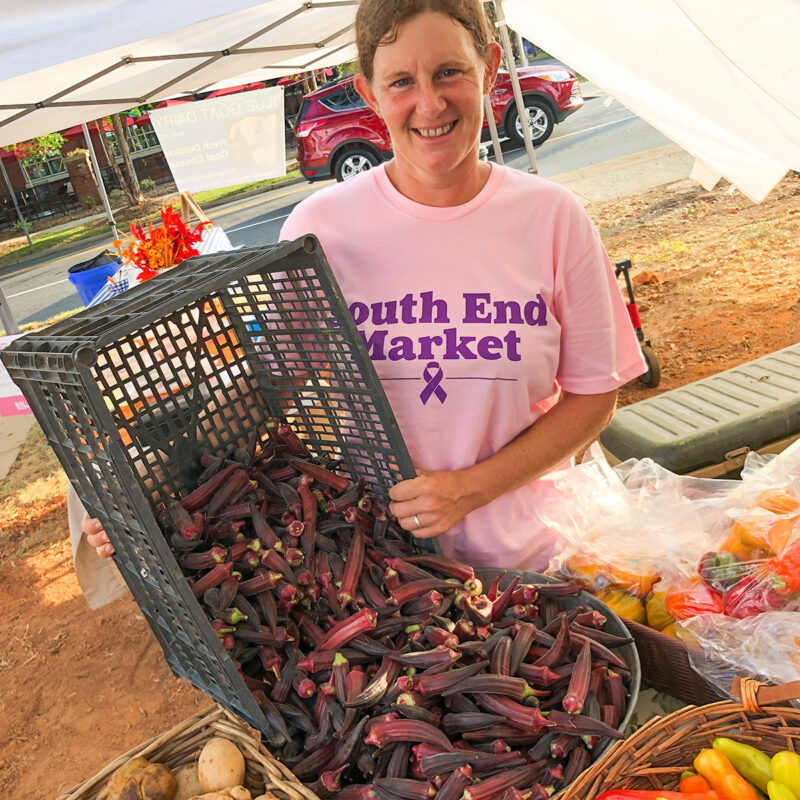
That okra is one of the things that sets the farm apart. The seed is unique to Coldwater Creek Farms, passed down through several families who no longer have the seed anymore. But the Hinckleys keep their seed, refrigerating it for longevity. The burgundy okra stays tender for longer and is sweeter in flavor than its counterparts. When it’s in season, during the hottest part of the summer, people line up to get it, she says.
Their approach to farming is one that provides customers with produce and meat in their most natural state. Their processes try not to impact the natural order of farming by adding chemicals or pesticides. Going natural can be costly and time-consuming because it makes the crops more susceptible to animals and critters, Hinckley says.
“We’ve had years where the deer have come in and eaten 100 percent of our strawberry crops,” she says. “Some crops, it’s not much, maybe 30 percent. So sometimes you have just to take the loss and move on.”
The Hinckleys use experiences like these to affirm that they must be doing something right in their approach because animals flock to their crops.
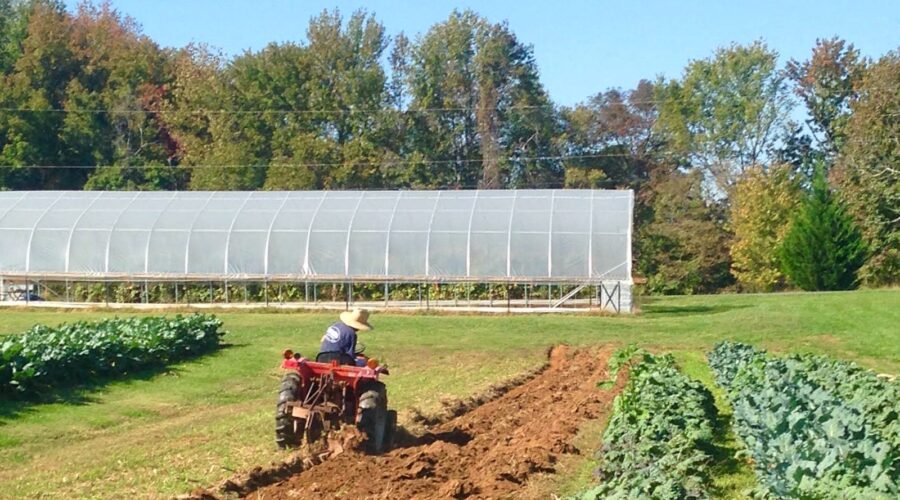
While the loss of crops is challenging for farmers, the couple is adapting to yet another obstacle. As they grow older, they have to be more innovative in the way that they farm. They’ve determined ways for the small tractors to help them along the way; crops they normally hand plant are now set in the ground using machines on tractors, and plastic is used in the fields to catch drip irrigation to conserve water. It also suppresses the weeds, which means the couple doesn’t have to pull weeds daily.
Though there are many things to navigate, one of the things Hinckley loves is watching crops mature no matter how long it takes, whether it’s three months or longer.
“There’s just that great satisfaction of seeing a crop all the way through to the harvest,” she says. “Ever since I was a little girl, I loved vegetables. So that’s an added bonus. I get to take all this super fresh produce with the highest nutrients you could possibly get because it was just pulled out of the ground.”
Hinckley attributes the farm’s success to the family atmosphere it brings to the farmers markets. It garners repeat customers, she says.
“When we talk about our produce, it’s just pure passion, as if it were our own children,” she says. “We tell customers about how the crop grew, the flavor of the crop, or how it’s different from others. And our excitement about produce gets the customers excited to take it home and try it. We also grow what we like to eat, and we want to share that with the community.”