Hidden gem in Charlotte’s Oakhurst neighborhood where the menu is as creative as the food
Hidden gem in Charlotte’s Oakhurst neighborhood where the menu is as creative as the food


Here’s why judging a restaurant based on health scores isn’t always fair — and what to look for
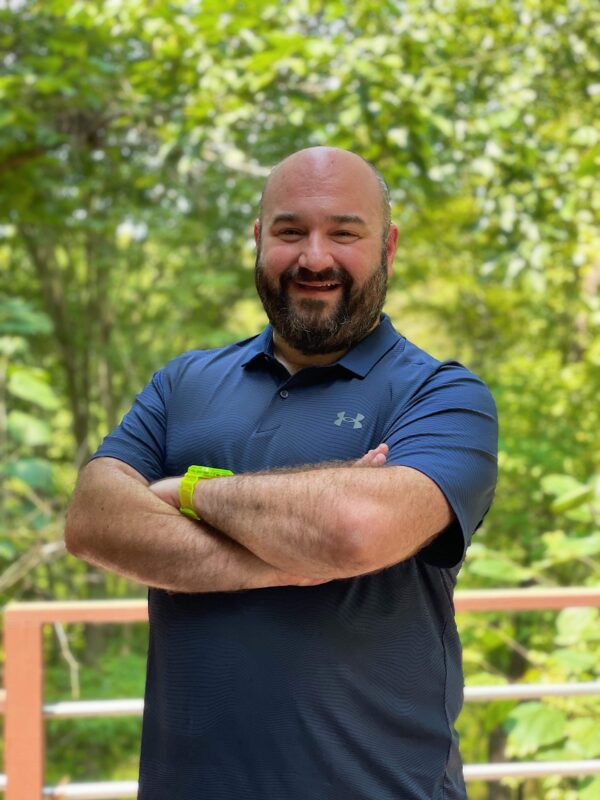
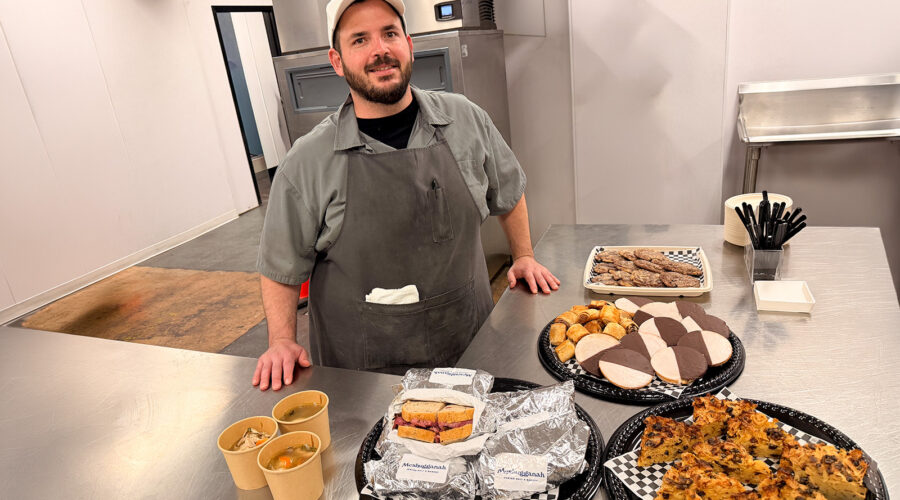
Adam Dietrich, the owner of Expo Food Safety. Photo courtesy
Last week, food safety instructor Adam Dietrich taught his first class in his new space in Elizabeth. His business, Expo Food Safety, leads workshops with restaurant industry professionals to train them in ServSafe’s sanitation and food safety standards. ServSafe certification is recognized by the state of North Carolina, and those in management at a foodservice establishment must be ServSafe certified to ensure they are aware of proper food preparation and storage. Because of the popularity of Monday lessons — when many restaurants are closed — Dietrich needed a reliable space where he could teach employees of more than one restaurant, instead of asking them to book months out for a Monday date.
To better help restaurants understand the state’s food safety requirements, Dietrich also holds alcoholic beverage safety training and mock health inspection walk-throughs. That latter service has become more important than ever as customers have grown more aware of the sanitation rating hung near restaurants’ front doors. Part of that awareness, Dietrich believes, is due to sensationalized reporting of them — several publications in Charlotte, for example, publish regular stories reporting the restaurants that achieved the worst health scores. Sometimes, however, low scores don’t mean anything serious.
“We know that repeat violations can be really detrimental to a restaurant health inspections score,” Dietrich says. “It can just be a few things that if they haven’t corrected from the last inspection, that can that can really add up very quickly. Not always are low scores due to critical violations. There might be small, non-critical violations, but quite a few of those add up.”
Dietrich says he cautions people against setting a score threshold at restaurants. Instead, use the health department’s website to look up the reasons behind a low score. To him, the worst things to see are violations that indicate management isn’t paying close attention or setting strong expectations in the kitchen, like hand-washing violations or food repeatedly stored at too warm a temperature. Low scores based on simpler violations, however, don’t prevent him from eating at a place.
“A 92 doesn’t mean that you have rats the size of chihuahuas running through the kitchen,” he says. “It could easily be paper towels are out at one of the five hand-wash sinks, it could be no ServSafe certification, and a bottle of sanitizer is mislabeled. That automatically brings you down eight points.”
With his new classroom, Dietrich — a former culinary arts high school teacher — hopes he’ll be able to guide more restaurants to better health scores. He plans to allow others to rent the space outside of his classes for events like painting classes or CPR workshops.
“I had such a hard time finding a space that would fit my needs that I can imagine that there are other people out there who also were in the same boat,” he says. “If I can help, I’m happy to.”