


May 23, 2023
Fonta Flora celebrates ten years of farm-to-table beers
Brewmaster strives to quench thirsts while rekindling the roots of the craft
by Brian Beauchemin
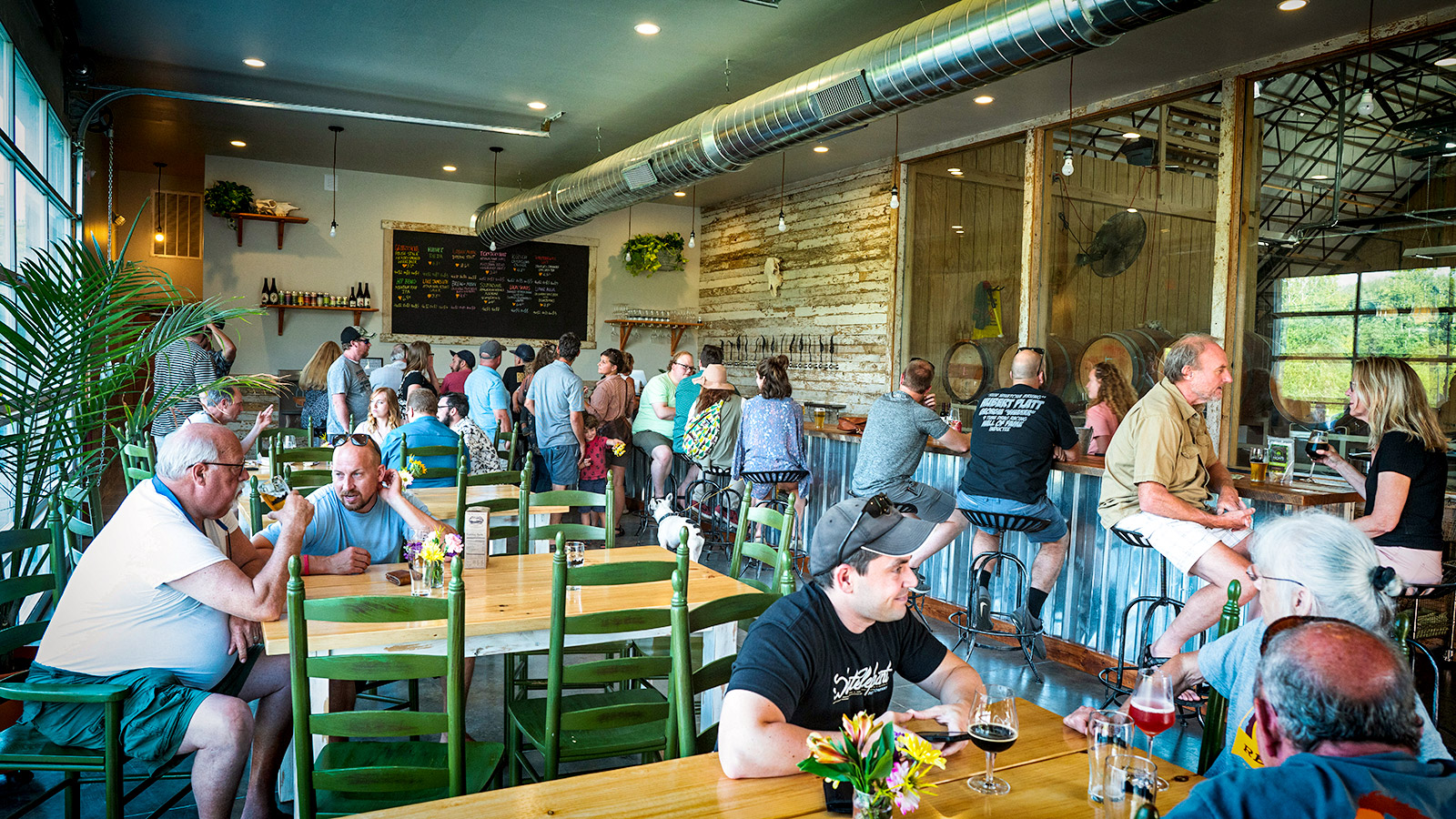
Fonta Flora’s taproom at Whippoorwill Farm. Photo courtesy
As Fonta Flora Brewing celebrates its ten-year anniversary, founder and owner Todd Boera, admits he’s living a dream come true. “I’m obsessed with making agriculturally-driven beers. Getting back to the roots of brewing and doing it on a farm has been fantastic,” he says.
Even before opening the doors of Fonta Flora Brewing, Boera wanted to capitalize on his agricultural background while making delicious beers. After studying Sustainable Agriculture at Warren Wilson College, outside Asheville, he first pursued his passion with Catawba Brewing in Morganton and then started Fonta Flora to pioneer his farm-to-table concept for beer.
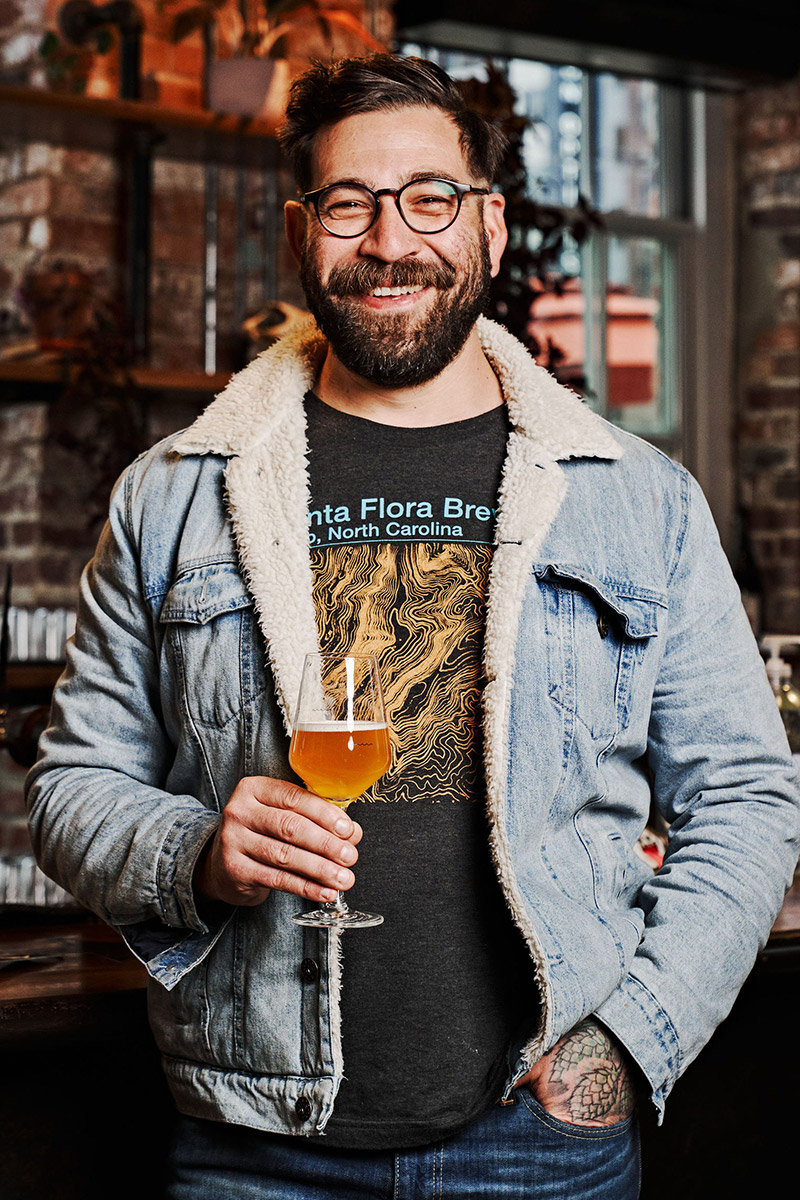
Fonta Flora Brewing founder Todd Boera. Photo courtesy
He opened Fonta Flora in Morganton in 2013 with a 1,200 square-foot brewery and taproom with a mantra of “local culture / local agriculture”. The goal was to establish a central gathering place while becoming a driving force for beer brewed with local ingredients. Hence, Fonta Flora’s mission statement: brewing beer with a sense of place and agricultural purpose.
Fonta Flora quickly became a local success garnering recognition for its Appalachian wild ales – fruited, barrel-aged, sour beers. As its popularity increased, the brewery soon outgrew its 3.5-barrel (100 gallons of beer) brew system
“There were no formal plans for growth – it all occurred organically,” Boera says.
Looking into expansion based on his agricultural background, Boera explored rural locations. He always liked what a true winery provided – a farm where wineries stay connected to agriculture through its own vineyards.
“Over time, breweries have become disconnected from the farms where their ingredients are grown. We wanted to get back to the craft’s farming roots to help make our products”, Boera says.
In 2016, Boera found 53 acres of land in Nebo, NC at the mouth of the Linville Gorge. Fonta Flora partnered with the Foothills Conservancy of NC which buys tracts of land and puts them in permanent conservancy. The conservancy purchased the entire tract of land and subdivided nine acres for Fonta Flora to purchase.
The remaining 44 acres were donated to Lake James State Park which surrounds the brewery. “I don’t think we could recreate this if we tried,” he says. Fonta Flora has since purchased an additional six acres but doesn’t foresee adding more.
The new production facility, known as Whippoorwill Farm, is an old dairy farm that now houses a 20-barrel (620-gallon) system with 60-barrel fermenters. Production increased from brewing 500 barrels a year to a projected 5,200 barrels in 2023. Production in Morganton shut down but the taproom remains open.
The farm allows Boera to lean heavily into his agricultural identity. Growing a variety of crops has become a focus as the farm provides a platform to showcase his agriculturally-focused brewery.
The farm is known for its pawpaw trees, North America’s largest native tropical fruit. There are 75 pawpaw trees on site with plans to expand the orchard. One of its first beers utilized pawpaws and the trees are a key component of the brewery’s educational focus.
“The ability to see both the trees and fruit provides customers a stronger connection to the beer,” Boera says. “They are able to see what the ingredients look like before being transformed into a drinkable product. The farm even has a sign asking patrons to “Keep your paws off our pawpaws.”
He speaks fondly of “farming the soil” which means crop rotation and cover crops to help keep the soil properly and sustainably nourished. Cover crops, including an annuals garden, are not only good for the soil, but are also visually appealing for customers.
Flowers grown for both farmyard aesthetics and brewing beer include red crimson clover, purple hairy vetch; buckwheat with bright white flowers; yellow rapeseed; Hopie Black Dye sunflowers; and orange and yellow marigolds. The brewery will begin selling hand-cut bouquets later this year.
Cash crops grown on the farm include heritage Red Turkey wheat. The wheat will be used in beer as will other cash crops including corn, cantaloupes, and watermelons.
A variety of beers have been brewed using these crops. Mixed culture (a variety of yeasts including wild) beers are brewed using the clover flowers and marigold flowers. Last year’s Estate Saison had sunflower and Floriani red corn. “Different fruits and vegetables lend a big impact to flavor,” Boera says. “Our heritage ingredients have a story behind them that the patrons can see while sitting at the farm.”
Fonta Flora uses 100% North Carolina malt and strives to use as many local ingredients as possible. The brewery uses water from its well and labels on its canned beers show what percentage of ingredients are local. Depending on style, this can range from 55% to 99.9%.

Visitors to Fonta Flora’s Whippoorwill Farm can see exactly what goes into their beer. Photo courtesy
Adding to the educational component for consumers, Boera is building information kiosks around the property. “Consumers can read about the garden and crops, see what’s growing, receiving local education while enjoying our beers,” he says.
While the production facility and two of the original taprooms are 75 miles northwest of Charlotte, Fonta Flora does have a taproom in Optimist Hall. ““We can still be seen as an outsider because of our beer styles, but overall the Charlotte market has been good to us.”
Fonta Flora crafts a wide range of beers, but early on it was known for its wild ale program, which incorporated ingredients such as beets and carrots. “Because of the unique ingredients we use, we got pigeonholed into people thinking we only make wild beers with funky ingredients,” Boera says. “In reality, we brew a broad range of styles from wild ales to clean, crisp lagers.
“At the end of the day, we want local agriculturally-driven beers to be in the conversation for all types of beers.”