Hidden gem in Charlotte’s Oakhurst neighborhood where the menu is as creative as the food
Hidden gem in Charlotte’s Oakhurst neighborhood where the menu is as creative as the food


Charlotte cooks share secrets for more environmentally-sound ways with food and drink
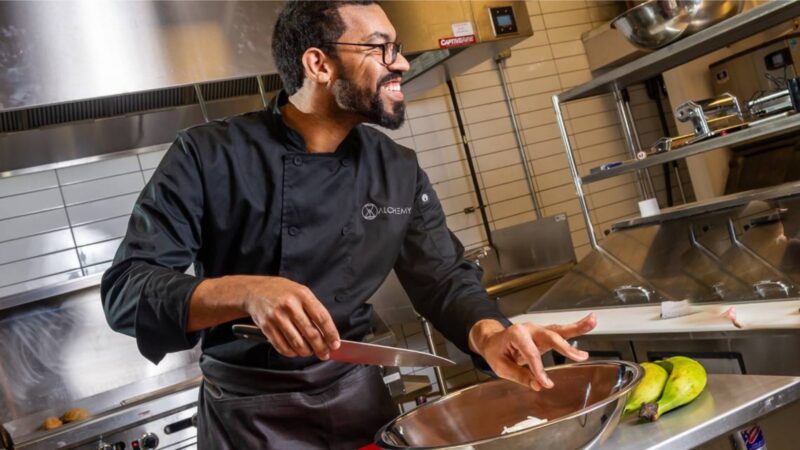
Chef Ken Aponte/Photo by Glyn A Stanley Photography
We at UP are rounding up some of Charlotte’s best to give their best take on everything from devilishly good deviled eggs to the crispiest chicken wings. This time, they’re taking a break from the kitchen to chime in on the subject of culinary sustainability. Editor’s note: Responses have been edited for clarity and brevity.
Earth Day is April 22, but it should be observed each day. It’s the small changes, collectively, that create impact. That’s why we are departing from our regular format for this month’s Chef’s Takes. Instead, we will closely examine green culinary approaches over three segments, from three Charlotte food and beverage industry pros. These two cooks and one mixologist will share insights beyond the obvious and tired, culled from ways they practice sustainability in day-to-day operations.
Their unique vantage points all strive towards a common goal: turning a carbon footprint into more of a toeprint. Reducing food waste and overreliance on animal meat as a primary protein source are both worthwhile steps to take in decreasing overall ozone-depleting gas emissions.
Our second expert, executive chef Ken Aponte, is advancing plant-forward dining in Charlotte by offering thoughtful plant-based and meat dishes at Alchemy.
The owners of Alchemy have supported Aponte in his desire to provide an atmosphere where the vegan and meat eater can dine together at one table, both happy with their selections. His vision of one diner enjoying a filet over blue cheese tortellini while trying a bite of the other’s lion’s mane mushroom pot pie is now reality at Alchemy, enabled by Aponte’s seasonal menus. He is not about limiting himself or customers to one style of food, which he feels “misses the point” of eating out at a restaurant and experiencing many different sensations. He expresses frustration that restaurants have grown to be so niche, diners aren’t always sure what to make of his menu at Alchemy. He’s not asking Alchemy patrons to give up meat; he says he is inviting them to experience what is possible on a plant-based plate. A reduced-meat diet makes it possible for Charlotteans to expand their palates while also promoting a greener world.
Take a look at some statistics associated with animal agriculture’s impact on the environment (source: Reducetarian Foundation):
The Reducetarian Foundation defines Reducetarianism this way: “The practice of eating less meat — red meat, poultry, and seafood — as well as less dairy and fewer eggs, regardless of the degree or motivation. This concept is appealing because not everyone is willing to follow an ‘all-or-nothing’ diet. However, reducetarianism is still inclusive of vegans, vegetarians, and anyone else who reduces the amount of animal products in their diet.”
Aponte has crafted the Alchemy menu in this spirit, to be one where no one — herbivore, carnivore, or omnivore — has to compromise.
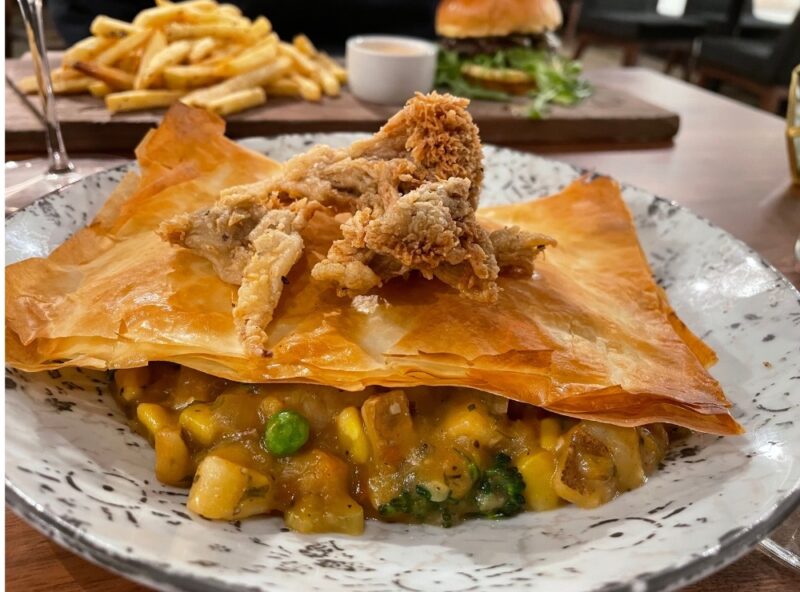
Lion’s Mane Pot Pie and ALCHEMY Steak Burger/Shannon Blair/UP
That’s why he strives for originality over mimicking when designing a vegan or vegetarian entree. The art of taking materials and transforming them from original form into something completely new comes naturally to Aponte, a sort of alchemist in the kitchen. He is less interested in trying to replicate a meat item in plant form and more keen on taking quality ingredients, whether short rib or eggplant, so they can shine in their own right. He understands why some vegan establishments use beets for a burger to remind customers of that medium-rare juiciness, but that is not his goal as a chef. He points out that such a strategy could even unintentionally upset the vegan who moved away from meat due to concerns over animal welfare.
Alchemy is described as a “vegetarian-focused” restaurant; however, some customers still sit down, peruse the menu, and make the remark “I thought this was a vegetarian restaurant” when they spot meat on the menu. Aponte believes that an establishment doesn’t have to be classified vegetarian to offer interesting, tasty plant-based dishes, and it’s okay to let those reside on the same menu with meat and seafood delights, as well. In fact, one of Aponte’s plant-innovative creations may lead someone to become more curious about eating less meat.
Other Charlotte restaurants like Dish and Enat Ethiopian operate by this principle, too. Just because they are not defined as vegan or vegetarian, they offer vegetarian dishes and accommodations on the menu. Enat’s Passport Plate, for example, is a vegan platter with a choice of one tibs (lamb, beef, chicken or mushroom). Dish has a multitude of Southern comfort plates like country fried steak and a spicy lentil “meat” loaf that coexist on the menu.
Not strictly vegan or vegetarian himself, Aponte considers himself an omnivore. He grew up in Puerto Rico, where his family would enjoy a chicken dish for one meal and rice and beans with plantains the next. “The protein was there to complement the other dish elements,” he says. “Butter was a luxury, and we rarely had steak.” These days, when he orders a chicken-broth based pho, he opts for tofu as the protein, simply because he likes the way both taste (and that’s what his body is craving).
While reducing meat consumption and emphasizing plants comes naturally to Aponte, it takes intentionality for others. That’s why we’re sharing some tips to try at home.
A self-described “rule breaker,” Aponte recognizes he has to first know the rules to bend them with artful execution. He realizes unconventional approaches — such as trying to happily unite a meat and vegetarian menu — is difficult to popularize and sell at a high-volume level. Aponte remains committed, though, to the thinking that you don’t have to be committed one way or another. As he says, “The overall goal should just be good food.”
Want intel on a certain cooking technique or culinary topic? Let us know in the comments, and we’ll get the scoop from Charlotte’s food and beverage maestros.