

August 1, 2022
Chef’s Takes: Kabobs
Israeli-born Yafo Kitchen executive chef Shai Fargian gives insight into the skewer
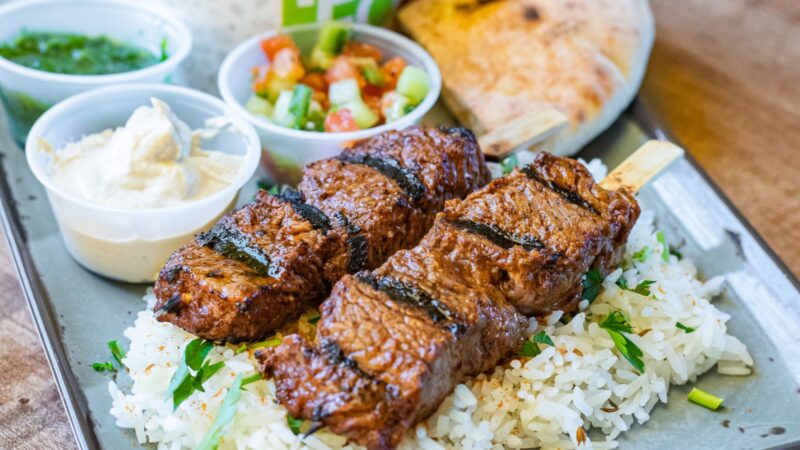
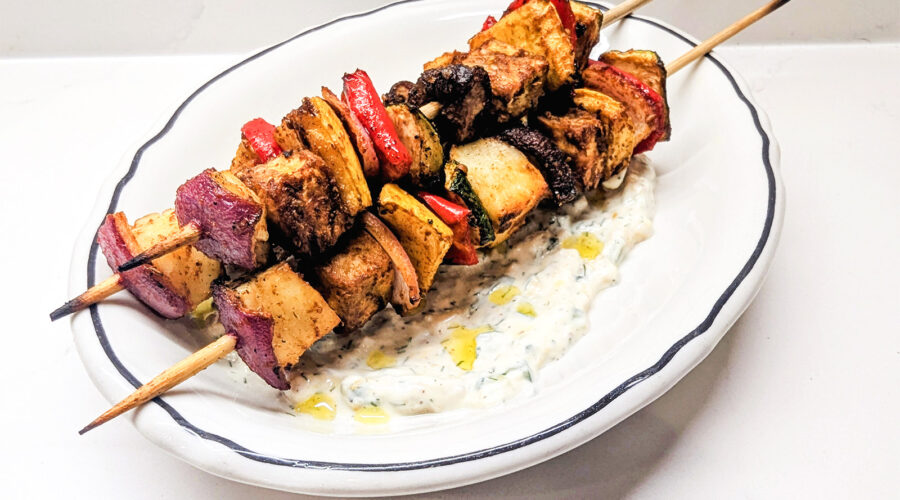
Steak kabobs with a Turkish spice blend from Yafo. Photo courtesy
We at UP are rounding up some of Charlotte’s best to give their best take on everything from achieving a perfectly-seared steak to building a better charcuterie board. This time, we asked executive chef and partner at Yafo Kitchen Shai Fargian to assist on the matter of grilled kabobs (North American spelling), a summertime classic. With a little guidance, home cooks can avoid pitfalls common when cooking the seemingly simple kabob: burned sticks, unevenly cooked pieces, and lackluster flavor. Editor’s note: Responses have been edited for clarity and brevity.
Chef Fargian infuses Yafo Kitchen’s Mediterranean menu with Middle-Eastern flavors. Here, he shares helpful tips to ensure a palate-pleasing result in our own kitchens when skewering meat and veggies.

Chef Shai Fargian, executive chef of Yafo Kitchen. Photo courtesy
Kabobs are thought to have partly originated in the Middle East. What is your background with the culture and this particular food?
My father is from Tehran, Iran, and my mom is actually from Portland, Maine; they met in Israel, and that is where I was born and grew up. We ate Persian skewered food often, mostly cooked over charcoal grills, almost every weekend — sometimes even on a weekday. We would do anything on skewers, from chicken thighs, hearts, and livers to beef or lamb. It was typically a festive occasion and a big part of how I grew up.
How do you approach kabobs at Yafo Kitchen?
The challenge at Yafo is that we are considered “fast casual.” People expect their meal fast, but kabobs can take a little longer to cook when using thicker cuts of meat. We used to have a kofta kabob on the menu, but even that took too long to reach the right temperature. Right now, we are doing a steak kebab with a Turkish spice marinade, which I can cook to medium and serve. A Michelin-star Turkish chef (the first one to attain that rating in Turkey) came to Yafo and helped us develop those flavors.
Skewers come in many sizes and are made of different materials. What type do you recommend for home cooks?
I most often prefer metal because they are flat, wide, and generally bigger. That allows room to leave gaps between food pieces for more even cooking. The heated metal also helps cook proteins from the inside out. The wooden kind is good as well when serving large crowds because you can buy them in bulk and dispose of them. If using wooden skewers, it is important to soak them in water for at least four hours so they don’t burn on the grill. Choosing thicker ones allows them to hold even more water to reduce the chances of burning as well. I like the 7″ bamboo ones in packs of 100 from Amazon.
How do you advise building a kabob?
Successfully built kabobs are less about the type of skewer and more about the vegetables and meat. Make sure that everything included on a single skewer has the same cook time and approximate size, no matter what you’re putting on it. For example, you can put onion and peppers between meat on a skewer, but the veggies need to be cut in a way that does not separate the meat from contact with the grill.
What is the best way to achieve maximum, authentic kabob flavor?
There are essentially two steps: 1) marinade and 2) glaze.
The first part involves creating a marinade that will be the final, desired kabob flavor — but on steroids. This way, even though some of the marinade will burn off, some will still get into the meat. It should be very salty, very acidic, and very flavorful but almost inedible when you taste it with a spoon. Marinate the meat for at least eight hours; overnight is better, and 48 hours is even better. I like vacuum sealing the marinade bag, too. I do not marinate the vegetables because I like to bring out their natural flavors enhanced with just salt, pepper, and olive oil as they caramelize on the grill. As for the second part, make sure when marinating to set aside some for the glaze, untouched by the meat. You will brush on that layer of flavor near the end of grilling. A good guideline is to make 1 cup of marinade and use ¾ of it for soaking and ¼ for the glaze.
We use two primary flavor profiles at Yafo Kitchen:
- Herb: lemon juice, fresh herbs, garlic, jalapeño, olive oil, and salt (great for chicken, fish, and shrimp)
- Turkish spice blend: pepper, sumac, smoked paprika, cinnamon, red wine vinegar, extra virgin olive oil, and a little Coca-Cola. The soda binds the flavors and aids browning.
What is important to keep in mind during the grilling process?
Everything on a skewer should be the same size, cubed if possible. This allows you to cook four different sides versus just two. This will make for maximum browning effect. Begin by grilling over direct heat at a higher temperature, flipping four times as opposed to turning only twice over lower heat. You can finish kabobs in the oven if you need to for larger cuts of meat not yet cooked to proper temps.
Which condiments and side dishes do you like to pair with kabobs?
It really depends on the kabob flavor, but hummus and tzatziki almost always go well. So does Israeli cucumber tomato salad. In my house, we usually serve kabobs with pita bread or over rice. That’s why Yafo customers get it both ways, with pita and over rice.
Anything else to add on the topic?
What’s cool about the kabob is it can be eaten as an entrée or served as a make-ahead appetizer at a party. Just prepare smaller skewers, like 2.5″ ones, with one food piece on each, and keep them warm in the oven. You can do shrimp or salmon and chicken, for example, with different marinades for variety.
Want intel on a certain cooking technique or culinary topic? Let us know in the comments, and we’ll get the scoop from Charlotte’s food and beverage maestros.
Disclosure: The links above may be affiliate links, which means Unpretentious Palate earns a small commission on any sales of the items above. Since nearly everything is available on Amazon these days, this has no influence on which items we feature.