


March 16, 2022
Chef’s Takes: Deviled Eggs
Charlotte cooks share secrets for how to make the best of boiled eggs
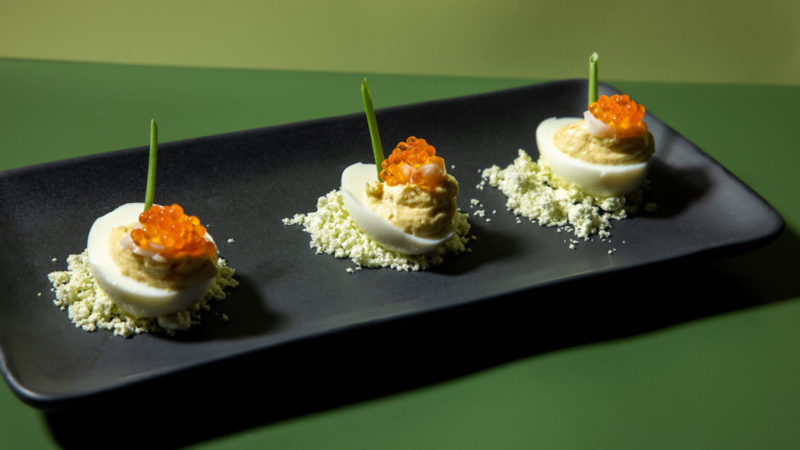
Miso deviled eggs from PARA in South End. Photo courtesy
We at UP are rounding up some of Charlotte’s best to give their best take on everything from perfectly-seared steak to the crispiest chicken wings. This time, they’re taking a break from the kitchen to chime in on the subject of eggs. Editor’s note: Responses have been edited for clarity and brevity.
Easter is April 17 this year, almost two weeks later than last year. This leaves you ample time to hone your boiled egg approach and yolk-mayo strategy. Sure, family recipes typically please at Sunday lunch, but these chefs have some techniques and styles you’ll want to consider. Here to guide us through the peeling and piping are three Charlotte cooks:
- Heather King, executive chef of Steak 48
- Rose Mushe, executive chef of Haberdish
- Alex Verica, executive chef of PARA
In Chef’s Takes, we ask, they answer, and you benefit from pro tips and insights. Here’s what the experts have to say on deviled eggs done right.
What have you found to be the most tried-and-true way to boil eggs?
These methods are as unique as the chefs’ culinary styles. All processes are precise, though, with a rationale for the steps and timing.
Heather King: Start with a pot of cool water, place eggs so they are submerged at least 1 inch, and bring to a rolling boil. Once this is achieved, reduce heat to medium high for about 5-7 min. Then, shock them in ice water to prevent overcooking.
Rose Mushe: Start in a pot with cold water. I also put a little bit of white vinegar or baking soda and salt in the water. This will help soften the shell of the egg while it cooks. If you start with cold water, when it starts to boil the eggs are fully cooked and ready to come off the heat.
Alex Verica: Bring the water to a boil, then drop the eggs in for 8 minutes. Turn the heat off, leave it on the stove for 8 minutes. Put them in an ice bath before peeling.
How about peeling?
Mushe and Verica are split on whether fresher is better when it comes to this task, but Verica and King agree cold water and ice baths ease the job.
Rose Mushe: Pro tip –– The older the egg the easier it is to peel. An older egg has a looser membrane under the shell so it’s easier to remove.
Alex Verica: You always want the freshest eggs possible. If they’re harder to peel, that’s a good thing — that means they’re fresh. We get ours from Freshlist. Crack them on the table and peel under cold water.
Heather King: Crack the entire shell first. You can either run under cold water to release the shell, or again use the ice bath soak after cracking for about 1 minute. The shell should pull off with ease.
Which qualities determine a “good egg”?
Heather King: Diet and surroundings of the chicken.
Rose Mushe: The way I tell if an egg is good to use for boiling and peeling is by its age. The best are around two weeks old. To make sure that eggs aren’t spoiled, you can test them in water. If an uncooked, whole egg is spoiled, it will float.
Alex Verica: I like cage free/free range eggs. Brown.
What are must-have ingredients in your deviled eggs? Tell us about the deviled eggs at your establishment.
Heather King: Mayonnaise! At Steak 48, we serve shrimp deviled eggs (parmesan, crispy shrimp) and fried deviled eggs (panko, farm fresh egg, sriracha aioli).
Rose Mushe: You always need salt, acid, heat, and mayonnaise. At Haberdish, we add hot sauce and vinegar to the yolk mixture. Of course, we add mayo, but we have a few other flavors in there: our house dill pickle brine, horseradish, and North Carolina’s own Texas Pete. In addition, our deviled egg is a smoked version. Once eggs are boiled, yolks are reserved and weighed out to get exact measurements of the other ingredients. The egg whites get smoked here in-house with cherrywood. For a bit of extra smoke flavor and a more filling deviled egg, customers have the option to add smoked N.C. trout on top.
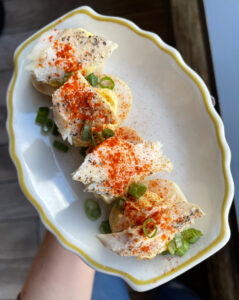
Smoked trout deviled eggs from Haberdish in NoDa. Photo courtesy
Alex Verica: Egg, mayonnaise, a tiny bit of yellow mustard, salt, and pepper are musts. Some of my favorite ones I’ve tasted have been bacon and blue cheese; chive and crème fraîche; and loaded jalapeño, chive, sour cream, and cheese. At PARA, ours are made with miso, shrimp, trout roe, and scallion.
Any deviled egg presentation or transporting tips?
Careful piping and platters make a big impact, according to these cooks.
Heather King: Deviled egg platter, of course. You can buy all different kinds depending on the event.
Rose Mushe: As far as plating and transportation, I have a solution for both. We load the egg filling into piping bags and tie off the ends for pressure. The tip gets cut and is loaded into another piping bag with a decorating pastry tip for a beautiful structure. We pipe a little bit of filling in the bottom of the plate or takeout container so that the egg whites will stick into place and not roll around.
Alex Verica: Get actual piping bags to make them look pretty.
Besides deviled eggs, how else do you like to use boiled eggs?
Heather King: They make a killer potato salad ingredient and are a fast way to have a protein snack. Many people forget they are a protein.
Rose Mushe: I like to use hard boiled eggs to make a quick egg salad or as an addition to a wedge salad. Just make sure to season that egg.
Alex Verica: Soft boiled egg –– 6 minutes at a boil and then straight to the ice bath. Editor’s note: Try this as your sole primary protein for a less heavy ramen.
And, what everyone really wants to know: what is your vote for best mayo?
All agree: As the jingle goes, bring out the Hellman’s and bring out the best. King adds that it should be the extra heavy version.
“I’m originally from Cleveland, Ohio so I won’t tell you that my favorite mayo is Duke’s,” Mushe says. “I grew up on Hellman’s and still prefer it in most situations.”
Want intel on a certain cooking technique or culinary topic? Let us know in the comments, and we’ll get the scoop from Charlotte’s food and beverage maestros.