


May 25, 2022
Chef’s Takes: Charcuterie
Charlotte cooks give tips on building a better board
By Shannon Blair
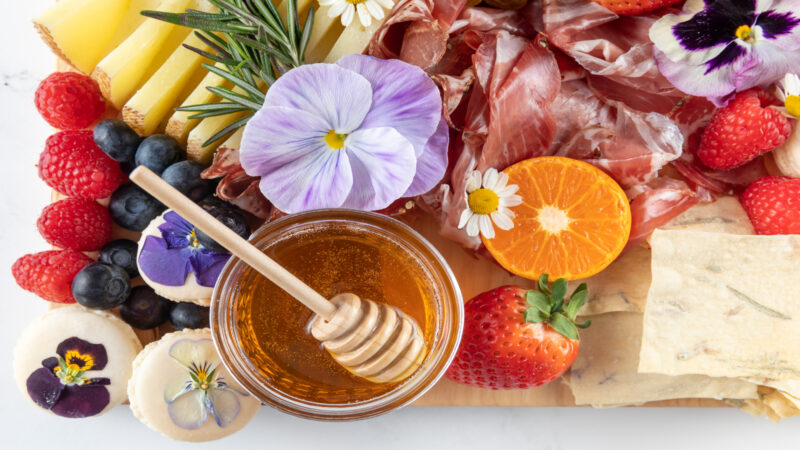
Charcuterie from Babe & Butcher in Camp North End. Photo courtesy
We at UP are rounding up some of Charlotte’s best cooks to give their best takes on everything from sustainability in the kitchen to devilishly good deviled eggs and crispy chicken wings. This time, they’re taking a break from the kitchen to chime in on the subject of charcuterie. Editor’s note: Responses have been edited for clarity and brevity.
The spring weather beckons for simpler meals and al fresco dining. A basic cheese plate paired with meats and other accouterments, served alongside a glass of wine, can answer that call. We’ve consulted some of the most notable board builders in town to guide those of us who wonder what goes where. Here to help us prepare Insta-ready charcuterie are three Charlotte pros:
- Chris Sottile, Founder of The Loyalist Market
- Lindsay Anvik, Owner of Babe & Butcher (sometimes the babe, sometimes the butcher)
- Bruce Schlernitzauer, Owner and Chef of Porcupine Provisions catering and Gathered, curated local provisions
In Chef’s Takes, we ask, they answer, and you benefit from their tips and insights. Here’s what the experts have to say.
Can you offer arrangement tips?
Striving to mix colors, shapes, and flavors is essential to the process.
Chris Sottile: We like to take the guessing game out of it for our guests, so we place items closest to each other that pair well together. These are not set-in-stone rules, but bries like sweet stuff, aged cheeses are versatile but usually go well with nuts, washed rinds typically go with pickled veggies, and blues almost always join something sweet.
Lindsay Anvik: Varied flavors matter, and so does a variety of colors. Fresh produce can add that pop of color well.
Bruce Schlernitzauer: Try cutting items into irregular shapes and chunks to give the arrangement more of an organic feel. Make sure to position different shapes next to each other for visual interest. Aim to avoid straight lines, curving and wrapping foods around each other instead.
Which materials or products make the best boards?
Chris Sottile: We use wooden boards at the shop for dine-in, but slate is another great option that we sell at retail. Some guests bring in heirloom silver serving trays or marble slabs that present very nicely too.
Bruce Schlernitzauer: You can’t go wrong with oil-rubbed woods, marble, and natural stones. Cedar planks, for instance, have a nice fragrance to them, and you can buy them pre-made for grilling or head to the lumber yard to be cut down to a desired size. This is a particularly inexpensive way to make several smaller boards. If you’re looking for another way to support local makers, Brent Martin of The Grazing Buffalo makes awesome boards right here in Charlotte.
What are must-includes (and fun extras) for any spread? Do you have favorite local goods?
Chris Sottile: First things, first. Charcuterie literally means “flesh” (or meat). If it doesn’t have some sort of cured or cooked meats on the board, it drives us purists a little crazy. The ideal board would include a mix of cured and cooked meats, typically made of pork, along with cheese and accompaniments. Depending on headcount, I’d usually include soft-ripened, aged, washed, and blue cheeses along with jams or honey, dried fruits, nuts, pickled veggies, and maybe even bean-to-bar chocolate. We’re big fans of Garnet Gals and City Farm Foods jams, as well as pickled okra from Copper Pot and Wooden Spoon.
Lindsay Anvik: Whenever I am building, I always have something salty, something sweet, something brined, and something savory. Those elements give a good mix of flavors. The best part about charcuterie is that it can be open-ended. It’s one of the best places to play with new foods. Break out the expensive crackers you’ve been saving or that jar of pickled okra only brought out for holidays. Try adding something you’ve never tasted, either from your pantry or when you’re shopping. Nana’s Porch makes great pimento cheese. City Farm has great jams and spreads.
Bruce Schlernitzauer: Start with three kinds of cheeses (one hard and sharp, one soft and creamy, and some sort of triple cream – forme d’Ambert is my favorite). From there you can add other cheeses. Goat cheese rolled in herbs or a spice mixture like za’atar gives color and isn’t outrageously expensive. Cured olives are a nice touch, too. We make these in-house with fennel seed, red pepper, rosemary, lemon zest, and olive oil. Pickles, particularly cornichons, add color and texture to a board. Something crunchy is important as well, like marcona almonds or spiced pecans. A mustard will go well with both charcuterie and cheese, such as Lusty Monk Mustard out of Asheville. A little bit of honey and jam never hurts. We love Cloister Honey and City Farm Foods Jam – both local to Charlotte. I always include herbs, such as rosemary, as extra garnish for color, height, and texture. Last but not least, include crackers or chips in different shapes and sizes. Once you have the basics, you can get creative. We love to add smoked fish, pimento cheese and other dips, and smoked meats like duck or goose breast that we make in house. Honeycomb is a fun textural addition and alternative to honey in a jar. Add dried fruit like cranberries and figs when fresh fruits are not in season.
Can charcuterie be its own meal? Tell us about your establishment’s best board.
It’s unanimous: our experts agree a board can definitely be a full meal.
Chris Sottile: Absolutely! Our best board is our “Big Board” with four meats and four cheeses –– each with its own individual pairing –– and some locally baked Verdant Bread ciabatta. This board gets our guests talking about the flavors they’re tasting and makes for a fun, interactive way of dining.
Lindsay Anvik: Charcuterie is the ultimate meal to me. A board that has a mixture of salt, acid, fat, and heat makes for an interesting dining experience. Our “Flora Board” has been a best seller this spring. It has a variety of house-made goat cheeses (honey berry and blueberry lemon). It also has a stinky floral-laced cheese, which contrasts well with the goat cheeses. We add seasonal fruit and beautiful floral-laced crackers to make it extra pretty.
Bruce Schlernitzauer: Absolutely! The board pictured here was one of my most recent favorites we built. It includes herb-crusted goat cheese, manchego, aged white cheddar, Forme d’Ambert, prosciutto, Capocollo, soppressata, house smoked goose breast, house-marinated olives, house-made pimento cheese, cornichons, marcona almonds, City Farm Foods jam, and Cloister honey. We also have a cheese board kit available on our gifting website, gatheredclt.com. It follows our “golden rules” of a cheese board and includes our local favorites for you to DIY at home.
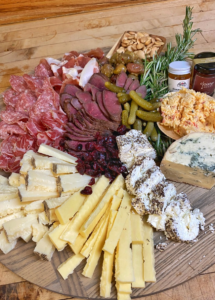
Charcuterie from Porcupine Provisions in Dilworth. Photo courtesy
Which wine or beverage pairings would you recommend this season?
Chris Sottile: Chances are whatever wine or beer you bring to the table will pair with something on large boards. If you want to play it safe, though, pinot noirs are almost always a winner. Gewurztraminer is a fairly safe white, and bubbles always work well. For beer pairings, saisons go with almost any accompaniment, and stouts or brown ales go nicely with cheddars and blues.
Lindsay Anvik: We carry a wine called Obsession; it’s a white with botanical and citrus notes that pairs well with cheese. It’s delicious on a warm day with any of our boxes or boards. Lighter wines, like a prosecco or cava, are nice with intense flavors, allowing for balance. Fuller-bodied reds like a good cabernet or malbec add richness when paired with milder cheeses.
Bruce Schlernitzauer: Vodka-soda is always a winner in my book, but my better half and co-owner Leslie would have to say that Domaine Lafage Miraflors Rosé is a must-have throughout spring and summer.
What are best practices for transporting and keeping a board’s contents fresh?
All three agree it’s important to maintain the right temps when it comes to presentation.
Chris Sottile: A sizable cooler is helpful when buying a premade board from an establishment, and then transporting it a fairly long distance; however, if you’re buying individual wedges of cheese and sliced meats, then you could put it together in your kitchen and try to serve it at room temperature. Take it out of refrigeration about thirty minutes before guests arrive to experience the best flavors and textures. That’s usually true for your wines as well.
Lindsay Anvik: You want the board as cold as possible because cheese and meat can sweat easily when too warm. After preparing your platter, pop it in the fridge until ready to serve so that it stays as fresh as possible, limiting oxidation.
Bruce Schlernitzauer: When we are catering in people’s homes we always travel in pieces. We prep all cheeses and charcuterie beforehand to assemble on site. This gives us the opportunity to arrange the cheese board in the best way for the space and overall design of the event. When entertaining socially, you don’t always want to arrange when you show up to someone’s house. In this case, wrap your pre-arranged board loosely in plastic wrap and use an ice blanket over the top to keep it fresh.
Who are the board-building influencers you admire?
Chris Sottile: I’m a bigger fan of the classic board over the more Instagram-worthy ones we see nowadays, so I like the way the folks at Goat Sheep Cow present their boards. They’re super clean and classy. I also love the way Murray’s Cheese Bar and Casellula in New York focus on their pairings. Our boards for dine-in are inspired by them.
Bruce Schlernitzauer: My go-tos are usually Ottolenghi, the master of cooking simply, and Frank Stitt for Southern inspiration.
Anything to add on this topic?
These board experts are in agreement that you should focus first and foremost on your guests and flavors you like rather than the ideal board. “At the end of the day, it’s all about enjoying the company and keeping it simple,” Schlernitzauer says. “There’s no right or wrong way to put together a charcuterie board,” Sottile adds. “Put the things you like on there and entertain. No one is going to remember how pretty (or not pretty) it looked after the first person starts to eat.”
Chris Sottile: If you have separate knives for each cheese, put those out so you can have a “clean” flavor for each selection.
Bruce Schlernitzauer: It’s easy to get caught up in making the “Instagram-perfect” cheese board, but it all comes down to enjoying the friends and family around the board.
Want intel on a certain cooking technique or culinary topic? Let us know in the comments, and we’ll get the scoop from Charlotte’s food and beverage maestros.