Hidden gem in Charlotte’s Oakhurst neighborhood where the menu is as creative as the food
Hidden gem in Charlotte’s Oakhurst neighborhood where the menu is as creative as the food


Restaurant owners feel disadvantaged when it comes to credit card disputes
By Kristen Wile
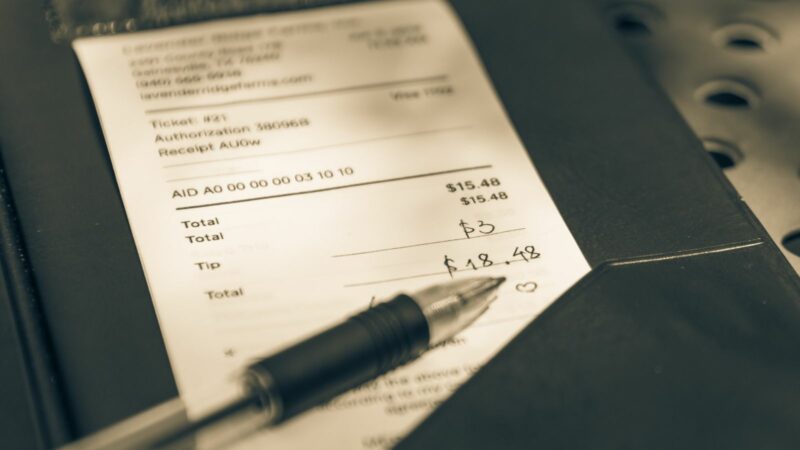
Restaurants are losing revenue to customers disputing their visits. Photo by Canva
When credit card companies switched to issuing cards with chips in them, the change was expected to bring added security to transactions. However, customers are finding ways around that security — and restaurants are finding they’re losing thousands of dollars from their bottom lines thanks to malicious chargebacks.
Paul Manley, one of the owners of High Tide Hospitality, says so far this year his company has already lost more than $5,000. These diners will eat, then dispute the charge on their credit card statements. And usually, they win following their credit card company’s review — enjoying a free meal in the process.
“More often than not, they just decide, ‘Yeah, it’s fraudulent.’ And they side on the side of their customer,” Manley says. “That customer gets their money back and we get left with no money.”
There are several ways customers make things fall their way.
One is by leaving without signing their receipt. Even when the restaurant has provided information such as a signed receipt — which takes staff time to track down — Manley says the restaurant still often loses.
Jon Dressler, co-owner of Rare Roots Hospitality, says that picking up the billfold and making sure the customer’s receipt is signed has become a step of service. It’s a step that Dressler says some of “the kids,” as he refers to his staff, don’t enjoy.
“That’s the hardest thing to battle with the kids, because they’re like, ‘Well, I don’t want to make the people feel uncomfortable. I don’t want them to think I’m looking at the tip.’ But, you’re not.”
Even then, however, the people who are planning to try to get a free meal will leave immediately.
Another way malicious diners steal a free meal is by damaging their card’s magnetic stripe or chip, then asking the restaurant to key in the card. Doing so means the restaurant will lose any dispute, but refusing to can make for an awkward situation when the diners claim to not have another card.
“As soon as you key it in manually in 2023, you can automatically dispute it,” Dressler says. “It doesn’t matter, you’re not PCI compliant. You’re not getting any credit for it.”
Dressler says his restaurant group now sees one or two chargebacks like this in each restaurant per quarter; previously, it was only once or twice a year.
Manley’s group, High Tide Hospitality, includes restaurants Sea Level NC, The Waterman, and Ace No. 3. The restaurants with higher takeout orders have higher levels of fraud, Manley says. Customers will come pick up the food, then dispute the charge.
Paul Manley at his restaurant Sea Level NC in Uptown. Photo by Peter Taylor
Where his restaurants are seeing the biggest losses, however, are from the purchases of online gift cards. Someone will purchase a gift card using a legitimate credit card but a fake name and email address, use the gift card, then dispute the gift card purchase. Nearly 40 percent of the malicious chargebacks come from this method, with 30 percent each from takeout and dine-in disputes. As a result, High Tide has recently stopped selling gift cards altogether.
Dressler says there’s no way to preempt the fraud, because you don’t know when it’s happening. When the chargeback matches the name on the reservation — a rare occurrence — they’ll reach out to the customer to see what the issue was.
“95 out of 100 [times], at the very least, you don’t have a reservation,” Dressler says. “It’s two people hanging out at a bar, having eight high-dollar tequilas and a steak.”
The loss of money at the hands of diners comes at a time when slim margins are the norm in the hospitality industry. Manley says they’ve weighed selling gift cards online in order to prevent fraud, but they would lose an important revenue stream in doing so. And despite making as many changes as they can to policy to prevent this from happening, businesses are left to the mercy of credit card companies who are more likely to side with their own customers.
“Even when we produce everything that we should — you were there and this is where you signed and all this kind of stuff — it’s kind of arbitrary whether we win or not,” Manley says. “It’s up to the customer’s credit card company. And a lot of times there’s just no good reason why we lost. We just lost. And it’s just on us.”