Hidden gem in Charlotte’s Oakhurst neighborhood where the menu is as creative as the food
Hidden gem in Charlotte’s Oakhurst neighborhood where the menu is as creative as the food


Small businesses fight to overcome loss of revenue, damage, and a staff exodus
by Sarah Nicholson
Nestled in the Appalachians, the towns of Asheville, Boone, Burnsville, Spruce Pine, Black Mountain, Swannanoa, and Hendersonville — to name a few — experienced the wrath of Hurricane Helene right before the ever-important autumn tourist season. The area was devastated in multiple ways: first by the storm itself, and then by the ripple effect of the damages sustained.
I’ve lived in Asheville since moving here from Charlotte with my husband a decade ago. I work as the marketing manager for a local darling, French Broad Chocolates (yes, of Chocolate Lounge fame). Every year, come autumn, we “locals” tend to avoid Biltmore Village, downtown, and main brewery hubs as scores of visitors flock to enjoy that which we have every day: The startling beauty of the changing leaves, the coolness of the mountains, and the funky, hip, delightful scene of our downtown area where incredible food, music, and art prevail. The autumn crowds always garner some eye-rolls from us, but, at the end of the day, we all know that the visitors to our mountain getaway help keep our local economy booming, growing, and sustained. When Helene hit, Asheville became a ghost town. Instead of cars honking and jockeying for parking, sirens wailed through streets and supply helicopters soared overhead.
And it was like that for weeks. With a lack of water and an exodus of service workers, restaurants weighed how and when they could — if they could — reopen their doors.
The devestation
Helene was only part of the problem for the Western North Carolina area. The lead-up to the storm set the stage for a perfectly timed catastrophe to unfold over several days. On Monday, Sept. 23, weather watches and warnings began being issued for areas in and around Asheville, mostly related to flooding. The usual alarms were raised; Biltmore Village floods pretty consistently when heavy rains are forecast. Cane Creek, areas along the French Broad River, and areas further down the Swannanoa River all slowly began receiving notices that the waters would steadily rise over the next few days. A low-pressure system was set to start dumping rain on the area around Tuesday, continuing through Thursday until Helene would make her way into the mountains early Friday morning.
Although nearly everyone expected wind, rain, and flooding, many of us didn’t expect the level being forecast. Words like “historic” and “catastrophic” were increasingly used in the forecasts, and until Wednesday, many of us still didn’t think it would be that bad. It’s common, I think, for those of us here in the mountains to shrug off many of the weather warnings we receive. Because of our geography, storm systems forecast with incredible certainty sometimes peter out, breaking up over the terrain before they can reach us. There have been times we’ve had a forecast for devastating snow, rain, and storms, with little to nothing reaching us by the time they’re set to arrive. There have also, though, been times when we’ve had a forecast for a dusting of snow, and received nearly a foot.
Unfortunately, this was not one of the times things petered out by the time they reached us. In fact, it was worse.
On Thursday afternoon, the French Broad River was already flooding as was the Swannanoa. It was over its banks in unexpected areas, like near UNC Asheville and my workplace, the French Broad Chocolate Factory — a company ironically named after the river. Helene’s winds began late Thursday evening, the gusts putting increased stress on trees standing in now-saturated soil. As the wind picked up early Friday morning, branches and trees began to snap, but, more often, the entire rootballs simply fell out of the soil, toppling into others and creating domino effects down the sides of our mountains, in front yards, in parks, and along roadways. Power flickered and was out over Western North Carolina by 10 a.m. on Friday. Water, too, began to trickle to a slow stop for everyone from downtown Asheville to Swannanoa and beyond. As the storm began to slow, trees blocked roads everywhere.
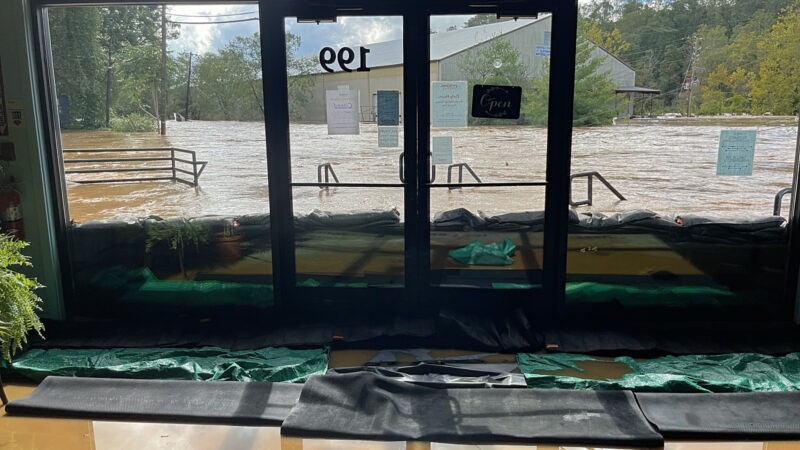
The French Broad River crested at 24.67 feet, crushing a previous record of 23.1 feet set during the Great Flood of 1916; it flowed into studios, galleries, restaurants, and homes along Riverside Drive, destroying the River Arts District and making it unrecognizable — like a war zone coated in mud and trash from the raging waters.
Tourism season with no tourists
In downtown Asheville, wind whipped through the streets, but the city, which sits on a hilltop overlooking the area, was untouched by flooding. What devastated downtown, though, was the lack of water and power. Without water and power, restaurants and breweries — which make up the majority of downtown’s real estate — could not operate. For a day or two, this is perhaps not a huge loss. But what slowly became apparent was the incredible damage done to the area’s water system. The massive amounts of flooding had literally washed away water systems — even those situated more than 25 feet underground. Pipes were gone. There was no telling how bad the damage was, either, in areas that couldn’t be assessed as they weren’t accessible. In a tourist town, a bulk majority of folks living in and around the area are employed by the food and beverage industry. According to the Asheville Citizen-Times, nearly 15 percent of Asheville’s residents work in hospitality.
Following Helene, the only people moving in and out of downtown were FEMA agents and city officials, directing resources as quickly as possible to help where they could. With areas completely impassable, most downtown closed their doors starting on Friday with the storm’s arrival, thinking they’d be back open the next day. With a lack of water, though, those doors stayed locked for weeks. One of the worst factors of the storm was the timing of its arrival. October is the busiest month in Asheville. Leaf-peepers travel in as soon as the weather turns cool to take in the beauty of the mountains as the trees turn from green to yellow, orange, red, and brown. They parade along the Blue Ridge Parkway, spend time at larger tourist attractions like The Biltmore and Grove Park Inn, and settle in for evenings downtown to eat and meander through the locally-owned and operated shops.
Now, with downtown shuttered, the tourism board put out the message to “love Asheville from afar,” to avoid the city and surrounding areas hardest hit by Helene and, instead, try to buy online from businesses that could ship goods and wares. That may have helped homegrown favorites like French Broad Chocolate, Poppy Popcorn, EastFork, and breweries like Burial and Wicked Weed. It did not, however, help restaurants depending on in-person dining. October makes or breaks many of the businesses downtown. Every year, the influx of folks helps buoy shops through the slow winter months of January, February, and March until spring and summer visitors return. The message quickly started to evolve into pushing visitors to unaffected or largely unaffected towns like Hendersonville, Boone, and Waynesville while avoiding Asheville, Swannanoa, and Chimney Rock. But it seemed too little too late for some; the message needed to be stronger to get tourists and visitors back into the area.
According to an interview with Asheville’s Citizen-Times, French Broad Chocolate CEO and co-founder (and my boss) Jael Skeffington says that our company will have likely lost $1.5M as a result of our Factory being closed following its flooding and having our Lounge closed for several weeks after the storm. Insurance may cover some of the damage, but it won’t make up for the money lost in revenue.
James Beard nominee and locally loved eatery Vivian, situated in the River Arts district, announced it would not reopen last week. Rosabee’s, Pleb, and Bottle Riot are gone, as their brick and mortar spots were destroyed by the flood. Bold Rock’s downtown taproom was too much of a loss during the weeks of shutdown for corporate to consider reopening its doors, according to an Instagram post. Wicked Weed’s Funkatorium and Cultura, situated in South Slope, laid off the entire staff and will not be coming back. Little Pearl in East Asheville and several other businesses have all already announced that the losses in just two months have been too great to overcome. Despite restaurants’ attempts to work with the Health Department and serve limited menus on paper plates, the lack of clean water for more than 50 days and staff leaving town (temporarily or permanently) along with little to no business was and will be the death knell for many. Heartbreaking, for spots that just came out of the COVID hump.
What happens now?
Steve Boeger, an executive chef in the area for many years who now works at the Hendersonville Country Club, says the decisions facing business owners after the storm were tough.
“Asheville has become challenging for hospitality workers since the hurricane — kind of like the straw that broke the camel’s back,” he says. “It was hard enough to survive financially and work in this market. … Loss of revenue and goods started to become apparent, and, with that, labor was next. With no revenue, you have to make decisions based on the business. Some pockets only can sustain a month.”
Eric Riffe has cheffed all around Asheville, and works these days at several area wedding venues, clubs, and downtown’s Cultivated Cocktails. He says the labor shortage from food and beverage workers moving out of Asheville post-storm has left every food-based business desperate for help. “Everyone needs cooks or servers or bar staff or dishwashers,” he says. “You can pretty much walk in and get a job at the moment.”
But even with the desperate need for staff, the demand doesn’t seem to be there, says Riffe. “Downtown was dead this evening. This is peak tourist season. For the restaurants to survive, we desperately need tourism to rekindle. Folks need to come to Asheville; support local artists and local restaurants. Forgive them if everything isn’t perfect. Everyone has had to reset after suffering trauma. Every person in Buncombe County has been traumatized.”
So many people donated goods, money, and time to Western North Carolina when Helene came through. Those of us here were able to find supplies, hot meals, and everything from diapers to coats easily in most cases. As we start to rebuild, the needs have shifted.
Now, we need you to visit. We need you to eat in our small locally owned, family-owned downtown and area restaurants and buy food goods from our farmers’ markets. Try somewhere you’ve never been before. Grab gifts from local shops you haven’t visited, and skip some of the chain stores. Things may not be perfect, but we’re all doing our best, and we still need your help — now more than ever, if Asheville and Western North Carolina are to be anything like they once were.