Hidden gem in Charlotte’s Oakhurst neighborhood where the menu is as creative as the food
Hidden gem in Charlotte’s Oakhurst neighborhood where the menu is as creative as the food


The civil engineer pictured a career in construction, but he built a local restaurant empire instead
by Allison Braden
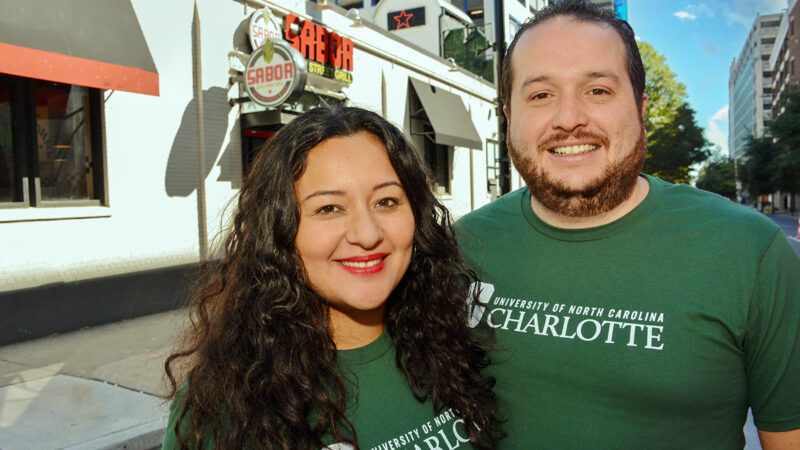
Miriam and Dalton Espaillat of Sabor. Tonya Russ Price/Poprock Photography
Dalton Espaillat moved to the United States from Santiago, Dominican Republic, when he was 15 years old. His father was relocated for work. When he told Espaillat that they were moving to North Carolina, he thought he meant California. Instead, they arrived in Statesville. “It was really shocking,” he says. “Everything is closed. I expected to be hanging out late at night, and that was not the case. I used to skateboard, but it was like, ‘Nobody’s out!’” He also got a crash course in racism. “I was like, ‘Oh, shit, I am a minority.’ I never had that experience in my life,” he says. When he told people he was from the Dominican Republic, they asked what part of Mexico that was.
Since then, Espaillat, now 38, has made Charlotte his home and built Sabor into one of the city’s most successful fast-casual chains. But it was not a straightforward path. He had little experience in hospitality, and he failed frequently before he found startling success. Now, he plans to help local chefs benefit from the lessons he’s learned.
Five years after Espaillat arrived in North Carolina, he moved to Charlotte to study at UNCC. Since he was little, Espaillat had dreamed of building houses and bridges. He graduated with a degree in civil engineering, with an emphasis on concrete design. But this chapter of his life didn’t meet his expectations either. In the Dominican Republic, engineers build. Here, engineers design. “So I went into the construction side of the industry,” he says. “I started my family back in 2007, 2008, and I wanted to start my own construction company.”
He quickly realized he would need a lot of money to get his company off the ground. “I needed to have a cash business kind of deal,” he says. “So, either a laundromat or a restaurant.” Espaillat had worked in fast food as a teen, and he learned about management and operations during stints at Sonic and Wendy’s. In 2008, he began looking for a restaurant to purchase. It took two years, but in 2010, he bought La Casa de las Enchiladas, which became Three Amigos. He also launched his construction company, which helped Espaillat stay afloat as he embarked on a string of mostly doomed restaurant ventures. (He closed the company in 2016, after Trump’s election made it difficult to recruit workers.)
At Three Amigos, Espaillat’s two partners would manage the food and day-to-day operations. “We quickly realized,” he says, “how quick you can lose money in restaurants.” By his own admission, Espaillat did not know what he was doing. They ran into trouble with the health department — they didn’t have sufficient cold storage — and overhauled their food storage procedures. They opted to throw out day-old produce and start with fresh ingredients every day. “We started becoming really popular,” Espaillat says. “My family started getting involved because my partners couldn’t handle the losses, and all the debt was under my name.”
It was a stressful time. Espaillat and his wife had just had a baby. They were both working full time — Espaillat also worked weekends and nights to support Three Amigos — and his wife started a master’s degree. Soon after, she became pregnant again. The restaurant was still not profitable, but that didn’t slow him down. He saw growth as the solution and opened three more restaurants, including a second Three Amigos location and a Dominican restaurant. But Three Amigos’ full-service model posed a slew of challenges: “the complicated menu, training people, we’re not Mexican — the food was Mexican.” Espaillat rethought his approach, which led to the concept for Sabor.
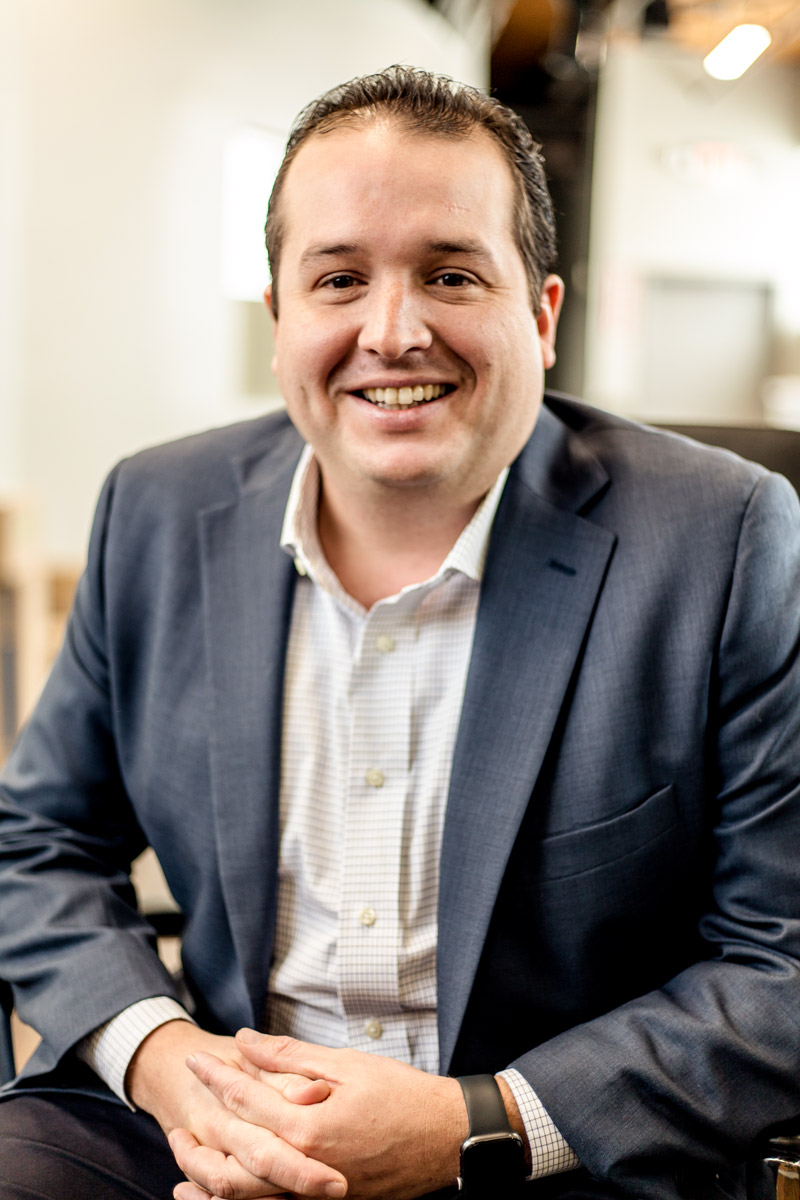
Dalton Espaillat. Photo: Jonathan Cooper
He decided to lift the simplest, most popular items from the menu and serve them in a fast-casual setting. “My whole goal with Sabor was to make something where it was easy to be trained,” he says. “I always say anybody off the street should be able to come in — week two, they should be on their own. Everything that we do has to be done by anybody.” Espaillat and his team honed the balance between simplicity and authenticity, landing on a menu and model they could easily replicate. He held a grand opening for the first Sabor on Hawthorne Lane on July 4, 2013. “Nobody came,” he recalls. “I didn’t even attend the grand opening, I was so depressed.” Still in debt and with a portfolio of struggling concepts, he thought he would have to shut down after a year and a half. “I had the great idea,” he says, “to open up two more in the middle of all this.”
He noticed that more locations allowed him to streamline operations and gain recognition around town. “So hold on a second,” he recalls thinking, “this is working!” Today, Sabor Latin Street Grill has 18 locations, as far afield as Durham and Greenville, South Carolina.
Ever since he launched Three Amigos, Espaillat has faced complaints about authenticity. Even though, he points out, the food there is made by Mexican people from Mexican recipes. When he opened Sabor, he thought, “Screw it.” Sabor’s name doesn’t refer to a specific place, “so I avoided the whole issue,” Espaillat says. “Our food is authentic to us, to the version that we’re trying to recreate.” He opted to focus on one dish at a time, researching and refining until he had the perfect recipe.
The arepa recipe, for example, is based on a vendor from a small town in Venezuela who shared her method with Espaillat’s father. The yucca fries are modeled after a classic Salvadoran dish, but Sabor has strayed from tradition, swapping a variety of proteins for the standard chicharrón. “If you’re Salvadoran,” Espaillat says, “it might not be exactly what your grandma cooked, but it’s still pretty damn good.” Sabor also serves Dominican-style empanadas, and Espaillat points out that even within countries, culinary traditions vary. “It is Dominican to me, from my hometown,” he says. “If you’re from another city, you might not see that.”
Thirteen years after he bought that enchilada spot on Central Avenue, Espaillat is quick to admit that he still doesn’t have full-service figured out. He stays out of the day-to-day operations there and at the Three Amigos in south Charlotte, which opened in 2021. But he has mastered fast-casual and the back-office business, skills his company, Raydal Hospitality Group, plans to market to local chefs as they build and expand their own restaurant brands.
“We can bring in the financial backup, my skills in construction, my skills in operations, how to manage property,” he says. “Just looking for that individual, that group that has good concepts but that might not have the backbone support of an office, which is what we do the best of anybody that I know.”
Espaillat travels to the Dominican Republic often, but he has no plans to leave Charlotte. The city is young, he says, and welcomes newcomers from around the country and around the world — plus, the weather is wonderful. “It’s a new city,” Espaillat says. “You can’t go to New York and start a restaurant chain like I have. You can’t do it in Atlanta either. But you can do it in Charlotte.”