
Hidden gem in Charlotte’s Oakhurst neighborhood where the menu is as creative as the food
Hidden gem in Charlotte’s Oakhurst neighborhood where the menu is as creative as the food


The owner of Aria Tuscan Grill and Cicchetti faces down the biggest challenge of his career

Pierre Bader, owner of Aria Tuscan Grill and Cicchetti in Uptown. Photo by Peter Taylor
Pierre Bader calls March 16, 2020, “the most horrifying day.” Governor Roy Cooper had just ordered restaurants to close their doors. Bader gathered the staffs of Aria Tuscan Grill and Cicchetti, both in Uptown’s Founders Hall, and gave them their last paychecks before closing temporarily. “I showed them all how to go onto the unemployment website,” he says. “I told them that I am personally there for them. If anybody needs a loan, if anybody needs a check, if anybody needs money, just come to me.”
He ended up making several personal loans and keeping his salaried employees on the payroll, though he had no idea how long the shutdown would last. “I went home,” he recalls, “and I looked at my wife and I said, ‘If you see money missing out of our personal accounts, it’s because I am taking it out to give to my employees.” His wife, Patricia Childress, an English professor at Johnson & Wales, understood.
Now, bankers are gradually returning Uptown and the Blumenthal is once again hosting shows around the block from Aria. Bader speaks to me from the still-closed Cicchetti, which opened in fall 2019 after a renovation that cost Bader’s Sonoma Restaurant Group half a million dollars.
Here’s what a day in his life looks like.
5:00 a.m. “I’m not a big sleeper.” Bader starts the day early, with a cup of coffee and The Wall Street Journal or The Washington Post. He’ll catch up on financial and political news, and maybe read a fun article or two before heading to work.
8:30 a.m. Bader heads from his home in SouthPark to his office in Founders Hall, near both his restaurants. “I’m a guy that likes to go to work,” he says, which made it hard to adjust to the pandemic lifestyle. “Even if I didn’t have work, I wanted to go to work. I can’t sit at home.” Before Aria opens, he greets the chefs and kitchen staff, who let him know about any broken equipment or missed deliveries. Then he heads to the office to tackle bills and look over last night’s sales. He reviews reports from his managers and makes sure “every penny is accounted for.” Bader is meticulous about his books: “We’ve always been debt-free. If we don’t have the money to spend, we won’t spend it.” But the havoc wrought by the last year has made it hard to stay in the black.
In the last two months, Aria has changed its prices three times. The restaurant used to source 10 pounds of dry-packed U-10 scallops for about $180. Today, the same amount costs $280. And it’s not just scallops. Food costs in general, Bader says, have “gone haywire.” For more than a decade, Aria, which opened in 2010, charged $5 for its bar bites. This year, management raised the price to $7.
10:30 a.m. With some of the routine paperwork behind him, Bader heads down to Aria to help in any way he can. Though he doesn’t have formal culinary training, he grew up around the kitchen and has picked up enough skills from talented chefs to be a versatile helper. “I tell my managers and all that staff that I will go clean the toilet if I need to. There is no shame about that. We are in the hospitality business.” But typically he doesn’t clean toilets: “If the kitchen is backed up and food needs to be sent out to the tables, I am there for them. If we’re missing a person in the kitchen and the chef has to step in behind the line to cook, then I’ll take the expo station. If a station has fallen behind, I will try to bail them out.”
11:30 a.m. Each week is busier than the last, Bader says, but he believes it will be a couple of months before Aria is really in the clear. “As soon as Labor Day, I think everything will unravel and become Uptown like the way it used to be.” He’s heard that many Uptown employees will return to their offices after the holiday and bring the lunch rush back to pre-pandemic levels.
Now, if you pass Aria at lunchtime, you’ll notice a first in the history of the company: a small sandwich board on the sidewalk that says, “Now Hiring.” They’ve offered signing bonuses and finder’s fees, and “we’re spending a gazillion dollars on Indeed and ZipRecruiter,” but the staff shortage still meant that the restaurant had to cut its operating hours. On the way to Lowe’s on South Boulevard the other day, Bader noticed that McDonald’s was advertising $20 per hour wages. “Nobody wants to work for less than $20 an hour and all of a sudden, it’s like, okay, what do I do with my costs? I mean, it all has to somehow or another make sense, and lately, nothing is making sense.”
2:30 p.m. As the lunch rush wanes, Bader returns to his office. There, he sneaks in a quick nap on the couch.
3:30 p.m. Bader returns to the restaurant to gear up for dinner and greet the staff on the evening shift. As an Uptown establishment, Aria is subject to the schedule of the city: “If there is a Blumenthal Performing Arts show, then you have 200 people walk in the door at 6 o’clock, and they want to be out by 7:15,” Bader says. “So it’s just another kind of pressure to perform and to make sure that they get their food on time and their service is maintained.”
Bader prides himself on running a restaurant where you can get a quality dinner before a show or grab a drink and snack after work — in other words, not a special-occasion restaurant. “That’s the last thing I want to be,” he says, but he fears that’s where the price pandemonium is pushing him. He has no interest in serving high-end steaks for $60 because “that’s not who we are,” but he’s no match for the transitory inflation he reads about in The Wall Street Journal.
“They say every salad in the city now is $12,” he laments. “I mean, if you go to a restaurant and order a $12 salad and a $35 entree, without even drinking, you’re out close to $50. And that’s not dining out and having fun. That’s a special occasion.”
9:00 p.m. In the quiet moments before the restaurant closes, Bader sits at the bar and enjoys a glass of wine. He looks forward to the weekend, when he may go up to his home on Lake James with Patricia to ride bikes and relax, or brainstorms a menu for Sunday dinner, a big event each week, when his 27-year-old son, Luke, visits from South End. Next door, Cicchetti is frozen in a past before the pandemic, shelves full of wine that never sold. Bader plans to reopen the wine bar in early July.
10:00 p.m. Bader’s Brittany spaniel, Lucy, and 15-year-old Tonkinese cat, Sophie, greet him at the door when he gets home. He chats with Tricia and perhaps picks up one of the books she’s left on the counter. Other nights, he watches Somebody Feed Phil on Netflix or browses videos online, a habit born of the pandemic: “YouTube is becoming my best friend lately. I can just YouTube a recipe, and all of a sudden there are a gazillion.” The past year has shaken up Bader’s routine in many ways, but, he says, “I’m seasoned enough to survive all kinds of weird stuff. Nothing is going to take me down.”

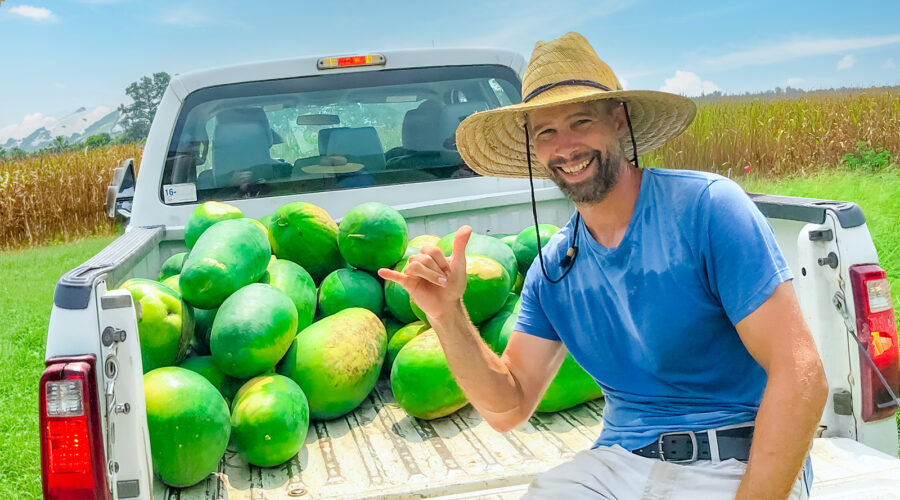


Thank you for this article. Pierre Bader is a visionary restauranteur, and a great influence in Charlottes culinary and agriculture history. He was one of the first restauranteurs to purchase from local farmers. As a small farmer I can say that his restaurants helped keep us going in the 90’s because Pierre saw the value of a locally crafted vegetable in a time when few other did.
Appreciate your perspective, as always, Sammy, and what you’ve done for the farm community!