

October 29, 2026
Key takeaways from our Mastering Marketing and Branding industry breakfast
Panelists discuss the intricacies and insights for building brand that lasts
by TM Petaccia
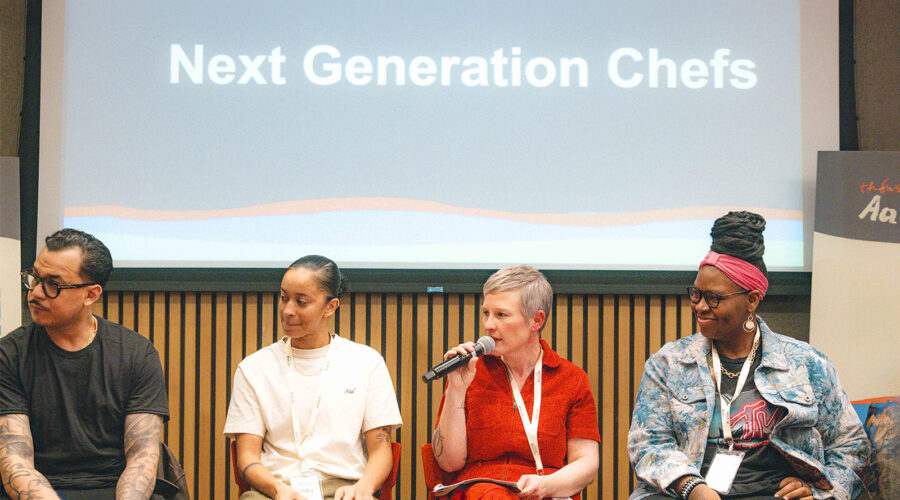
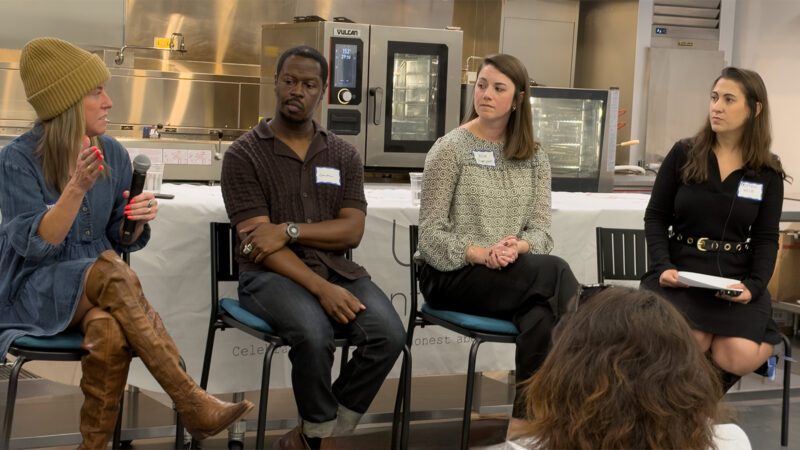
A restaurant’s brand takes shape in the details: the music in the dining room, the people serving the food, the photographs shared online, and the voice inviting guests through the door. Giving those details a clear, consistent identity was a recurring theme at Unpretentious Palate’s final Industry Breakfast of 2026, “Mastering Marketing and Branding.”
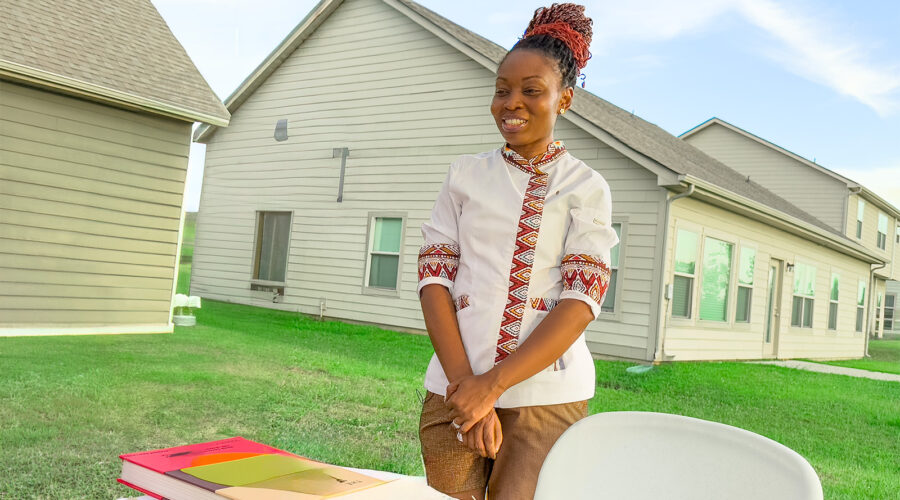
Moderated by UP editor Kristen Wile, the panel featured Allie Papajohn, founder of eatdrinkclt and PR director for Tonidandel-Brown, the restaurant group behind Supperland, Leluia Hall, Haberdish, Ever Andalo, and Olivelli Deli; Katy Kindred, co-owner of Kindred Hospitality, whose restaurants include Albertine, Deepwell, Hello Sailor, and Kindred; and food photographer Jonathan Cooper.
The panelists repeatedly returned to the importance of knowing what makes a business distinctive.
Kindred used her group’s newest restaurant, Deepwell, as an example, citing Mooresville where the restaurant is located was originally named Deepwell.
“When you’re building a brand from the beginning and you want it to have more than just a logo or whatever, you kind of want to create a character,” she said. “We wanted to kind of have Deepwell feel comfortable, like it had always been there. And that can come down to the music and the uniforms and the candles and every little detail,” Kindred said. “You want to think about it through the lens of that character that you built for the restaurant itself.”
Cooper looks for that same clarity when learning about a business he will photograph.
“I feel like individuality is missing. So I’m always trying to figure out what’s that one thing that sets them apart,” he said. “A lot of times, you know, to a point, there are a lot of restaurants that all feel the same. So it’s like going to one place, and everything feels like copy and paste.”
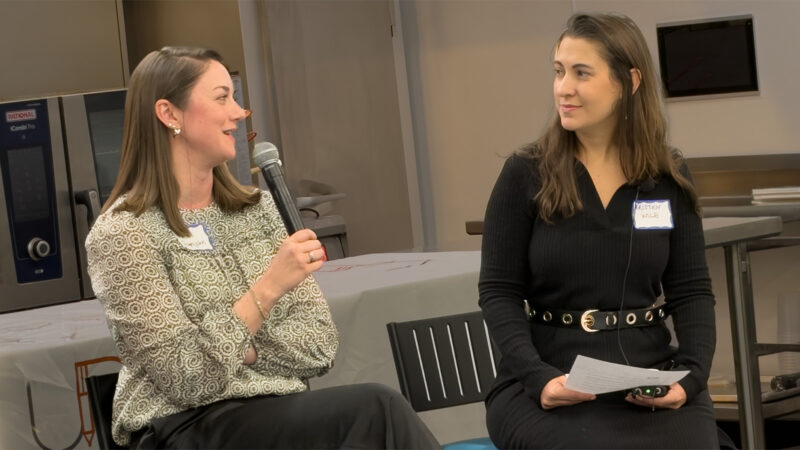
For Papajohn, the people behind a restaurant are often the starting point for understanding it.
“I obviously can tell a lot about a brand through their stories. So whether it’s the story of the owners, it’s the story of the staff, maybe the people that are working for them. That is such a big part of it,” she said. “That’s always a big part for me is learning about their background, why they do what they do, why they serve what they serve.”
She encouraged operators to spend time with their teams, ask questions, and talk with managers and chefs about employees who might have something interesting to contribute. Finding someone willing to explain a dish, demonstrate a process, or share a perspective can make a restaurant’s communication more personal.
Kindred added that a well-developed identity can also help a business find its audience. “I think that a lot of times your people will find you. And I think that just going back to that authenticity and having a brand that’s authentically itself, you’re going to find people that connect with it. she said.”
The next challenge is staying connected. Both restaurant groups use Instagram and newsletters, although their approaches differ.
“From the restaurant side, working in-house, we are very big on social media. That is pretty much our main platform. And when I say social media, I really mean Instagram,” Papajohn said. Tonidandel-Brown uses Instagram for food, spaces, news, and ticket sales, with newsletters providing ticket announcements and subscriber-only offers. “We tend to steer any sort of like call to action type reach out to email just because the Instagram is really more for storytelling,” Kindred said. “So if we need to get the word out about a ticket sale or a discount of some kind, we may put it on Instagram, but it tends to not do well. Whereas, email storytelling does really well.”
Kindred also gave some demongraphic insights based on her experience and collected data. “The generation you should be aiming for, at least the ones that have the disposable income, don’t like to be sold,” she said. “Maybe older generations may be open to the a special that might intrigue them to come in, but I definitely notice in the data’s younger folks do not want to feel like they’re being sold something directly. They are more like, ‘Please paint the picture of the experience and I’ll decide if I want to experience that.”
Papajohn’s work gives her a view of that connection from both sides: as the storyteller behind eatdrinkclt, she approaches restaurants as a diner, while her role as Tonidandel-Brown’s PR director involves shaping expectations for the group’s guests. “As a diner, obviously I do want the food to deliver in the way that it might look on social media,” she said. “It’s just nice to see a dish and know that when you come in, it’s going to look realistic.”
From the restaurant side, that means keeping the promotion grounded in what the team actually delivers. “I’m not in the restaurant cooking the food,” Papajohn said. “So when it comes to service and food and cooking, like there’s not much I can do from that end.” Her responsibility in telling the restaurant’s story is to ensure “we’re not posting something that’s inauthentic or not true to what we’re actually delivering.”
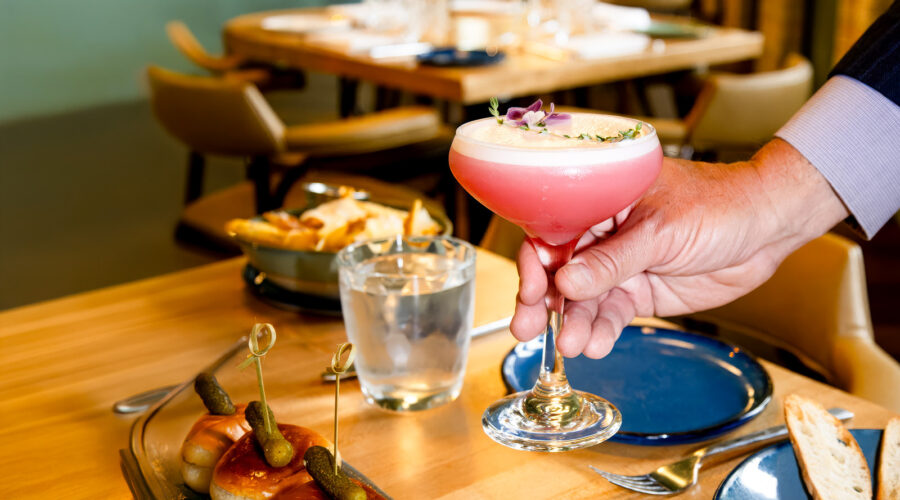
Cooper approaches photography with the guest in mind, asking about popular dishes and considering what would make him want to visit. People are central to that work. “While I do see the importance of actual food photography like product, it’s nothing without people. The same way that it takes you as a chef to make the dish, you also need people to consume it,” he said.
He urged operators to approach photography with a budget, a plan, and an understanding of how they intend to use the images. “But at the same time, I’m thinking, how are you going to use these? Like, this is literally an investment,” Cooper said. “The same way you’re going to invest in your kitchen, it’s the same. You should approach that with branding and photography, down to the graphics, down to photography, like everything matters.”
Kindred agreed. “Photography is a big one. Either by getting some professional photos or taking a quick class to learn how to take good phone photo so you can do it yourself, depending on your resources.”
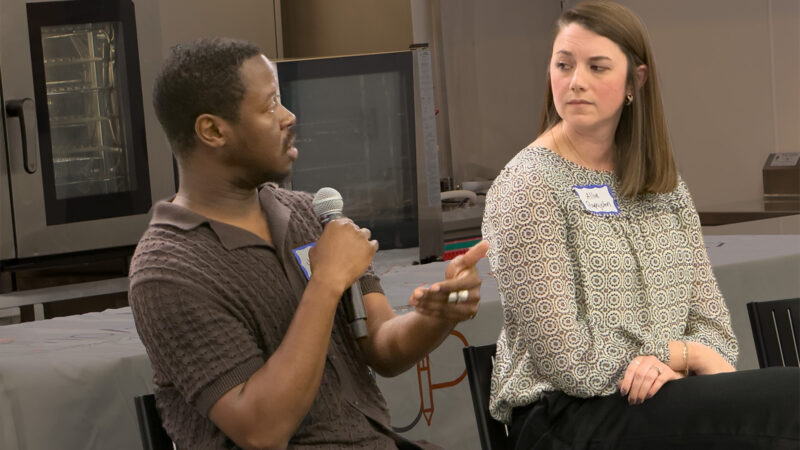
Cooper’s practical advice included preparing a shot before the food arrives and photographing the most time-sensitive items first. “Try to set up your shot first. That way when the dish comes out, you’re ready to go. That’s important,” he said, then added the preparation itself can also provide useful material. “Capturing bartenders, the process shots are equally as important as a final product. We see this thing, but we don’t know how it was made. So also telling the stories about that is equally important.”
Papajohn has found that putting employees into promotional content can help move an audience from watching to acting. “We do have to use our page a lot for selling. So when we have something we want someone to buy a ticket to or attend, a lot of times we like to use or have our team members talk about an event,” she said. “I find that when team members are willing to be on the post, that has helped a lot,” she said.
Papajohn also watches how people share posts, considering the value of someone sending a restaurant’s content to a friend as a suggestion for where to eat. Food shown being served or enjoyed can still prompt that response. “Shareability is a huge factor on social media,” she said.
Kindred favors reels for reaching people and suggested carousels when posting still photography. “So do multiple photos. They do better than just a single post,” she said.
The discussion also addressed the different roles of press coverage, paid creators, and word of mouth.
“I think earned media is, at least in our experience, way more fruitful in the end,” Kindred said. She described inviting food writers to dine, with the restaurant covering the meal, as one outreach approach. Her group’s experience paying an influencer had left her uncertain about its return. “I don’t know how much it actually turned anything into like legitimate business,” she said.
Papajohn brought another perspective through eatdrinkclt, which she started nearly twelve years ago as a place to share food photographs and explore Charlotte’s dining scene. “It turned into what I do now kind of by accident, but when it became what it became, it was taking up a lot of my time and I had to figure out how to monetize,” she said. “I wanted to keep doing it, but I couldn’t. I can’t do every single thing on that page for free.”
Her account includes meals she buys herself, hosted experiences, and paid advertising. Requests from businesses for specific promotional content become advertising conversations, but the fit still matters. “I say no to a lot of stuff. It doesn’t fit what I like, what I would consume, what I would spend money on,” she said.
Cooper emphasized the influence of guests who return and recommend a restaurant to others. “I feel like the real influencers are real people,” he said. He encouraged operators to consider the neighborhood they serve and the relationships that will sustain a business after a burst of online attention has passed.
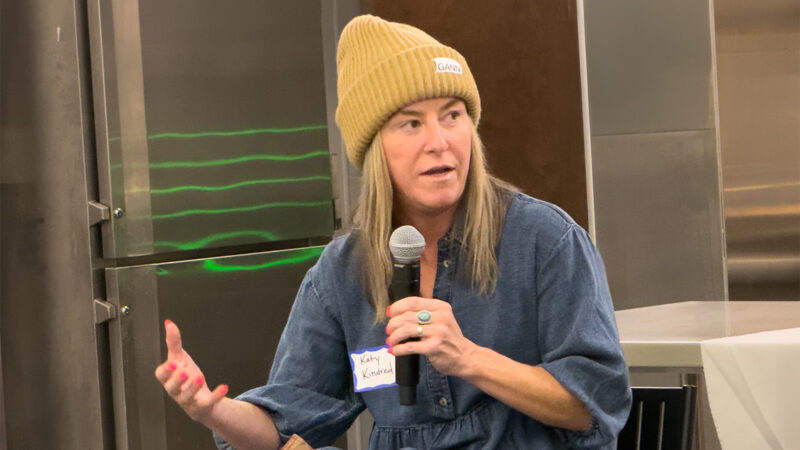
For restaurants considering professional support, Kindred suggested first identifying what help they need. A business still developing its identity may benefit from marketing guidance. One with a strong story may find value in PR support to connect it with people who can share that story. “The PR is the one who gets the foot in the door so you can walk through it and tell the story. So I think that that’s a valuable thing to have if you really want to get your story out there,” she said.
She described hiring a PR professional by the hour for a specific outreach assignment, making use of that person’s contacts and follow-up work. “But again, you’ve got to have that story to tell in the first place.”
For operators wondering where to begin, Papajohn recommended attention to the basics: an active social presence and an accurate, useful website. “Obviously my brain goes straight to social media, which is free, but investing in someone to run it or come up with ideas or create content obviously is not free,” she said.
Websites deserve the same attention. Menus, hours, contact information, and staff information should stay current, and the path to making a reservation should be easy to find. Papajohn said her group’s sites also include food philosophy pages explaining sourcing and relationships with local farms.
Cooper emphasized making a website easy to use on a phone and giving visitors enough information to understand the restaurant.
“A lot of times we would hear about a restaurant, but we don’t know what type of food it is. So when we go to the website and there’s no images of food, there’s barely enough information for anyone to lean on, they’re just gonna go to the next thing,” he said. “So I think about functionality, that’s incredibly important.”
The same principle applies to chefs hosting pop-ups and businesses moving between locations. Papajohn suggested sharing upcoming schedules along with material from previous events. “I also like to see what has happened at past events, so showcasing what your most recent pop-up looks like,” she said. Pinned Instagram posts can help keep an event or schedule visible, she added, provided someone also remembers to remove outdated information.
Kindred suggested collaborating with a complementary business to introduce the experience to a larger audience. “See if you can’t negotiate some sort of a collaborative thing where you’re doing the food and they’re providing the drinks. And then you can do some co-marketing with them,” she said. “And you can tag each other and share each other’s posts to help you build an audience.”
Keeping that audience interested remains an ongoing job. Papajohn said her team is developing seasonal options for Olivelli Deli and continually discussing ways to bring guests back across the group. “We’re trying to keep going and bring ideas to the table all the time. So it just kind of never stops,” she said.
Kindred said she and her husband, Joe, were thinking about longevity early in Kindred’s life, recognizing that the initial excitement surrounding an opening would eventually subside. “You get to the point where you can choose to keep pushing and become an iconic local joint, or you can just fade into the distance,” she said. “Part of that is just persistently maintaining the restaurant, keeping it fresh, keeping it top of mind, and just constantly doing that storytelling.
“You want a place that just becomes woven into the fabric of the community,”
Support local food journalism in Charlotte.
UNPRETENTIOUS PALATE is a digital publication covering food and drink in Charlotte. At UP, you’ll find ethical food journalism that isn’t based on free meals. We’ll be your taste testers around the city, letting you know where you can’t miss and where to skip. And we’ll ban any condescending food-writer speak. We’ll tell you the dishes we love, where to go on date night, and the best places for cocktails. You can trust us.
Become an Unpretentious Palate member today to dine better in Charlotte.
Not ready to become a paying Member? Sign up for our free newsletter below.