


September 25, 2026
Takeout containers are now recyclable in Mecklenburg County
No. 5 plastics can now go in your curbside bin
by Michelle Boudin
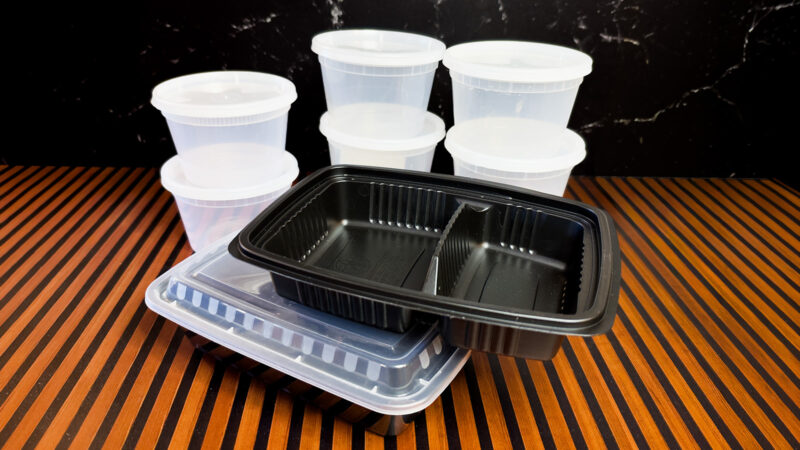
Across the country, many communities are cutting back on curbside recycling. Mecklenburg County is expanding it – and that’s good news for area restaurants and their customers. County residents can now recycle more types of plastic containers in their curbside bins, including takeout containers.
Amy Aussiker, executive director of Envision Charlotte says, “There are so many different communities that are completely shutting down curbside recycling, so the fact that Mecklenburg is expanding is a big deal in itself.”
The county’s Wipe Out Waste program says plastic fruit and takeout containers, plastic drink and yogurt cups, and paper cups are now accepted. Officials say those items should be clean, dry, and placed loose in the recycling bin, not inside plastic bags. Aussiker says until now, the only plastic residents could put in their curbside bins was a bottle with a neck. Many of the newly accepted items are made of No. 5 plastic, which is used for takeout containers, berry boxes, and yogurt cups. Very few cities accept No. 5 plastics at the curb.
“People have been clamoring for the county to take this material,” Aussiker says. “Previously, they would go into the trash.”
Envision Charlotte has seen how much demand there is to divert these plastics from the landfill. During the COVID-19 pandemic, when takeout orders surged, the organization collected No. 5 plastics and turned them into products like benches. “We got overrun by people bringing it to us, like overrun,” Aussiker says. “So we had to shut the program down.”
Aussiker says the county has been working towards this for a while, but the move took time because they needed a buyer for the plastic and a way to sort it. Everything that goes into a recycling bin has to be separated by material before it can be baled and sold to manufacturers. In order to process the additional plastics, the county installed new equipment at its materials recovery facility. “The equipment is expensive,” she says. “It’s very complicated.”
For restaurant owners, the change could affect what they buy.
“A lot of this compostable stuff is really expensive for any restaurant for to-go,” says Shari Robbins, owner of Sharigato, a sushi hand roll bar that opened in May. “It’ll save money, in that sense, that we can now use the number five.”
Aussiker points out that most households don’t compost, so compostable containers usually end up in landfills. Without oxygen, they don’t break down there and give off methane instead, contributing to greenhouse gases. Her advice is to skip the compostables and use recyclable plastic. “People who do that think they’re doing a good thing,” she says. “And it’s actually worse.”
Robbins says her customers are “more conscious of what they’re eating out of” and how much they throw away, and she sees the new curbside additions as good news all around.
“It’s just a win-win,” she says. “It’s good for Charlotte. That stuff isn’t going into a landfill, and it’s getting recycled versus just getting thrown out in the trash.”