



September 9, 2026
Key takeaways from our Making Moves Toward Leadership industry breakfast
Three industry stalwarts discuss what it takes develop and nourish strong teams
by TM Petaccia
“I’ve always felt like I was a flawed leader.”
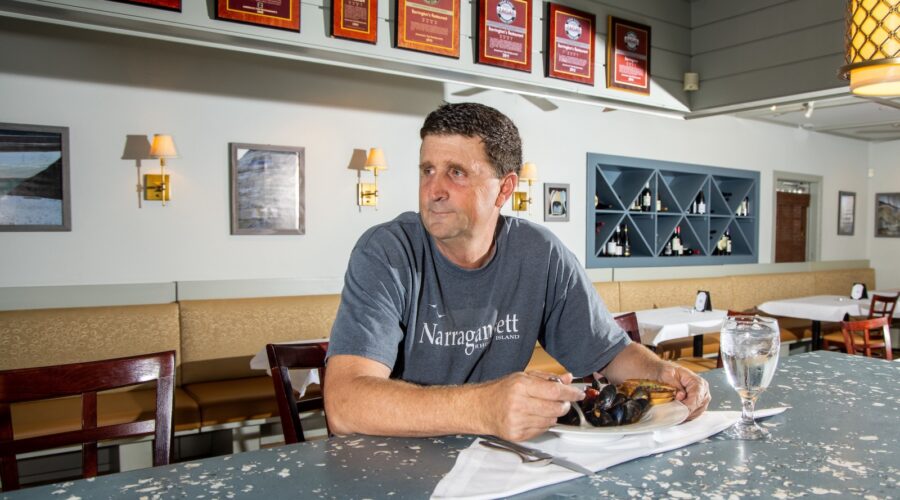
The candid admission from Bruce Moffett came midway through an hour-long conversation about leadership in the hospitality industry. For Moffett, chef and owner of Moffett Restaurant Group (Barrington’s, Stagioni, and Sala), acknowledging those flaws is part of becoming a better leader.
“You know, I make mistakes,” he continued. “I let things go on for way too long. I’ll set a precedent that’s probably not helping my group. And then, you know, you learn and look inward.”
That willingness to learn — from employees, peers, and one’s own mistakes — became a recurring theme during Unpretentious Palate’s September 8 Industry Breakfast, “Making Moves Towards Leadership.”
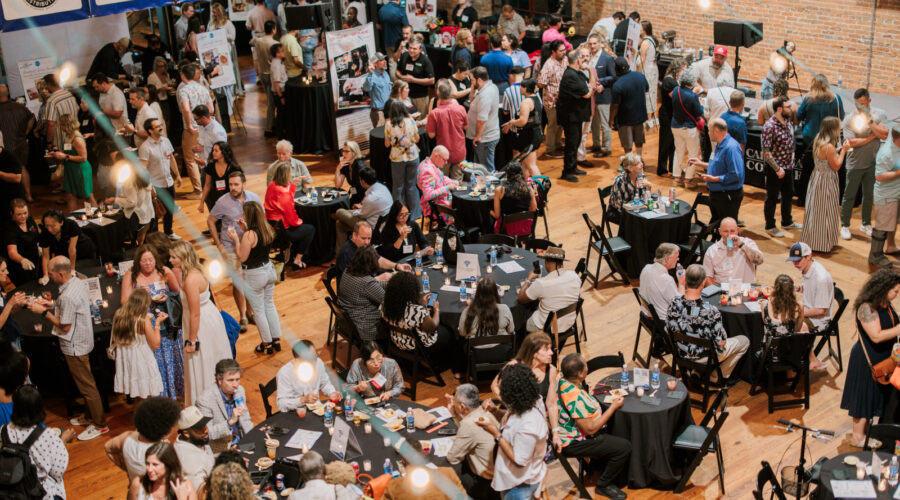
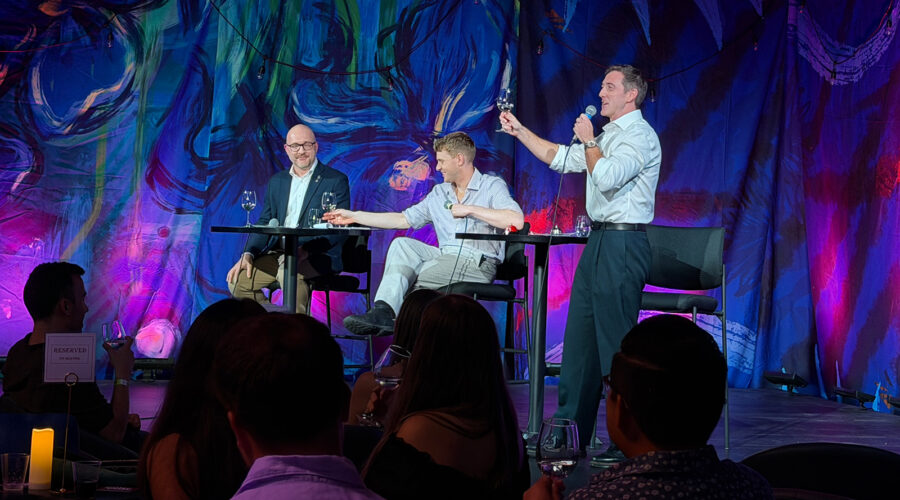
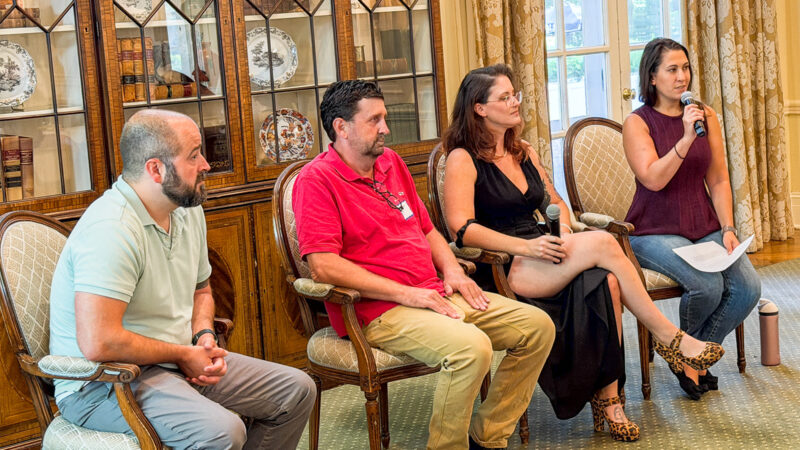
Held at Charlotte’s historic Duke Mansion, and made possible by a grant from Charlotte’s Arts & Science Council, the panel featured Moffett along with Nori Schmidt, general manager at Dot Dot Dot and Tim Buchanan, director of operations at Rare Roots Hospitality (Dressler’s, Fin & Fino, Dogwood, Chapter 6, and The Porter’s House). Their approaches reflect different businesses and backgrounds, but several common themes emerged: educate and empower people, communicate clearly, remain consistent, meet employees where they are, and most of all, recognize leadership is never a finished skill.
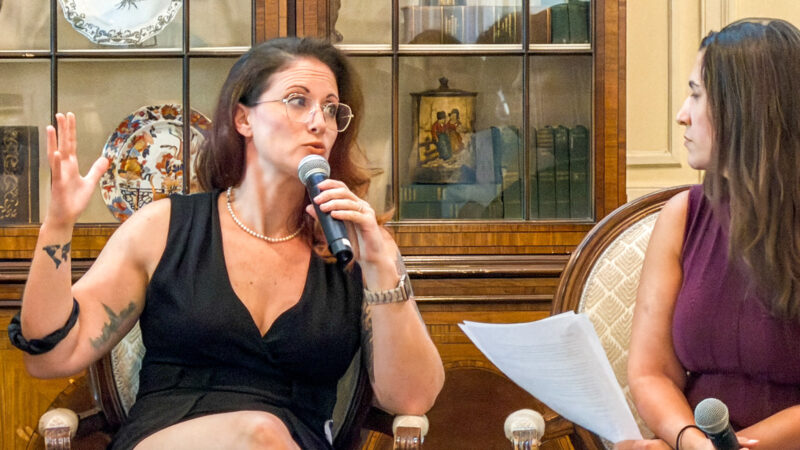
Opening the breakfast, Unpretentious Palate editor Kristen Wile explained that the series was created as “a space where hospitality professionals can gather,” network, and see one another. “We all do so much for gathering everybody else in the community,” she said. “We really want to help provide an opportunity for all to stay together.”
More than managing a shift
Schmidt began by distinguishing leadership from management. While management is often centered on completing tasks and reaching operational goals, she described leadership as the ability to guide and motivate people to become their best.
“For me, what you want is to educate and empower,” Schmidt said. “The more that you know, the more that you can share and the more that you can learn. “There’s so much more than just going through your tasks,” Schmidt said. “It’s experience and the journey of taking somebody through a menu or through dinner or even just a cocktail process.”
Moffett described his approach as finding people who are passionate about what they do, then giving them “a template and boundaries” within which they can work.
“Just have them kind of do what they love to do and what they’re passionate about, as long as they’re working within your boundaries,” he said. “I’ve always found that kind of empowers them to move in directions and think about things and, honestly, educate me as well.”
He also sees leadership as giving employees something useful to carry into their next job. “I always found that it was giving your employees a path to be successful and a path to a better future,” Moffett said. “If you kind of mentor and lead in a way that when your employees walk out of your door, they learn something, and they’re more able to hold their own position or run their own place,” then the leader has provided “that pathway for future success.”
Buchanan called leadership the “connective tissue” that brings a group together and pushes it forward. “Progress, I think, definitely is a piece of leadership,” he said.
The challenge in hospitality is that the members of that group may have very different reasons for being there. One employee may be developing a career, while another may be a college student, a teacher working a second job, or someone temporarily passing through Charlotte. “The reasons why the team is there, I think, can vary greatly,” Buchanan said. “They don’t have to be moving toward the same goal.”
For the leader, that means learning what each employee wants and helping that person get the most from the job—even when the employee has no intention of remaining with the company indefinitely.
“We just ask that they get the most out of their time,” Buchanan said. “Some of that is definitely leadership. Some of it is helping them grow or mature as individuals.”
Moffett said employee turnover is not necessarily a failure in an industry where people often advance by changing jobs.
“There are certain people that fulfill a certain role at a certain time and move on,” he said. “You just try to make sure that they have the best skill set that they have, so in their next step, in their next level,” they are prepared to succeed.
His promise to employees is straightforward: “Work hard for me, and I’ll help you get to wherever it is that you want to go.”
Meeting people where they are
Schmidt called her approach “situational leadership.”
“It’s meeting people where they are,” she said. “It’s honestly what the need for your business is at the time and what the need is for that person.”
Some employees may come in, perform their jobs reliably, and go home. Others may be developing rapidly and exceeding expectations. Schmidt said she wants to understand what is happening in an employee’s life so she can help that person do the best job possible.
“The goal is to help other people grow, to help you grow, to grow in the business,” she said. “What I like to do is help people hone their skills, not only in hospitality, but in their life so they are better able to make decisions and set boundaries within their role at the job and also their role in life.”
That requires striking a balance between being involved in employees’ lives and becoming too much of a friend.
“I love the vibe in the kitchen. I love the vibe in the bar,” Schmidt said. “Our staff, sometimes they like each other too much. But at the end of the day, they know that we are there to give excellent service, to leave our crap at the door, and come in and do a job.”
Even while enforcing those expectations, she wants employees to know that their well-being matters. “You want someone to work for somebody that cares about you, that doesn’t just care about the business, that cares about you as a human and you as an employee,” Schmidt said. “I’ve always strived to try to be the kind of manager that I wish I had.”
Buchanan said managers can be supportive and even become close to employees while preserving appropriate boundaries. “You know somebody needs help moving, help them move,” he said. “Help be a resource, help become a mentor. Maybe don’t go out after the shifts from 11 to 1 a.m.”
At work, he added, the most important thing is “being as consistent with your messaging as possible,” including when the employee receiving that message is a friend.
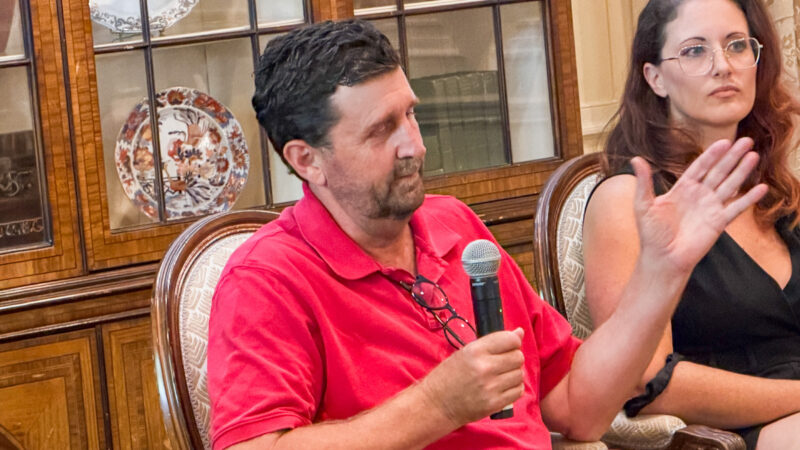
Moffett relies on an organizational chart and a clear chain of command. Kitchen employees bring issues to the chef, front-of-house employees go to the general manager, and the chef goes to the general manager before a problem reaches Moffett. When an employee bypasses that structure and complains directly to him about another leader, Moffett tells the employee how he will proceed.
“If you want me to deal with this, I’m going to tell the person you’re having an issue with, get their side of the story, and then, if need be, we’ll all sit down together,” he said.
Having “clear, distinct lines of who to report to and how to navigate through that” keeps leaders from reacting to only one side of a conflict.
Recognizing the next leader
When Wile asked how the panelists identify leadership potential, Moffett said he notices when employees begin thinking beyond the immediate concerns of their coworkers.
“My biggest thing is that they understand that they work for the company and not for the staff,” he said.
As an example, he described a manager concerned that employees were not earning enough tips on a slow Monday. Simply recommending that the restaurant close on Mondays addressed the staff’s complaint but not the company’s underlying problem.
A potential leader, Moffett said, would approach him differently: “We’re not busy on Mondays. I have five ideas to bring more people in on Mondays. Which of those do you think is the best idea? We’ll try to execute it.”
“When I see that they’re thinking in terms of what’s best for the company,” he said, “those are people I tend to elevate to leaders.”
Schmidt also looks for people who see the larger picture and bring possible solutions rather than simply pointing out problems. She also watches what employees do with the knowledge they acquire. “You want someone who obviously wants to continue education, but continuing education and not keeping it,” she said. “Sharing it and using it to your own advantage, but to the advantage of others.”
When she sees someone who is eager both to learn and to teach, Schmidt said, she begins thinking, “I’m going to put my time into this person.”
Buchanan first looks at how well employees perform their existing jobs. “I think it’s hard to move up if you’re not excelling in the position you’re already in,” he said. He then watches how the rest of the staff treats them. Coworkers may begin asking that person for guidance or relying on them to communicate an issue to management.
“A lot of times, they’re kind of self-nominating the next person to step up because of how they’re being treated by the rest of the team,” Buchanan said.
When leadership fails
Asked what failed leadership looks like, Moffett pointed first to managers who are physically at work but no longer fully engaged.
“A lot of times, you’ll see them just kind of mentally check out for days or weeks at a time,” he said. “They stop paying attention to the education of the employees. Failed leadership is when they just don’t show up mentally every day.”
Schmidt pointed to the chaos that results when employees are not held accountable, responsibilities are left unfinished, and standards become inconsistent. “I think if you can’t leave the building and not worry about that it’s either going to catch on fire or the whole thing is going to the zoo,” she said, there is a leadership problem.
Buchanan was reluctant to label someone a failed leader based on a single decision. “I think it’s probably more of singular events or occurrences,” he said. “I don’t think it’s as much the leader; it’s individual instances.”
His response is usually to pull the person aside and talk through what happened. “Here’s what I would have done. Here are the areas which you did well,” Buchanan said. The discussion then turns to the consequences of the person’s decisions and how the same situation might be handled differently next time.
Schmidt takes a similar approach when a guest review exposes a service problem. She asks the employee to read it, gives the person time to process it, and then starts asking questions. “Do you recall the situation? What happened? How could you handle it differently? How did you handle it? What can we do moving forward to make sure that this doesn’t happen again?”
“I think addressing it in a way and giving people an opportunity to respond to it” is important, she said. The objective is to create a learning opportunity rather than move immediately to “You’re out of here.”
Buchanan said the response also depends on the severity of the behavior. “I don’t tolerate if you’re putting somebody down or if you’re personally attacking,” he said. “Then you’re probably going to get a swift response from me and I’m going to have a pretty serious conversation about your future. But if it’s either having a hard time with punctuality or uniform or something like that, we can go to it and be a bit more lenient.”
However, forgiveness has it limits.
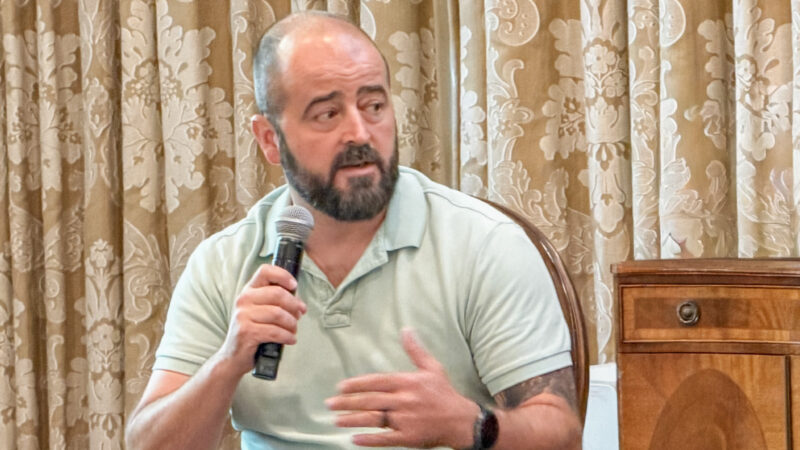
“If you’re showing too much forgiveness or you’re putting up with too much bad behavior, really the message is not just to that person,” Buchanan said. “It’s to the rest of the team that you’re willing to tolerate that.”
That was the point at which Moffett turned the subject of flawed leadership toward himself. “Sometimes I let things go on for way too long. I’ll set a precedent that’s probably not helping my group. And then, you know, you learn and look inward.”
“The biggest thing you got to do is kind of forgive yourself, learn what you need to learn, and move on,” he continued. “None of us are perfect leaders. We’re all flawed leaders. We’re working in a very stressful, small environment. And things happen, and we allow things to happen that we shouldn’t.”
Moffett traced that philosophy to his mother, who was a social worker.
“I would do something wrong, and she’d say, ‘Can we both agree that what you did was pretty stupid?'” he recalled. “And I would say, ‘Yeah, sure, Mom.’ And she’d say, ‘Okay, next time you get in a similar situation, what are three ways you can handle it differently?'”
After he came up with three choices, she made him select the best one and remember it for the next time he encountered a similar problem.
“I like to approach life and my staff and my leadership kind of with that in mind, that we’re all flawed, we’re all going to make a lot of mistakes,” Moffett said. “And I think sometimes, you know, letting your employees know that you’re flawed and that you make mistakes isn’t the worst possible thing.”
Leading when everything is a fire
Wile brought the conversation back to the particular pressure of hospitality. At a previous Industry Breakfast on mental health, she said, a therapist described restaurant workers’ nervous systems as being stuck in fight-or-flight mode because they are operating under pressure and “always performing.”
“The big thing is, you yourself maintain calm,” Buchanan said. “Staying calm, being that kind of peace when other people’s hair is on fire.”
A calm response can help employees regulate their own reactions, but Buchanan also urged leaders to remove the predictable obstacles that create unnecessary stress. “If they’re always fighting around looking for a teaspoon, make sure you have a teaspoon,” he said. After a difficult service, he talks to the people who experienced the pressure. “What can I do to help, so tomorrow, when we come back and do it again, and the day after that, it’s easier?” Buchanan said. “I ask all the time.”
Schmidt agreed that leaders need to anticipate trouble, see the entire room, and know when to step in. “There are times where I’m like, ‘What do you need right now? What can I do to help you?'” she said.
Moffett offered the kitchen perspective. “Everything is a fire,” he said. “Everything is a fire.”
Over the years, he learned that some employees respond to being pushed, while others shut down under the same pressure. Leadership requires knowing who can be challenged in the moment and who needs to be taken aside after service for a calmer conversation. He also learned how quickly his own mood could spread through the restaurant. If he walked into Barrington’s acting grumpy and pessimistic, service rarely went well. When he arrived enthusiastic about the reservations, the pacing of the evening, and ingredients that had just arrived from a local farm, the team responded differently.
“My mood directly affected everything in that restaurant,” Moffett said. “And to kind of understand as a leader the amount of power you have to set that expectation and set that mood is pretty eye-opening.”
Seeing what others miss
Part of leadership, the panelists said, is developing the ability to notice problems before they become emergencies.
“There are people who just walk into restaurants and they know everything instantly,” Moffett said. “They know when someone’s short on water. They know when someone’s looking for a utensil that they don’t have. They know when someone’s dropped a napkin. After a while, if you’re an industry person, it’s just kind of, for some reason, you’re able to take in all that information,” Moffett said. “Through your smell, through your sight, through your hearing, through that feeling you get in your body—it just kind of seeps into you.”
Schmidt said leaders also earn respect by being willing to do the work themselves. She described an owner who will take out the trash, clean the mats, or wash dishes, and said she approaches the job the same way. “If I see something that I can do without having to ask, I’ll do it,” she said.
Sometimes that means bringing ice, washing dishes, bussing a table, or refilling a guest’s water. The point is to establish through action what the restaurant should look and feel like.
Culture starts with whom you hire
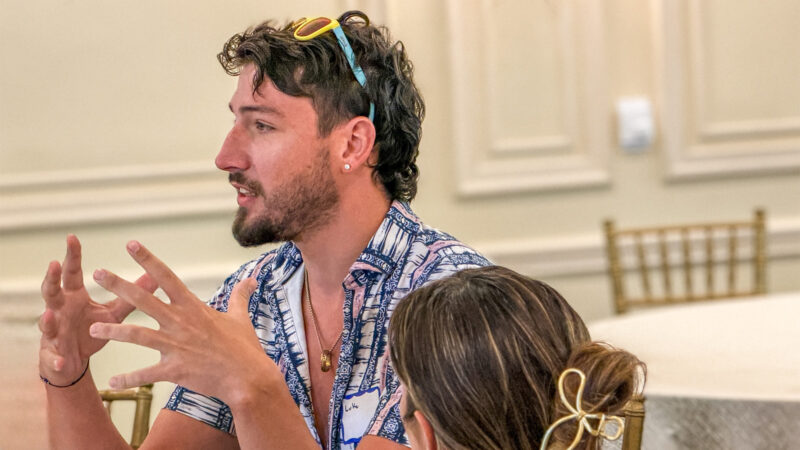
When an audience member asked how the panelists create a positive culture, Schmidt said hers is based on communication, curiosity, and education. “I try to cultivate open communication,” she said, “along with an environment where people can ask questions, be inquisitive, and continue learning. “We want people on our staff to come in and be smarter, happier, for whatever that is,” she said. “It’s kind of just hospitality as not just service, but as experience. So we try to do that with our staff as well.”
Buchanan said Rare Roots begins establishing culture during the interview process, then reinforces it through training, follow-up, and managers who communicate the same message. Work-life balance is part of the discussion from the beginning. “Everybody talks about work-life balance, but we mean it.”
Moffett described the culture he has tried to create as “a little bit more of an employee-friendly culture.” His restaurants are not open for lunch or on Sundays, Mother’s Day, or Father’s Day, and the company offers full benefits. Within those restaurants, employees are encouraged to contribute ideas.
“If you have an idea for a wine you want to bring in, if you have an idea for a cocktail you want to see, if you have an idea for a new local farm we can use, I try to motivate people and create a culture where they feel empowered,” Moffett said. “I just try to get them to kind of buy into that they’re a big part of the whole process,” he added. “I don’t want to micromanage you.”
Hiring for that culture can require looking beyond the length of a résumé.
Schmidt said she values personality and a genuine sense of care for the work. Her interview questions are intended to reveal more than technical knowledge. “What song was playing on your radio when you got out of the car for the interview?” she asks. “What do you like to drink? Where was the best meal you ever had? It’s not just about what the food is,” she said. “It’s what their experience was.”
Buchanan said Rare Roots sometimes invites candidates to spend time alongside employees already doing the job. A bartender, for example, might spend a day or two behind the bar before being hired. The candidate is paid and fed while there. “Interviewing and hiring is a difficult task as a general statement, just because it’s hard to know somebody from a 20 or 30-minute conversation,” he said.
Experience can bring skills, but it can also bring habits that do not fit a new workplace. In the end, Buchanan said, the company wants more than someone capable of performing the position.
“You want them to be a good person,” he said. “Somebody you enjoy having a conversation with.”
There is no finish line
The morning’s final audience question asked how established leaders continue developing their skills.
“You don’t want to appear checked out,” Buchanan said. “You don’t want to stop growing ever.”
Rare Roots reimburses employees for reading leadership and hospitality books, he said, citing Unreasonable Hospitality, Setting the Table, and Radical Candor. Just as valuable are conversations with fellow leaders and making time for self-reflection.
Schmidt also relies on reading, one-on-one conversations, and talking through challenges with other people in the industry. Leadership, she said, involves “a lot of trial and error” and requires “the humility and strength to learn and grow from it instead of to destroy you or other people.”
Moffett agreed that it helps to have another hospitality professional with whom to talk through problems. Advice from outside the business, he noted with a laugh, often sounds simpler than the reality. “Everyone you meet is an expert in restaurants,” he said. Someone may insist, “‘Well, if it were me, I would have just fired them on the spot.’ And I’m like, ‘Yeah, but it wasn’t you and you’re not the one that would be lacking a general manager for the next five weeks.'”
Leadership also has to adapt to the restaurant itself. Moffett Restaurant Group’s concepts are deliberately different from one another, and each requires a different approach. “What works at Barrington’s does not work at Stagioni,” Moffett said.
“It’s just constantly adapting, working with the people and the personalities that you work with to get the best out of them.”
Our final UP Breakfast of 2026 will be October 28, Mastering Marketing and Branding, and is open to all culinary/hospitality industry professionals. Click here to request an invitation.
Support local food journalism in Charlotte.
UNPRETENTIOUS PALATE is a digital publication covering food and drink in Charlotte. At UP, you’ll find ethical food journalism that isn’t based on free meals. We’ll be your taste testers around the city, letting you know where you can’t miss and where to skip. And we’ll ban any condescending food-writer speak. We’ll tell you the dishes we love, where to go on date night, and the best places for cocktails. You can trust us.
Become an Unpretentious Palate member today to dine better in Charlotte.
Not ready to become a paying Member? Sign up for our free newsletter below.