

September 20, 2022
Edible landscaping is growing in popularity — in homes and at restaurants
Garden consultants Emily Shepherd and Erin Hostetler share tips for fall success
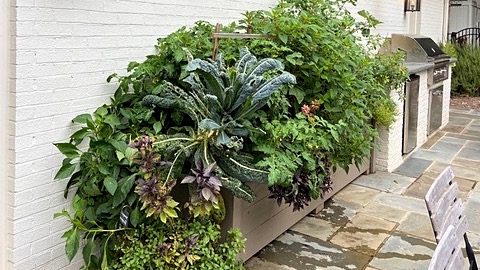
Emily Shepherd, owner and garden consultant at Yard to Table, created this bed for a client. Photo courtesy
Many associate the first light freeze (predicted to be October 30th this year) as a spring bulb planting deadline, but there is more to fall gardening than preparing for daffodils and tulips — especially when it comes to growing your own food.
Emily Shepherd, owner and garden consultant at Yard to Table, and Erin Hostetler, “The Patio Farmer,” help restaurant owners and home gardeners achieve more thoughtful and visually captivating edible landscapes. Services range from education to installation and maintenance.
“It is important to meet people where they are in their growing journey, from the beginner to the advanced,” Hostetler says. Shepherd notes that some individuals feel disappointed when they invest a lot in establishing a garden and do not reap enough produce to lower the grocery bill. “If you’re only growing your own food to save money, that is not sustainable,” Shepherd says. “But I like to say that a garden-centered life is too rich to go without. It’s also good for your mental health and physical health.” Hostetler agrees the benefits extend beyond pulling up a high yield of carrots. “Growing your own food allows you to have a connection with the food you eat,” she says. “It is a grounding experience. Learning about cultivation gives an awareness of what goes into your food. Food doesn’t just show up.”
Shepherd works with chefs like Sam Diminich of Your Farms, Your Table and the eagerly anticipated Restaurant Constance. “I grow his specialty crops. He’ll come to me and say, ‘Hey, I’d like to try this new radicchio.’” Their relationship is a mutually beneficial one. Shepherd will, at times, have too much of a crop, such as five pounds of kale or an overflowing harvest at her church’s community garden. He will put it to good use. “Chef Sam will take anything that is organic and freshly harvested because he knows how much flavor there will be,” Shepherd says. Diminich helps her make sowing decisions as well. “He explained to me how purple baby pak choy is a highly regarded culinary crop.” Shepherd would like to partner with even more chefs and restaurants. She describes herself as an “awe hunter” and feels especially inspired when she spots edible gardens as part of the city’s landscape, such as the one she noticed recently while dining at Leah and Louise.
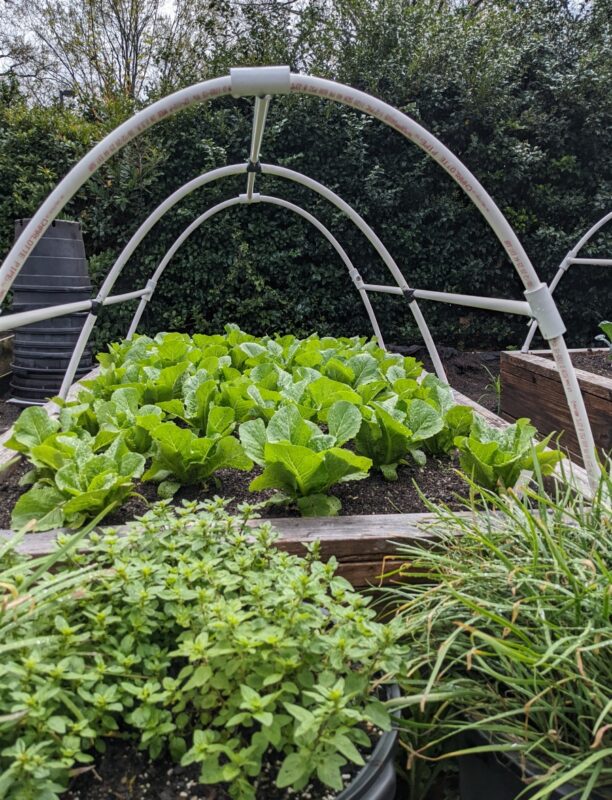
The Patio Farmer oversees the raised bed at Myers Park Italian restaurant Zio. Photo courtesy
Hostetler branched out into partnerships with chefs and restaurants herself in 2020. She provides installation and maintenance services for Zio Casual Italian in Myers Park and Local Loaf and Oh My Soul in NoDa. “Zio has three hydroponics systems in the restaurant to provide fresh lettuce and basil year round, and there are about eight to nine raised beds in the back I help them with,” she says. “The edible plants are both pretty and usable.” Hostetler appreciates the plant growing and plant-based culinary connection. She is a Piedmont Culinary Guild member and self-proclaimed fan of vegan chef Julia Simon. Simon provides The Patio Farmer Plant Club members with a monthly plant-based recipe to use what they grow in creative ways. The Plant Club is a unique facet of Hostetler’s services. Through online community and learning clinics, the members are able to gain the education they need for seasonal success. “In October, we’ll be growing garlic, in November golden raspberries, and in December bay laurel. These plants will come from Windcrest Organic Farms, whose owner is also a Piedmont Culinary Guild member.”
The power of continuous learning is something Shepherd emphasizes in her operations as well. She wrote a book, Yard to Table: You CAN Grow an Organic Vegetable Garden!, and tells her more novice clients that with some scaffolding and awareness, anyone can achieve a useful and beautiful kitchen garden. “Spend time educating yourself on the basics: soil, water, and sun — before spending money,” Shepherd says. “[Understanding and applying those fundamentals] are really where a garden consultant can help someone save money and time.” Hostetler adds to those essentials how often she has to help her clients understand fertilization. “Staying on top of feeding your plants, even if you start with good soil, is so important. It helps avoid plateaus in growth.”
Both garden consultants hope would-be growers in Charlotte capitalize on the region’s cool growing seasons. Shepherd sees a lot of transplants from places like Ohio come down South and expect the same summer gardening experience with tomatoes, cucumbers, and peppers. “But we have heat and pest pressures here that they didn’t have,” she says. Instead, she recommends that people embrace growing their own food in the cooler months and that they begin with something practical like herbs and greens. As they gain confidence, they can scale up and invest more in landscaping efforts. Hostetler recalls planting a bunch of collards during a recent autumn. “I was still harvesting them in May,” she says.
Both garden mavens’ favorite fall crops to grow are greens like collards, kale, and purple mustard greens. Shepherd likes to think of these and their culinary applications in two ways: fresh greens and cooked greens, noting that collards are “quintessentially Southern.” She advises growing more of this plant than you think you need since they cook down quite a bit. She enjoys frying mixed greens in a bit of bacon grease, finishing by tossing in of some pickled peppers. Hostetler devoted an entire raised bed to spinach this year. “I use greens for everything. I use them in hearty soups and simply sauté them in olive oil with garlic, seasoned with salt and pepper. You can grow greens in spring, but they tend to taste even better in fall.”
Growing your own food is not limited to fruit and veggies, either. Herbs are an accessible starter project. Shepherd notes that most herb-growing questions she receives relate to cilantro, which adds exotic flavors to everything from Latin to Asian dishes, but is tricky to grow. “Now is the time to plant those seeds. A lot of the nurseries will market cilantro and put the seedlings out in spring, but transplanting it, and doing it then, will shock cilantro and make it bolt.”
A final garden consultant tip? Try growing edible flowers like violas, which thrive fall through spring in Charlotte. “They make great additions to cocktails and baked goods and grow beautifully as part of edible landscaping,” Shepherd says.