


August 16, 2022
Eat This and That: Juice Edition
Our resident nutritionist shares how to make healthier choices
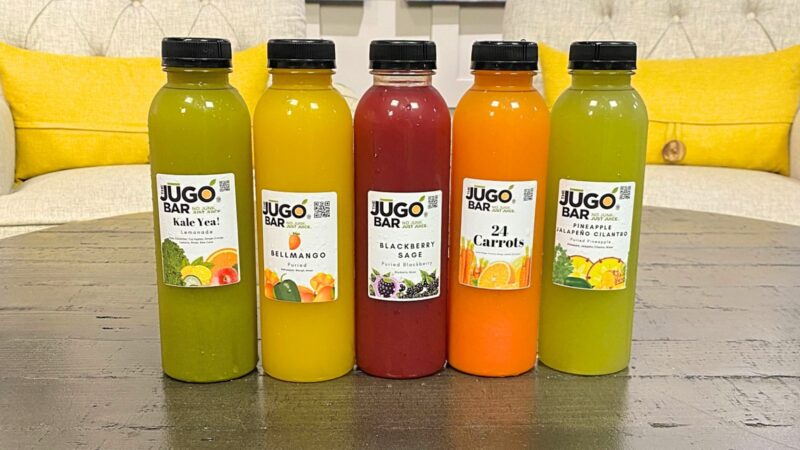
The Jugo Bar offers a fresh selection of juices. Kristen Wile/UP
By Shannon Blair
Southern Pressed Juicery hailing from Greenville, South Carolina and The Jugo Bar from Winston-Salem have both expanded into Charlotte. While the city has an abundance of smoothie offerings, juice joints offer some healthier options. Cold-pressed juices contain ultra-concentrated, highly accessible levels of the vitamins, minerals, and phytonutrients (health-beneficial plant compounds) found in fruits and vegetables; these are essential to lowering risk of heart disease, certain cancers, and other illnesses.
Still, juice — and especially, juice detoxing — has a fair share of criticism. Cleanse advocates say detoxes leave them feeling energized, reset, less inflamed, focused, illness-resistant, and lighter; however, the FDA has not yet certified those claims nor found that juiced produce is healthier than basic whole fruits and vegetables. On that point, the beneficial fiber of whole fruits and vegetables is left behind after juice extraction. Specific juices can even be risky to consume at certain levels for some with chronic conditions or on particular medications. No wonder there is confusion and doubt about juice and juicing. Let’s dig into the culinary trend of juices from a certified nutritionist’s perspective.
Juices are not:
-
- Necessary to cleanse our bodies. The liver, kidneys, and digestive tract do this naturally everyday by breaking down and ridding toxins for us.
- Meal replacements. Think of them instead as snacks, meal preludes, or even vitamin cocktails. Balanced meals contain carbohydrates, protein, and fat. Juices contain only carbs — and only the sugar form of carbs. The fiber form of carbs is excluded from juice, allowing for quicker vitamin and mineral absorption into the bloodstream. This also means quicker sugar absorption, which can lead to blood sugar spikes (and energy dips, headaches, and lack of concentration).
- Weight loss tools. True, some pounds may drop after a detox; however, these pounds come from water, waste, and carb reserves, which all return once the cleanse ends.
- Advised for athletes in training, beyond a daily supplement or 1 to 2 day detox. This should occur during a recovery period with little to no exercise because lengthy juice detoxes and juices independently will not yield the carb energy sources needed for performance and endurance.
- For anyone and everyone. Individuals with existing health conditions and those taking medications should clear juice intake with health providers. Some types and amounts of juice can exacerbate symptoms or negatively interact with and even counteract medications. For example, FDA studies have found grapefruit juice has the ability to release too much of certain meds — such as blood pressure and cholesterol lowering ones, corticosteroids, and antihistamines — into the bloodstream. Research has also found that consuming excessive amounts of vitamin K, highly present in leafy greens, in a single sitting can weaken blood thinners. Not monitoring sugar, even natural sources of it, over time can turn prediabetes into type II diabetes. Individuals with CKD (Chronic Kidney Disease) must exercise caution around potassium since an overabundance can reduce the kidney’s filtering ability, leading to serious implications for the heart. Most juicers pride themselves on learning their customers’ needs and being flexible enough to customize orders.
Juices are:
-
- Reflective opportunities. Even a one-day juicing program allows the consumer to be mindful about regular eating habits and relationships with food. Eliminating certain foods and then reintroducing them can even help troubleshoot potential dietary issues.
- A way to incorporate more pure versus processed foods, and varied produce, into your lifestyle. Cold-pressed, fresh juice contains less added sugar (as well as fewer additives, preservatives, and syrups) than many supermarket bottled juices. Cold-pressed, fresh juice can also infuse your diet with a wider array of produce than you might normally enjoy. We nutritionists are always saying to eat the “rainbow” because color in produce is linked with different types of phytonutrients.
- A daily recommended intake boost. Big kids who are still hesitant to “eat their veggies” can benefit by adding in one juice a day while still striving to eat at least half of the recommended fruit and vegetable servings from whole, fiber-rich forms. These are the general daily recommendations: Fruit = 1.5 cups for women, 2 for men; vegetables = 2 – 2.5 cups for women, 2.5 – 3 cups for men.
- Nutrient-dense and convenient. Packed with vitamins and minerals, juices are good for on-the-go snacks. Some can be high in calories, so opt for more veggie-heavy than fruit-based. If going full-fruit, try consuming only 4 ounces at a time, equivalent to 1 whole fruit serving. Some menus even feature smaller amounts of concentrated juices in shot form or enhanced waters.
- Best consumed fresh (and well-timed). Vitamin and mineral absorption is enhanced on an empty stomach, but it’s important to prime it to avoid gastric upset. Try to enjoy green juices around two hours after a meal and about 20 minutes before another meal. You can even “chew” juice to activate digestive processes more quickly. Health officials advise pasteurized juices for vulnerable populations with weaker immune systems, such as seniors, children, and pregnant women. Flash pasteurized is best since it uses higher heat for shorter times to ensure safety while retaining more nutrient integrity.
For the carb-conscious, it’s of note that pressed juices are not no/low-carb. The carbs are mostly in the form of natural fruit and vegetable sugars. There is the possibility of added sugars, too, so read the menu ingredients and know that even though it is natural, honey as a sweetener is still an added sugar. The carb form of dietary fiber in peel and pulp is discarded in the process. The glycemic index rises when fiber is lost because it is no longer present to slow the absorption of sugars (both natural and processed forms) into the bloodstream. Glycemic index does matter, but so do total carbs, sugar, fiber, protein, and fat. Eating high GI foods with substantial protein or healthy fats can reduce the chance of a blood sugar spike. That is why it’s less important to dwell on banana versus mango versus apple and more critical to follow up any juice with a balanced meal. Tip: If juicing at home, save the pulp and add it back into your juice. You can also avoid waste by using the pulp in recipes, too, like sweet muffin batter or savory casseroles and soups.
When taking a closer look at juice, smoothies and energy bowls also demand attention as they are frequently featured on juice menus. Unlike juice, smoothies and energy bowls keep the fiber intact and often include milks, which usually are rich sources of protein and calcium. Some of these concoctions, however, are more akin to a milkshake with added sweeteners and heavy fat content. On the other hand, they can be very delicious and packed with nutrients, even from superfoods. Instead of hitting your local creamery for a cone topped with butterfinger bites, try sharing with your sweetie The Pacific Bowl (almond mylk, pineapple, mango, Blue Majik, agave, avocado, coconut chips, blackberries, kiwi, honey) or the Blue Magic at Southern Pressed, which has blue green algae. Other ingredients to try when visiting a juice restaurant might be spirulina, açai, turmeric, bee pollen, ginger, and even activated charcoal.
The truth about some juice ventures gets sweeter. The Jugo Man is helping bridge a cultural nutrition gap in his community by introducing pure juice options to replace the overly processed juices more familiar to many. Each Southern Pressed Juicery site has its own relationship with local farmers to support them by buying in bulk when possible. SPJ is also waste-conscious. For instance, they transform the resulting almond milk pulp into granola and waste that cannot be reused for product is sent to a worm farm. They encourage customers to freeze their juices if they won’t be able to use them by the freshness date.
To help you along in your next dining adventure, here are healthier ordering options (our Eat This picks), as well as some indulgences (And That), when visiting some juice businesses in Charlotte. Here’s our advice on what to feel good about, and what to save for special occasions.
Southern Pressed Juicery, Park Road Shopping Center
Eat This: I Do Declare Juice (kale, arugula, celery, romaine, cucumber, lemon) followed by the Pad Thai Zoodles (zucchini noodles, carrot, red cabbage, bell peppers, sprouts, cilantro, lime, cashew pieces / dressing: lime juice, tamari, tahini, sliced almonds, ginger, honey, jalapeño)
And That: Chocolate Macaroons (shredded coconut, raw cacao, maple syrup, coconut butter, vanilla extract, sea salt) with a glass of Luca Lovin’ Mylk (almonds, dates, water, agave nectar, cinnamon, vanilla extract, Himalayan pink salt)
The Jugo Bar Tasting Room, NoDa (now open Fridays from 11 a.m. to 8 p.m.)
Eat This: Kale Yea! Lemonade (kale, cucumber, Fuji apple, orange, lemon, ginger, turmeric) or Beet It! Lemonade (beets, orange, ginger, turmeric, lemon)
And That: Bellmango Juice (bell peppers and mango) or Pineapple Jalapeño Cilantro Juice (pineapple, jalapeño, cilantro)
Clean Juice, multiple locations
Eat This: Green, Pink, or Yellow Juice followed by The Protein Bowl (mixed greens, diced chicken, hard-boiled egg, avocado, feta, hemp seeds, walnuts)
And That: Gold Juice (filtered water, himalayan pink sea salt, balck pepper, cashes, cinnamon, maple syrup, turmeric, vanilla) or The Nutty Bowl (açai, almond butter, almond milk, banana, cacao, granola, maple syrup, strawberries, camu camu)
Note: Clean Juice menus display calories. You can also ask for nutrition facts at other venues where not listed.
Disclaimer: The information contained here is of a general nature to provide research-backed educational content. It is not intended to offer professional medical diagnosis and treatment. While a certified nutritionist produced this article, your specific needs may or may not apply. Consult your team of professional healthcare providers with health concerns or questions.