

June 9, 2020
Mecklenburg’s ABC Board has a new CEO
We spoke with Keva Walton about Covid, the push for privatization, and the bourbon boom
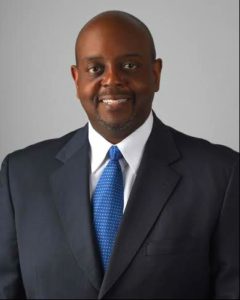
Keva Walton is the new CEO of Mecklenburg County ABC. Photo courtesy
On June 6, Keva Walton stepped into the position of chief executive officer of Mecklenburg County’s ABC Board. Walton was previously the CEO of Charlotte Regional Business Alliance, as well as a vice president with Goodwill Services. Walton replaces longtime CEO Jason Hughes, who retired at the end of April.
Walton, an Eastern Carolina University graduate, earned the job during a tumultuous time, managing the health of ABC staff and customers during Covid-19, an uncertain future for many of the small businesses the board works with, and an ongoing push for privatization of the state’s alcohol sales.
Like all of the state’s ABC boards, the Mecklenburg County ABC Board is an independently run organization given a permit to operate in the county, with a percentage of revenue being paid back to the government, as well as to local charities. The local ABC Board oversees the Mecklenburg’s nearly 30 liquor stores. The legislation establishing the rules for the system is dense text, and Walton says he still has some reading to do in order to determine what he can legally do under that framework. Here’s what he’s prioritizing, and what to look for in the future as he steps into his new role. —Kristen Wile
Unpretentious Palate: We’d love to learn a little more about you. Do you have a spirit of choice?
Keva Walton: Currently it is bourbon. Ironically, I was flipping through — this before going through the interview process — and there is this whole documentary on Audience called Bourbontucky. And it’s a two-hour documentary on bourbon manufacturing in Kentucky and the history; it talks about these bourbon societies and all this. Fascinating. I had no clue. I just like the bourbon. I’ve typically always been a Jack Daniels fan, but have gravitated over to Maker’s.
UP: Coming into this role in the middle of a pandemic, what are your first steps going to be as CEO?
KW: First, I’ve just got to give kudos to Jason, the former CEO, and the team for the consistency, the delivery, the experience for shopping in any store. I’m just blown away by the scope and the magnitude of it and the efficiency, the consistency of it. That comes from great leadership and a solid foundation. So I am so blessed to be able to walk into a situation that has such a solid foundation and an intact team that understands the operation very well.
Clearly, first things first is making sure we continue with that consistency and constantly making sure that we do the things that make the organization and keep the organization strong and healthy. A big part of that obviously is navigating our way through this pandemic for our teammates and our customers. It’s hard to know where this is going. I’m so grateful to our customers who have been patient as we’ve put in place the safety guidelines. I know that’s tough. But again, our priority is making sure our teammates and our customers are healthy and safe. That’s first and foremost.
I believe that in any crisis, necessity is the mother of invention. I wish that was original, but it isn’t. We’ve got some sharp teammates out there. And I’m betting on the fact that they’ve got some ideas about how to make the operation even more efficient for the customer.
How do we make sure that it’s operating at its best for the customer and their experience? I don’t know what that looks like. Maybe it involves technology or just reengineering some of our processes. That’s part of it. Clearly, a big part of all of this is how do we help stand up our small business community and improve for our industry? Of course, that’s the small bars and the mixed drink beverage establishments. I’m not sure what that’s going to look like yet given the constraints of the pandemic, but I think as an industry, I’m hoping that we all can collaboratively think about that and work towards supporting those outlets.
The other part that’s critical to this, and for me, is certainly the community investment part. You know, I want to make sure that our community knows that, yes, there is a business component where we sell spirits. But those profits come right back into this community and in helping people with treatment and education.
UP: Obviously, this is a difficult time for restaurants and bars. I saw Ohio is doing a liquor credit to help restaurants reopen. What kinds of things are in your power to do, versus has to be mandated by the state? Could you do things like offer credits or rebates, or give support for restaurant employees through those grants?
KW: The first thing, obviously, was the buyback program that the board, certainly prior to my arrival, offered. That was an immediate opportunity. … I think that was an example of the flexibility. I have received my very thick book of 18B, so I’ll be reading into this.
When I talk about associates and teammates who may have some ideas, I think this is where we get them engaged. And I think that’s where we get some of the industry members engaged in the conversation about, well, where is our flexibility? How can we go in and support them, and still possibly be within the framework of legislation? And/or, do we need to go advocate in Raleigh?
Certainly that’s a longer term proposition, but that’s a possibility. It may be a necessity also, but I’m confident somewhere in there are some things we can do. That’s a big priority when I say Covid — obviously, the health and wellness, but I do think it’s also, how do we help our mixed beverage establishments? So stay tuned on that. I don’t know all the ins and outs yet, but that’s a priority.
UP: I’m sure a lot of folks will be glad to hear that. I know with the buyback program, bigger establishments were happy with it. But the smaller places that plan to reopen were left out because they basically would’ve been paying tax twice.
KW: We always toss around “small business is the backbone of America.” And I think we’ve seen that clearly throughout this pandemic. And maybe people just didn’t notice it as much. But the number of people that are employed there, how many of us interact with it every day. This is a lift that we’ve all got to pick a corner and lift. And it’s not an immediate thing. This is going to be a minute.
UP: Liquor is becoming much more complicated with the bourbon boom. There’s an increasing population of people who just hunt rare bottles down and resell them on the secondary market. Do you have any ideas for how to temper that? One of the great things about North Carolina is you can get things at retail cost, but it’s becoming harder and harder for the average person.
KW: Wow, again, that’s obviously something I need to study up on a bit, you know, and just really understand where we are with that stuff. Thank you for sharing that. What do you attribute to the big boom?
UP: Scarcity, I guess. It’s like the wines that everybody wants in California. They get this reputation, then everybody hunts them down and they’re so limited. It’s crazy, the resale value on some of these bourbons. It makes it tough when you’re a North Carolina resident who just wants a bottle to drink, and you’ve got people that stake out the market. A lot of the anger comes because there is a growing perception out there that these valuable bottles aren’t going where they’re supposed to.
KW: And the opportunity, equal opportunity to purchase those. Well, thank you for the assignment. That’s the kind of thing I need to know. I may not have the immediate answer, but plan to really delve into it.
UP: You’re stepping into this job not only during the pandemic, but the push for privatization has been bubbling up. You mentioned advocating for changes in Raleigh. Are some of these things to stave off or make some improvements that people are calling for in terms of why they want to switch to privatization?
KW: Well, my first thing is to really be clear about my understanding of the call for privatization. I think spending some time with the proponents of privatization and understanding what that is, and why that is. That’s why I think it’s so important to really demonstrate how the ABC system is a community asset, because we’ve got to think about that. You know, certainly there may be benefits on the private side. But we’ve also got to think about over like 70 years, something close to $100 million has been reinvested into this community. And I think helping everyone realize when you go buy a bottle, you are really putting something back into this community in which we live, in some way, form, or fashion. And I think a big part of it is our messaging and how we talk about that and engage as many people and organizations as possible in that quest.
UP: I wanted to ask you about is the operating hours, specifically the closures on holidays, which tend to be pretty big drinking days. Do you know whether you have the ability to change that statewide?
KW: Again, that’s something I might have to study. I think it’s pretty regulated in that, and I’m sure that’s one of those things that people don’t appreciate, having limits on when you can go buy. So that’s one of those things I’ve got to look into. The first time I went with my fraternity brothers, we used to always go to Mardi Gras every year. My first trip there, we were looking for the package store; we always called it the package store. I grew up in Raleigh. And they were like, “What package store? Go to Winn-Dixie.” Are you kidding me? You go down there and it’s like, OMG, this is like on the shelf next to the milk.
UP: You mentioned innovation. Are you thinking anything specific, like online ordering?
KW: I can’t see why we wouldn’t. But again, I’ve got to go back and do some education, and there must be a reason.
I want to spend some more time with mixed beverage customers and hear more there — and customers in general, but particularly mixed beverage. And some of the organizations that I’ve reached to, like [Greater Charlotte Hospitality] and Charlotte Area Hotel Association, and some of the distributors. A lot of listening with an eye to not just hearing, but listening and putting some things in motion.
One of my biggest challenges is I see possibility in everything. So having to dial back and prioritize, you know, first things first. Like I said, first for me is making sure our team and our customers are safe and healthy. And then I think helping the restaurant community come back after Covid and sustain after Covid, because this is about more than just coming back. It’s how do you sustain through this?
UP: Thank you for your time. We’re looking forward to seeing what you do.
KW: I am so looking forward to it. Again, I love the alignment of there’s a business but there’s a community civic purpose, and there’s a government, that kind of tri-sector approach. I think the folks who put this together — and I know there are challenges in the system, but it really is very forethoughtful how they put it together.