Hidden gem in Charlotte’s Oakhurst neighborhood where the menu is as creative as the food
Hidden gem in Charlotte’s Oakhurst neighborhood where the menu is as creative as the food


Flipside Restaurant Group’s Jon Fortes shares what he’s learned
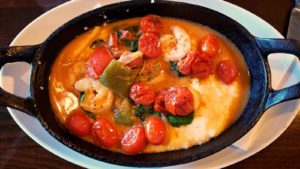
Shrimp and grits from The Flipsidé Cafe. Photo by Kristen Wile/UP
Last week, South Carolina loosened its restrictions on dining in restaurants, enabling establishments to open at 50 percent capacity. With North Carolina Governor Roy Cooper expected to announce a decision on reopening the state on Wednesday, restaurant owners will have a tight turnaround in preparing their dining rooms to reopen to the public.
We spoke with Jonathan Fortes of The Flipside Café and Salmeri’s Italian Kitchen in Fort Mill and The Flipside Restaurant in Rock Hill about what he and his wife, fellow chef Amy Fortes, learned after reopening their dining rooms over the weekend. Salmeri’s, a new concept that only opened about two weeks before the closures, and the Flipside in Rock Hill opened their patios and dining rooms on Monday, with the café following over the weekend. The numbers are about what they expected with the reduction in seating, Fortes says. Here are five things they caution their North Carolina colleagues about.
Before reopening, the Forteses trained their staff on new sanitation measures to ensure both their diners and staff felt safe. Staff members are frequently sanitizing door handles, leaving the front door open to require less shared surface contact, and throwing away menus after one use. A bad review right now from a guest who doesn’t think the restaurant is taking safety seriously could significantly harm your business. “You certainly don’t want any guests to get on one of these social media pages or Yelp or TripAdvisor and blast you saying you’re not doing what’s required, because people aren’t going to come in and it’s already a struggle as most restaurateurs know. 50 percent is not enough to pay the bills.”
With pandemic measures increasingly becoming politicized, those with concerns over a spread aren’t the only ones expressing issues with masks and gloves. “‘We had a guest who actually commented, ‘I don’t know what the purpose of wearing gloves is, they should just be washing their hands,’ Fortes says. Ensuring staff members are visibly following increased safety protocols — like changing their gloves frequently — and know how to converse with concerned diners is important in preventing blowback.
Though parties of up to 8 can be seated, South Carolina doesn’t allow diners to meet at the restaurant. Policing who is coming in together can be difficult, Fortes says. “We’ve been trying to watch it and make sure that these are families that are coming in, not necessarily a bunch of friends meeting,” he says.
With an older clientele around The Flipside Restaurant, traffic in the restaurant has been slower, according to Fortes. “I’d love for the business to return, but if it was my mom, I’d tell her to stay home right now,” he says. Salmeri’s and The Flipside Café, on the other hand, have bounced back quickly thanks to the younger families in the area. The first brunch after the café reopened, for example, did almost exactly 50 percent of a normal brunch service pre-pandemic.
Especially with the additional costs of masks, gloves, hand sanitizers, and stronger surface sanitizers, takeout and delivery remain a necessary stream of income. Fortes says they’ll stop serving the family meals they’ve been doing, which are extremely low margin, even though some customers have been unhappy with the news. “We’ve got to start paying our bills again,” he says. Their take-out options will focus on dishes that travel well, not low-profit dishes built to get people in the door. —Kristen Wile