

March 9, 2020
International Eats: King of Spicy
Himalayan cuisine brings the heat
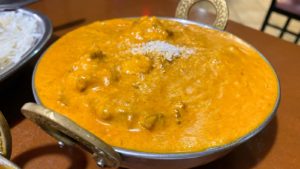
Korma curry (pictured with goat) is a yogurt-based sauce with spices, herbs, and crushed nuts blended into it. Travis Mullis/UP
The restaurant: Sitting in a strip mall that contains, among other things, a Mexican ice cream parlor, a Latino cake shop, a Burmese grocery store, and a taqueria, King of Spicy and its environs display the changing demographics of the city. Hardworking immigrants and refugees from around the globe flock to Charlotte, enriching it with the food and cultures of their homelands. Durga Dhimal, one of the owners of King of Spicy, is from Bhutan and spent time in Bhutanese refugee camps in Nepal before coming to America. He brought with him a passion for the spicy food of his small Himalayan home country.
The cuisine: Heavily influenced by their colossal neighbors, India and China, the food of Bhutan and Nepal is a midway point between those two diverse cuisines. Curries, tandoori-cooked meats, and various savory and sweet breads are served alongside noodle dishes, dumplings, and stir-fried meats and veggies. Nepal and Bhutan sit atop the world, with mountains that make our Appalachians look like mere anthills. Perhaps it’s oxygen deprivation, or simply the long cold winters, but the people of the Himalayas like their food to scream with spice. This isn’t the capsaicin heavy heat of cheap hot sauces used to mask flavorless foods, however — this is a spectrum of spice that flirts with sweet, sour, and umami.
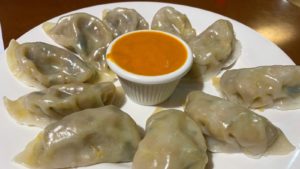
Momos, steamed dumplings, are served with a spicy dipping sauce. Travis Mullis/UP
Our must-order: Momos, vegetable or chicken filled steamed dumplings that resemble gyoza, are the best way to start your meal. Served with a neon orange spicy dip, these little bundles of hearty flavor help ease your palate into the spicy complexities of the menu and get your sinuses working. Chicken Manchurian and goat korma curry will give you a taste of both sides of this Indo-Chinese cuisine. The Manchurian is a melange of cooked onions, peppers, and chicken meatballs bathed in a Chinese-style gravy. Korma curry is a creamy yellow feast of flavor and color. Spices, herbs, and crushed nuts, like almonds and cashews, are blended into a yogurt sauce and then simmered on the stove until the flavors mingle and become one. Each main dish is served with a small trough of basmati rice. If that isn’t enough to soak up all the sauce of your main dishes, chili garlic naan offers another blast of complex heat to keep your taste buds on their toes. An old fashioned heat scale is used at King of Spicy to help diners decide just how much risk they want to take with each dish. From one to ten, with one being the spice equivalent of a bell pepper, and ten being sinus-pulverizing, ear-popping, vision-blurring, hot, be careful what you ask for when the waiter asks for a number for each dish.
Why we go: My most recent trip to King of Spicy came on a weekday night and the dining room was mainly empty as I sat down in one of the large booths. Any time a restaurant is empty, it means they’re losing money. Disheartened by the lack of patronage, my spirits were lifted by the steady stream of food delivery men and women who came in the front door to retrieve meals for folks curled up on the couch at home or too busy or tired to make dinner themselves. Though my spirits were lifted by the good business being done with apps like Grubhub and DoorDash, I know those companies can take a mighty cut of the restaurant’s profit and make a dent in the pocketbook of the person doing the ordering. I worry that as our work days get longer and our personal lives more stressful, our food culture will become more solitary and cut off. Visit King of Spicy in person to experience their food the best way possible while saving yourself a few bucks. You might even have fun watching your fellow diners’ faces as they realize that 7 or 8 spice order might have been a mistake. —Travis Mullis