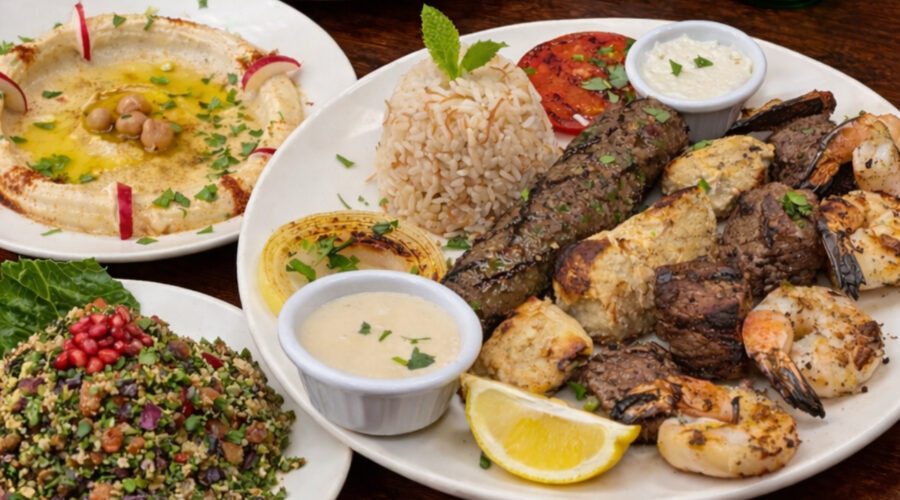
Hidden gem in Charlotte’s Oakhurst neighborhood where the menu is as creative as the food
Hidden gem in Charlotte’s Oakhurst neighborhood where the menu is as creative as the food


For centuries, southeastern peoples have foraged, harvested, and hunted native foods – here’s how to get a taste
By Allison Braden
In recent years, Indigenous writers, activists, and others have challenged widespread stereotypes and spurred interest in traditional lifestyles and foodways, especially amid the climate crisis. In Minneapolis, Chef Sean Sherman — also known as the Sioux Chef — received national coverage when he opened Owamni, a restaurant that shuns colonial ingredients like sugar and serves the traditional “foods of Mni Sota Makoce, Land Where the Waters Reflect the Clouds.” Closer to home, 7 Clans Brewing, a majority-female, Indigenous-owned brewery in western North Carolina, produces ales and IPAs “in keeping with the long tradition of women within indigenous cultures crafting fermented beverages.” Since 2008, UNC Pembroke has hosted Honoring Native Foodways, an annual event to “understand and sample foods that are indigenous to the Americas.”
The efforts aren’t revivals of extinct forms of cooking and eating. Instead, they’re reminders that these foodways, like the cultures they represent, have always been here — and have persisted despite tremendous oppression.
When Europeans arrived in the Southeast, it was among the most densely populated regions on the continent. What is now North Carolina was home to dozens of Indigenous groups, including the Cherokee, Lumbee, Waxhaw, Catawba, Saluda, and Miccosukee. (This map details their territories and more.) Then, as now, the area boasted extensive arable land, a bonanza of edible wild plants, and plenty of game.
In the Southeast, corn reigned. Tribes grew several varieties, often alongside squash and beans. The corn stalks provided a natural trellis for bean vines, while the broad squash leaves shaded out weeds and conserved soil moisture. Together, these staple crops were known as the three sisters. All three could be dried easily, alleviating food insecurity throughout the year, and corn in particular provided high yields with minimal labor inputs. Corn and cooking loom large in southeastern Indigenous cultures; in a traditional Cherokee origin story, the first woman, Selu, is known as Corn Woman.
Local peoples left their mark on the forests. Controlled fires spurred the growth of berry bushes and medicinal shrubs, among other useful plants, which in turn attracted important game: deer, rabbits, squirrels, wild turkeys, and more. Hunters also stalked black bears, elk, beavers, raccoons, and a bison subspecies that once roamed the forests here. On the coasts, fishermen used a variety of equipment to harvest sturgeon, herring, and mullet, along with oysters, clams, mussels, and crabs.
In a 2012 interview, Enrique Salmón, author of Eating the Landscape: American Indian Stories of Food, Identity, and Resilience, explained the link between land and food in his title. “The land is a central component of American Indian worldview. It is constant and is the embodiment of our language, spirituality, identity, and history,” he said. “When we eat our foods, we are not only eating our origins, but also our history, our identity, and everything that we hold dear.”
Learn more about native foodways — in North Carolina and beyond — and incorporate them into your kitchen with these resources.
Near
Far