



April 30, 2024
Meet Charlotte’s beloved mushroom man
Urban Gourmet Farms’ Hiram Ramirez shifted from hospitality to become the city’s most popular mushroom grower
By Ebony L. Morman
If you frequent Matthews Community Farmers’ Market, it’s likely you’ve seen Hiram Ramirez, founder of Urban Gourmet Farms, surrounded by trumpet, shiitake, oyster, and lion’s mane mushrooms. You can also peruse and purchase the farm’s mushrooms at both the South End and Waxhaw farmers markets, but if you want to catch him nerding it out about mushrooms, Matthews on Saturday mornings is your best bet.
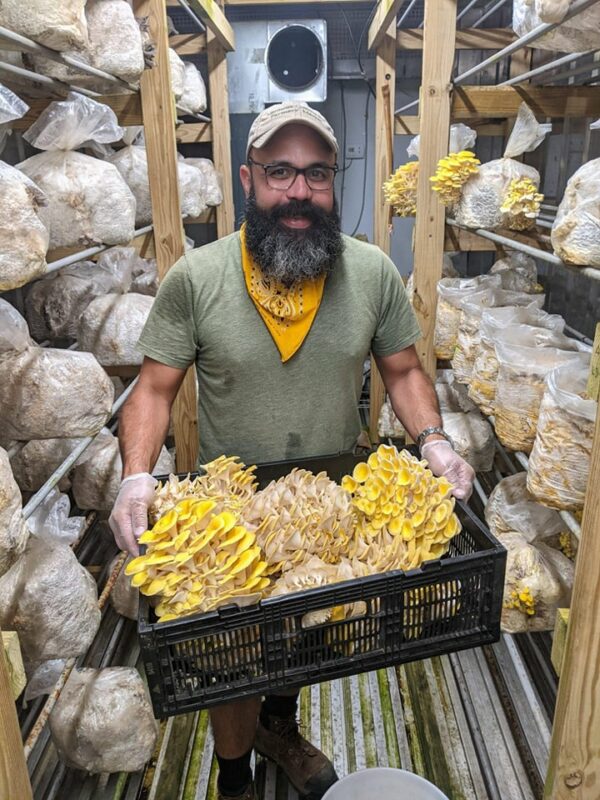
“I volunteer my time on the board of Matthews farmers market and I’m at that market every week, like me physically,” Ramirez says. “Last year, I think I was there for 49 weeks.”
Ramirez’s near-perfect attendance can be attributed to his love for talking to people and educating them about mushrooms. It’s one of his favorite parts about operating the farm. And since research, thus education, is what fueled Ramirez’s interest in mushrooms in the first place, he doesn’t mind being the friendly face behind his own booth, one that’s armed with mushroom knowledge.
“I fell into this really nerdy rabbit hole and just got consumed by them in a way,” he says. “I just thought they were fascinating. And at the time, I didn’t see anybody doing it. I thought, this city can support this. There’s enough people in this city that could make this happen with me.”
That was more than 10 years ago when Ramirez worked in hospitality at a few Charlotte restaurants. As a front-of-the-house manager, he’d communicate with vendors from which the restaurants sourced ingredients. There was someone who brought in lettuce, another person grew bok choy, and different people came in with fish, he says.
“There were all these people coming in and I was like wait, there isn’t a mushroom guy,” Ramirez says. “Then it just hit me one day — I’m like, ‘I’m gonna be the mushroom guy.’”
That thought struck in 2012, but it wasn’t until 2015 when Ramirez decided he was ready to do something different after 15 years in the hospitality industry, with eight of them spent in Charlotte. So without a proof of concept and never having grown mushrooms or run a business, the farm was born.
Now, the farm—which operates in converted shipping containers—sits on about one acre of land on a larger property in Waxhaw called Roots Farm, which is owned by Charlotte Country Day School. Through this connection, he collaborates with the school by hosting tours and leading mushroom-centric lessons for students in between running his operation.
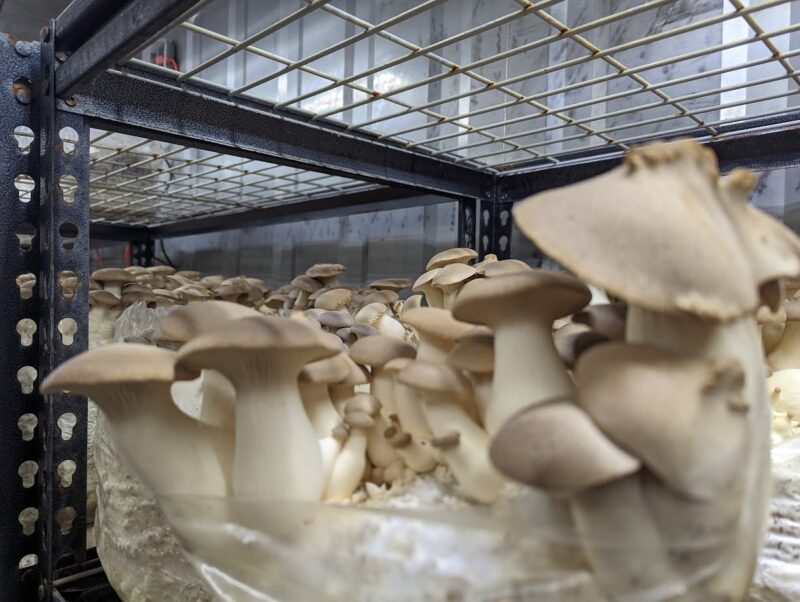
Mushroom farming is like a game of tetris, he says. Every mushroom that grows on the farm comes from one singular either log or block. Blocks are made onsite from raw materials, which are delivered 22,000 pounds at a time. Raw materials for shiitake mushrooms consists of a masters mix of 80 percent hardwood pellets and 20 percent bran. For the other mushrooms, the masters mix includes equal parts hardwood pellets and soybean hull. Weekly, Ramirez’s team inoculates blocks, inserting the mushroom spawn into a substrate that allows it to grow. Then, those blocks move into a colonization room. Blocks in the colonization room that have been there for a couple of weeks are, then, moved into the grow room, and spent mushroom blocks move to compost.
“We joke that it is like the movie Groundhog Day,” he says. “Every day is Groundhog Day, because every Monday we’re making blocks. Every Wednesday, we’re doing a spawn run and making deliveries, and every day we’re picking mushrooms.”
When they’ve fully harvested a mushroom block, the block is transported for compost at another farm, to be used in bettering the soil for that farm’s crops. The goal is to have the farm’s waste product — spent blocks and substrate — go to compost, which can grow food someplace else. Local farms, such as New Town Farms and Single Acre Farm, as well as some local master gardeners have been recipients of the spent mushroom blocks.
For perspective, big mushroom farms, which consist of big production portabella and cremini farms, produce tens of thousands pounds of one mushroom per week, Ramirez says. In contrast, smaller farms, such as Urban Gourmet Farms, can produce anywhere from a couple of hundred pounds to 1,000 pounds of various mushrooms during the same timeframe. Ramirez produces about 1,000 pounds total each week.
Over the years, Ramirez’s focus has been on efficiency. One way he’s accomplishing this is by bringing many of the processes in-house.
“When it comes to mushroom growers like us, about 80 percent of mushroom growers grow someone else’s block, which means they purchase blocks, and then they treat the blocks and sell the mushroom,” he says. “We did that for a long time. But now we are producing a majority of our blocks in-house.”
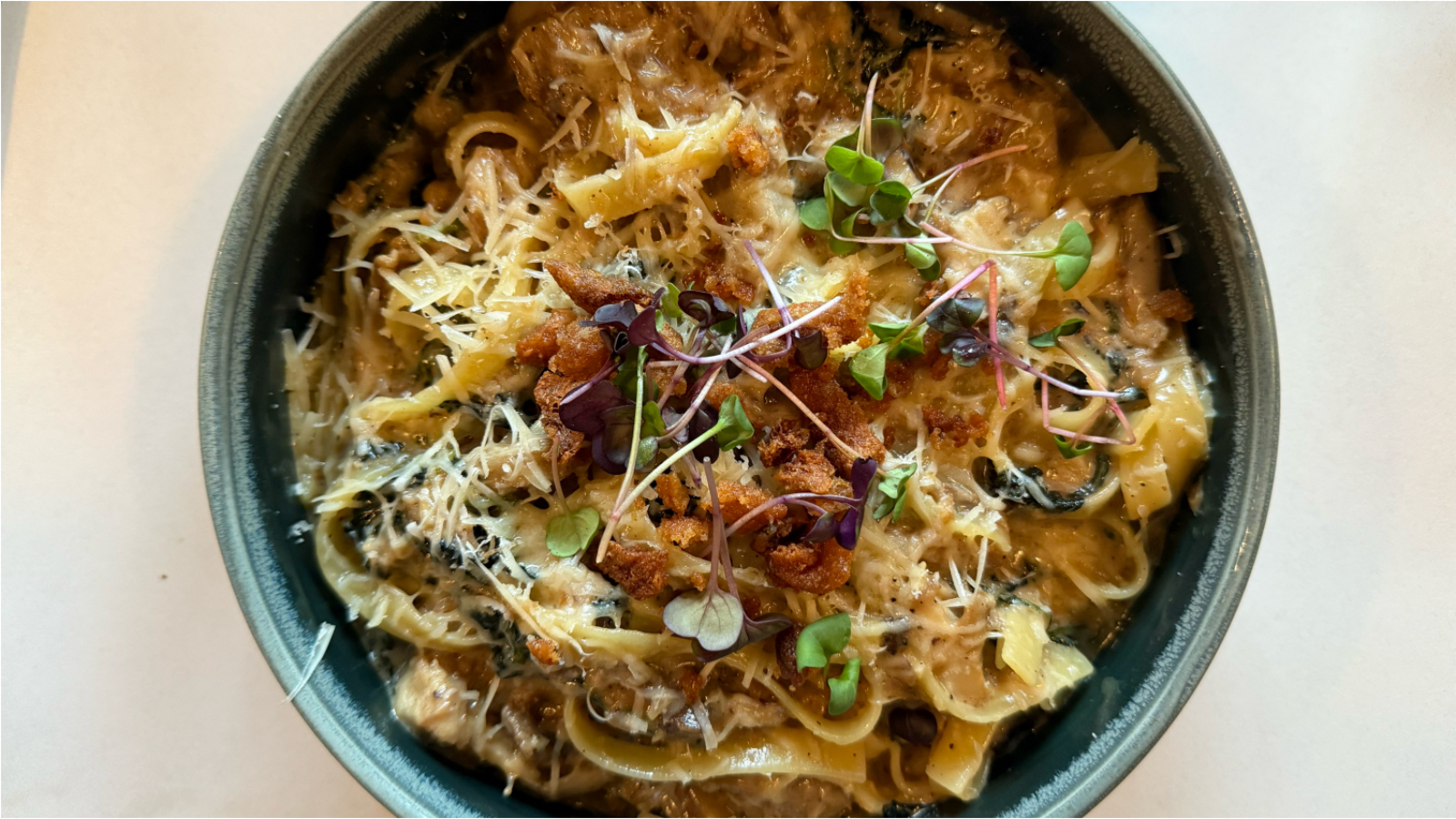
While efficiency is important to the 2023 UPPY Finalist for Farmer of the Year, he attributes the farm’s success to relationships. Ten percent of the farm’s wholesale goes to Freshlist. And that relationship means on any given week, you’ll find Urban Gourmet Farms’ mushrooms in dishes at nearly 50 restaurants. Freshlist gets the farm’s mushrooms into at least 20 restaurants weekly. Additionally, Ramirez is on the phone, calling on 30 chefs to ensure the chefs have what they need.
“I know when people are gonna slow down because they have Restaurant Week,” he says. “I know people that are going to kick up because they have Restaurant Week. You kind of build these relationships with chefs and you begin to know their needs and you have to be flexible. It’s really hard to load up and drive 40 minutes into town, but I will still do anything for my chefs.”


