Hidden gem in Charlotte’s Oakhurst neighborhood where the menu is as creative as the food
Hidden gem in Charlotte’s Oakhurst neighborhood where the menu is as creative as the food


Cooking for presidents and princes, this Charlotte chef finds ways to support our community
by Ebony L. Morman
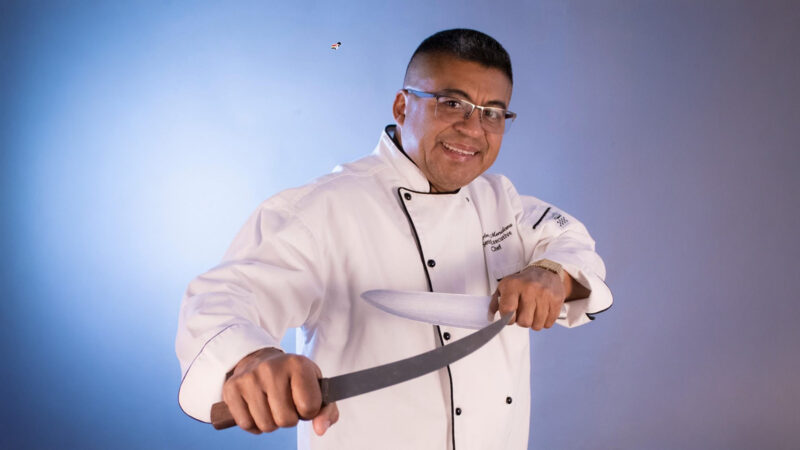
Chef Roberto Mendoza’s culinary career is not linear. With more than 30 years in the industry, the El Salvador native has a diverse set of experiences that started with one word: yes.
After four years of working his way up in restaurants and working at places such as the Loews Santa Monica Beach Hotel, he said yes when the opportunity came for him to work as a chef at the Beverly Hills Hotel, to cater the Academy Awards, and to cook at numerous Hollywood events including the premieres of Titanic and Air Force One. From there, it was a ripple effect.
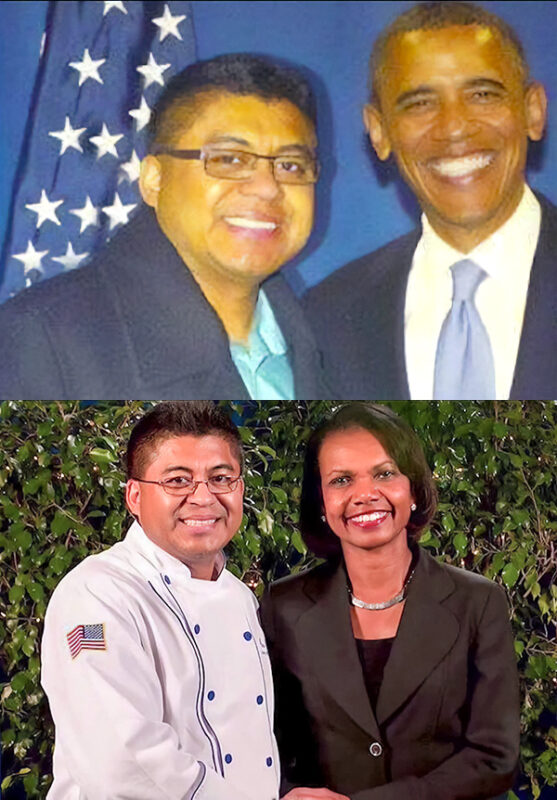
“I ended up cooking for the Prince of Saudi Arabia,” Mendoza says. “And he called Bill Clinton, and I ended up cooking for him. Then George Bush and Barack Obama. I did the Democratic Convention here in Charlotte, too. I’m still part of the team for The White House, which means I’m on call when they need help.”
Being there for people who need help is a common thread in Mendoza’s career and in his personal life, too. For him, serving others starts with love — when he won the lottery back in 2019, he demonstrated both love and a deep desire to help people in the world who tend to be overlooked.
“I stopped at the gas station to buy a $5 scratch ticket, and there was $250,000 on it,” he says. “I decided to donate all that money.”
Some of his winnings went to support people experiencing homelessness, locally and internationally. The rest of the funds went towards building a cafeteria on property he purchased a few years prior in a village in the Dominican Republic. Through The Chef Heaven’s Kitchen, a nonprofit he founded to fight hunger and poverty, Mendoza serves meals at the cafeteria to children and adults who are in need.
These days, Mendoza spends his time overseeing the import and export of food products for Copper Modern Indian Cuisine in Dilworth and The Blue Taj in Ballantyne. Managing that role, along with his nonprofit efforts and other responsibilities as a chef, is simple, he says.
“I divide my time very well with my career, helping people, and being close to the Lord,” Mendoza says. “When you organize you have enough time for everything because God is a God of order.”
Unpretentious Palate: How did the opportunity to cook for multiple presidents come about?
Roberto Mendoza: The Prince of Saudi Arabia put me in touch with Bill Clinton and he recommended me for the opportunity to cook for the president. Once I passed a security check and cooked for him, they kept calling me because I was in their files. Each time the opportunity came up, I took it. And I don’t get the calls because I’m the best chef or the greatest chef, I get them because God just put them on my plate.
UP: How has being connected to The White House impacted your career?
RM: It’s wonderful because it helps me a lot. Everywhere I go, and especially if I do a big event in other countries, there’s that recognition. It’s nice when they introduce me as a chef from The White House. It helped build my resume and it helps with other connections in the food industry. As part of The Healthy, Hunger-Free Kids Act that was initiated by former first lady Michelle Obama, I get to travel to schools and universities across the county to help them launch their food programs. Being connected with The White House also helps with American embassies around the world. I am so grateful.
UP: Did you always want to be a chef?
RM: I went to school to become an accountant. In El Salvador, I started working for a bank when I was 18 years old. During the 1980s, there was a war happening, and I was kidnapped for months. After my release, the Salvation Army picked me up and eventually, I ended up in Canada because it was safe. I went to school up there and learned French. Then, I moved to California in 1993. That’s where I got the opportunity to work for an Israeli family, and I ended up speaking Hebrew, too. Then I started to learn English, and I was looking for a banking job, but nobody hired me because I didn’t speak the language. So, I started as a dishwasher in kitchens in California and then, I moved on to prep, and I loved it. That’s why I decided to go to culinary school.
UP: What inspired you to start The Chef Heaven’s Kitchen?
RM: I started my organization back in 2009. I went to the Coca-Cola 600, and I saw how much food there was. And I said, ‘God, I have never seen that much food in my life.’ That woke me up because when I was 14 or 15 years old, I went to bed without eating anything. So that experience at the event was like an answer from God. He told me to listen and that that’s the reason why I’m a chef. It clicked my mind that it was time to do something.
Since I started the organization, we’ve helped 10,000 immigrants and people experiencing homelessness. We still cook each weekend for the homeless in uptown Charlotte and we support 500 children who live in the Dominican Republic and 300 who live in Pakistan with basic needs. That’s something that really fills my heart.
UP: What’s something important you’ve learned during your career?
RM: I learned that it’s important to love — and help — the people through the food. Being a good team member and helping each other right now is what we all need. Because of food, I am connected to presidents and politics, I’m connected to movie stars, and I’m connected to the local community in Charlotte and other countries. When we use food to help each other, we can become a big team in the world and hopefully, stop hunger.
UP: What’s something unexpected about you?
RM: Because I’m Latino, people didn’t — or don’t — expect me to be a cook for The White House. When they see me, it’s really unexpected. I’ve experienced discrimination in my career because some people believe that because I’m Latino, I shouldn’t be able to do what I’m doing.
UP: What are your plans for the future?
RM: My plan is to grow the organization so we can help more people inside and outside the country. I also hope to one day work with the government to create programs that can alleviate the issue of people living on the streets.